Buying Guide
Choosing among the best rice serving bowls starts with deciding whether you need one communal container or several individual bowls. JapanBargain 2075 and JapanBargain 2077 are traditional lidded containers intended for shared service. They pair a rice bowl with a lid and paddle, while JapanBargain 2073 is a smaller two-bowl format for meals serving roughly two to three people.
A lidded container is the most specialized option in this comparison. It is designed to hold cooked rice for table service and provides a matching utensil. This format is useful when rice is prepared separately and then brought to the table. JapanBargain 2075 is documented for three to five servings, JapanBargain 2073 for two to three people, and JapanBargain 2077 as a large format measuring about 9 inches across.
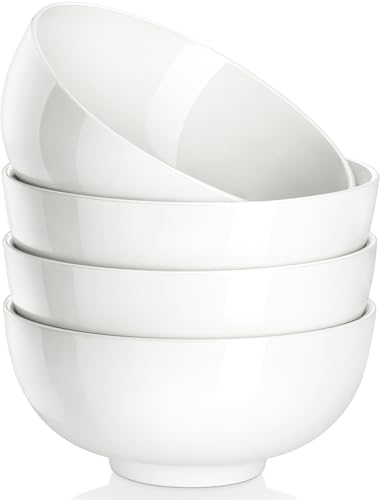
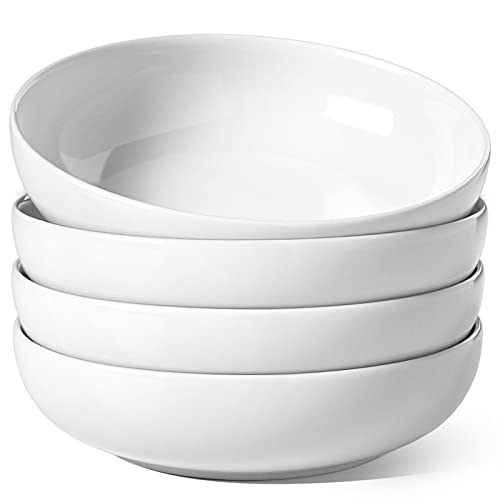
Individual sets are more flexible for place settings. Lenox, Sanbege, Nagpew, Whitenesser, and DOWAN provide multiple bowls so each diner can receive a separate serving. They can also serve noodles, soup, cereal, snacks, or desserts where those uses are documented. If one set needs to cover everyday meals rather than only communal rice service, a multi-piece ceramic or porcelain option is the more adaptable design.
Match capacity to portions
Capacity varies substantially. Compact choices are around 10 to 12 ounces: Sanbege is listed at 10 ounces, Hiceeden at approximately 10 ounces, Nagpew at approximately 10 ounces, Whitenesser at approximately 11 ounces, and Aynaxcol at approximately 12 ounces. These sizes suit modest rice portions or side dishes but may feel restrictive when rice is combined with toppings or sauce.
Lenox provides 18-ounce bowls, and DOWAN offers a 22-ounce maximum capacity. Those larger individual formats leave more room for rice-based meals, noodles, soup, or mixed dishes. Capacity descriptions are listing specifications rather than a guarantee of usable fill level, so leave room for toppings and comfortable handling.
Compare materials
Ceramic and porcelain dominate the individual-bowl selections. Sanbege, Nagpew, Whitenesser, and Lenox use ceramic or porcelain constructions with decorative finishes. DOWAN’s 22-ounce set is described as porcelain and chip-resistant. These materials suit conventional table settings and offer a range of shapes and patterns.
JapanBargain uses food-grade plastic lacquerware or melamine, depending on the model. The listings emphasize restaurant-oriented durability, with JapanBargain 2075 specifically described as restaurant-grade melamine. Aynaxcol uses SUS304 stainless steel and double-wall construction. Hiceeden uses jujube wood with food-grade varnish and describes thermal insulation for hot and cold food.
Check appliance and cleaning compatibility
Care instructions differ. Sanbege is listed as microwave, oven, freezer, and dishwasher safe. DOWAN’s 22-ounce set is listed for microwave, oven, freezer, and dishwasher use, while Lenox is listed as microwave and dishwasher safe. Whitenesser is listed as microwave and dishwasher safe, and Nagpew is listed as oven and dishwasher safe.
Aynaxcol is dishwasher safe but not microwave safe. JapanBargain 2077 is described as dishwasher safe and not recommended for microwave use. JapanBargain 2075 emphasizes heat resistance without providing the same full appliance list. Hiceeden focuses on its food-safe finish and insulation rather than microwave or dishwasher claims. When reheating matters, prioritize a product with an explicit microwave statement.
Plan cabinet storage and handling
Small bowls are generally easier to store in groups. Sanbege, Nagpew, and Whitenesser document stackable or space-saving designs, while Hiceeden’s wooden bowls are also described as stackable. Aynaxcol adds nesting and stackability to its two-bowl set. These features matter when several bowls must fit in limited cabinet space.
Lidded containers require room for the lid and paddle. They may still be worthwhile if covered table service is more important than compact storage. Larger individual bowls such as DOWAN’s 22-ounce design also need more shelf space than 10-ounce bowls, even when the set is stackable.
Consider presentation and versatility
For a traditional Asian-style table, the lidded JapanBargain options provide the most specialized presentation. Sanbege, Nagpew, and Whitenesser offer colorful patterns. Lenox provides a floral porcelain design, while Hiceeden supplies natural wood grain. Plain white DOWAN bowls coordinate easily with existing dinnerware and can transition from rice to soup or noodles.
The best rice serving bowls for your table are the ones whose size and care requirements match your routine. Choose a lidded container for shared rice service, a larger porcelain set for generous portions, or a compact ceramic set for individual servings and mixed everyday uses.
Final Recommendation
DOWAN 22 OZ White Ceramic Bowls ranks first overall in this specification-based comparison under the published weighted criteria.
DOWAN 22 OZ White Ceramic Bowls is the first overall specification-based choice in this comparison.
The final choice among the best rice serving bowls depends on the documented features that match your intended use.
DOWAN 22 OZ White Ceramic Bowls combines a 22-ounce maximum capacity with porcelain construction and microwave, oven, freezer, and dishwasher compatibility. It is the most practical selection for generous individual portions and mixed rice-based meals.
JapanBargain 2075 is the preferred shared-service alternative because it provides a three-to-five-serving format, lid, rice paddle, heat-resistant melamine, and a restaurant-style purpose. Lenox is a balanced individual-serving option with four 18-ounce porcelain bowls and microwave and dishwasher compatibility. Sanbege and Whitenesser suit smaller portions, while JapanBargain 2073 fits a smaller traditional lidded setup. Aynaxcol is appropriate when double-wall stainless steel matters.
Among the top rice serving bowls, the right final choice depends on whether you serve rice communally, portion it individually, or need bowls that also handle soup, noodles, snacks, and desserts.
Frequently Asked Questions
Among the best rice serving bowls, what size bowl is suitable for rice?
The selected products range from approximately 10 ounces to 22 ounces for individual bowls. Around 10 to 12 ounces suits modest portions or side dishes. An 18- or 22-ounce bowl leaves more room for rice combined with toppings, soup, or noodles. A communal container such as JapanBargain 2075 is better when rice is served from one shared vessel.
Are lidded rice bowls better than open bowls?
They serve different purposes. A lid can make shared rice service more organized and gives the container a traditional presentation. JapanBargain 2075, JapanBargain 2077, and JapanBargain 2073 include lidded designs, with paddles included in the listings. Open ceramic, porcelain, wood, or stainless bowls are convenient when every diner receives an individual portion.
Which rice bowls are microwave safe?
The listings explicitly identify Lenox, Sanbege, DOWAN 22 OZ, and Whitenesser as microwave safe. Aynaxcol is specifically not microwave safe, and JapanBargain 2077 is not recommended for microwave use. For products without a clear microwave statement, follow the supplied care information rather than assuming compatibility.
Which materials are available besides ceramic?
The comparison includes melamine and food-grade plastic lacquerware from JapanBargain, SUS304 stainless steel from Aynaxcol, and jujube wood with food-grade varnish from Hiceeden. Ceramic and porcelain provide the widest range of decorative individual sets, while stainless steel and wood offer different handling and visual characteristics.
What should I prioritize for limited cabinet space?
Look for documented stackability or nesting. Sanbege, Nagpew, Whitenesser, Hiceeden, and Aynaxcol provide space-conscious storage features in their listings. Lidded communal containers and larger 18- or 22-ounce bowls may require more room, so measure the available shelf height and width before choosing.
This is a specification-based comparison, not a hands-on product test. Editorial scores use rice capacity and portion fit (25%), serving-focused design (20%), material and construction (20%), care and heat compatibility (20%), and storage and handling practicality (15%). Marketplace signals are applied privately after the editorial assessment and are not reproduced here.