Buying Guide
Choosing among the best round cake stands starts with the cake, not the decoration. Measure the finished cake, including frosting or an outer board, and compare that measurement with the listed platter diameter. A stand that is only slightly wider may look neat, while extra surface area gives room for a cake board, garnish, or slices. The KOBIKOBI has a 13-inch platter and is listed for standard 8- to 10-inch cakes, while the Kukikan provides a 12-inch surface with separate guidance for cakes with or without a board. The Martha Stewart stand is narrower at 10 inches and is specified for standard 9-inch cakes, so it is better suited to a more exact size match.
Match the platter to your cake size
A 10-inch cake does not always need a 10-inch stand. Frosting, decorations, and a board can extend beyond the cake itself. The 12-inch Kukikan and GOVOKOI models leave more surrounding space for cakes within their stated limits. The 11-inch Yangbaga is listed for 8- to 10-inch cakes, but shoppers should still account for the dome and any decoration height. For larger presentation space, the 13-inch KOBIKOBI gives the broadest single pedestal surface in this group.
Multi-size sets can be useful when one event includes several dessert sizes. Hedume supplies 8-, 10-, and 12-inch stands, so it can support a coordinated arrangement rather than forcing every dessert onto one platter. The trade-off is storage: three pieces take more room, and the listing does not describe a cover or rotating base.
Decide between open and covered designs
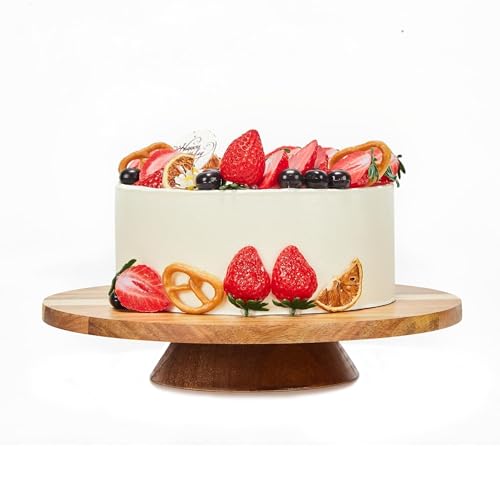
Open pedestals keep the cake fully accessible and emphasize height. Ceramic and stoneware examples such as KOBIKOBI, Kukikan, and Martha Stewart use elevated bases and decorative platter designs. GOVOKOI is also open, but its 360-degree bearing makes it a turntable-style option rather than a fixed pedestal.
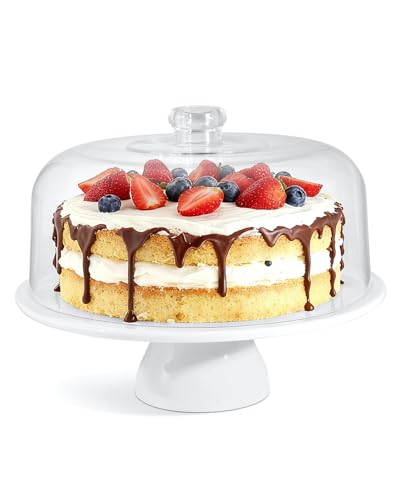
Covered stands add a dome to the display. Libbey uses acacia wood with a glass dome, while HOMESPHERE and JOCHER use acrylic domes. VIVIRBIEN and Yangbaga also pair wood with glass. A cover can shield a dessert from dust during display and makes the stand more suitable for transporting or holding a cake before serving, but it adds parts that need separate handling and cleaning.
Glass and acrylic are not interchangeable in the listings. Libbey, VIVIRBIEN, and Yangbaga document glass domes. HOMESPHERE and JOCHER specifically describe acrylic; HOMESPHERE emphasizes a shatterproof, lightweight design, and JOCHER describes a BPA-free dome that snaps onto a lip. Choose based on the type of cover documented, rather than assuming every clear dome has the same feel or care requirements.
Consider stability and movement
A broad or weighted base is helpful when the stand will be carried to a table or used for a tall cake. KOBIKOBI and Kukikan both describe weighted or wide pedestal bases, and the KOBIKOBI adds a raised edge. GOVOKOI lists rubber feet and a non-slip surface. Yangbaga describes a tray groove that helps seat its dome, while JOCHER uses a base lip for the acrylic cover.
Rotation is a separate feature from stability. GOVOKOI uses a steel bearing for 360-degree rotation, and Yangbaga describes a rotating base with metal bearings under its covered tray. These designs may be useful for decorating, cutting, or presenting a dessert from different angles. They also introduce moving components that a fixed ceramic or stoneware pedestal does not have.
Wood stands have their own movement and care considerations. VIVIRBIEN uses a magnetic pedestal connection, and the listing presents it as a portable, no-screw design. Covered wood models can also be converted or detached for other serving jobs. Check how the tray connects to its base and whether the product instructions call for carrying the stand assembled or separated; the supplied listings vary in the amount of detail they provide.
Choose material and care expectations
Ceramic, porcelain, stoneware, wood, glass, acrylic, and metal all appear in this selection. The Kukikan specifies food-safe, lead-free porcelain and recommends hand washing. KOBIKOBI describes food-safe ceramic that resists scratches and does not absorb moisture or odors. Martha Stewart uses stoneware and provides a glossy white finish, but the supplied listing does not state a dishwasher instruction.
Wood designs generally need gentler care. Libbey calls for hand washing and wiping the wood board with a damp cloth. JOCHER recommends wiping its sealed acacia base with mild soap, towel drying, and avoiding prolonged wet contact. GOVOKOI describes damp-cloth cleaning. These instructions are practical trade-offs for the natural-grain appearance of acacia wood.
Metal sets can be easier to use for larger event layouts. Hedume describes reusable metal construction and easy washing, while its food-safe water-based paint addresses direct dessert display. The listing does not provide the same cake-height or base-weight detail as the ceramic pedestals, so compare the stand dimensions with your planned dessert before ordering.
Select features that fit your serving routine
For a decorative centerpiece, prioritize height, finish, and platter clearance. Martha Stewart has the tallest documented pedestal here at 5.1 inches, while the 3.4- to 3.5-inch ceramic pedestals create a more moderate lift. For routine entertaining, a covered wood stand may offer more functions: Libbey can serve cheese plates, HOMESPHERE can become a charcuterie board, and JOCHER can handle snacks, fruit, pizza, or dips.
For cake decorating, an open rotating model is the most targeted design. GOVOKOI is listed as a turntable with a non-slip surface and rubber feet. If protection and rotation matter together, Yangbaga combines a rotating base with a glass dome. If you need several coordinated display levels, the Hedume set provides three diameters, although it is not a tiered stand joined into one structure.
Final recommendation
KOBIKOBI 13-Inch Ceramic Cake Stand ranks first overall in this specification-based comparison under the published weighted criteria.
KOBIKOBI 13-Inch Ceramic Cake Stand is the highest-scoring returned product and the first overall specification-based choice among the best round cake stands. Its 13-inch platter, documented 8- to 10-inch cake fit, raised edge, weighted base, food-safe ceramic, and 3.4-inch height give it the broadest balance of size and everyday display features in this comparison.
Choose Kukikan if you prefer a traditional porcelain pedestal with explicit sizing for cakes with or without a board. Select Libbey, HOMESPHERE, VIVIRBIEN, Yangbaga, or JOCHER when a dome is central to your use. GOVOKOI is the focused open turntable, and Hedume is the practical multi-size set. For a taller decorative profile and a 9-inch cake fit, Martha Stewart remains a distinctive alternative. Together, these are the top round cake stands for different combinations of cake clearance, covering, rotation, material, and event display.
Frequently Asked Questions
Among the best round cake stands, what size cake stand should I buy for a 10-inch cake?
Look for a platter wider than the finished cake and account for frosting, decorations, and any cake board. The KOBIKOBI is listed for standard 8- to 10-inch cakes on a 13-inch platter, while GOVOKOI is specified for cakes within 10 inches on a 12-inch surface. The best round cake stands for a 10-inch cake depend on whether you need extra border space or a close-fitting presentation.
Are covered cake stands better for storing desserts?
A covered stand can shield a displayed cake from dust and provide a contained presentation, but the supplied listings do not establish long-term storage performance. Libbey, VIVIRBIEN, and Yangbaga use glass domes; HOMESPHERE and JOCHER use acrylic. Review the dome material and care instructions before choosing one for your routine.
Which selected stand rotates?
GOVOKOI is an open rotating cake stand with a 360-degree steel bearing. Yangbaga also describes a rotating wooden tray with a glass dome. Rotation may help with decorating, cutting, or viewing, while fixed ceramic and stoneware pedestals provide a simpler stationary setup.
Is wood or ceramic easier to care for?
The answer depends on the care routine you prefer. The ceramic and porcelain listings describe smooth or glossy surfaces, while the wood listings generally call for wiping with a damp cloth or hand washing and prompt drying. Wood offers natural grain and multipurpose serving options, but ceramic and porcelain provide a different cleaning and presentation profile.
Should I buy one stand or a set?
Buy one stand when you need a dedicated cake centerpiece and know the cake size. Choose a set when you expect multiple dessert sizes or want a coordinated event display. Hedume includes 8-, 10-, and 12-inch stands, but a three-piece set needs more storage than a single pedestal.