Buying Guide
Choosing among the best facial cleansing gels for sensitive skin is less about chasing one universal texture and more about matching documented formula details to your skin’s needs. In this comparison, every selected product is a facial cleanser presented as a gel, gel-to-foam, foaming gel, or closely related jelly format. The rankings are specification-based: they use the supplied titles, features, and technical fields rather than hands-on testing or customer opinions.
Start with the cleansing texture
A clear or low-lather gel usually feels different from a cleanser that turns into foam. Eucerin describes a low-lather gel, making it a logical option for shoppers who want a less foamy wash. Good Molecules lists a light lather, while COSRX emphasizes a gel format and low-pH design. These products may suit routines where a light cleansing feel is preferred.
Gel-to-foam products offer a different experience. PHYSIOGEL describes a gel that transforms into light foam, RoC uses a gel-to-foam format, and Illiyoon describes a richer foamy lather. This design can be useful when you want to begin with a gel and finish with a more traditional foaming cleanse. However, texture preference is personal, so the listing language should guide expectations rather than promise a particular skin feel.
Aveeno is the main milky cleanser in this group. Its formula is described as gentle, fragrance-free, and hydrating, with prebiotic oat and feverfew. That makes it a sensible format choice for people who prefer a nourishing cleanser rather than a visibly foaming wash.
Check sensitive-skin signals
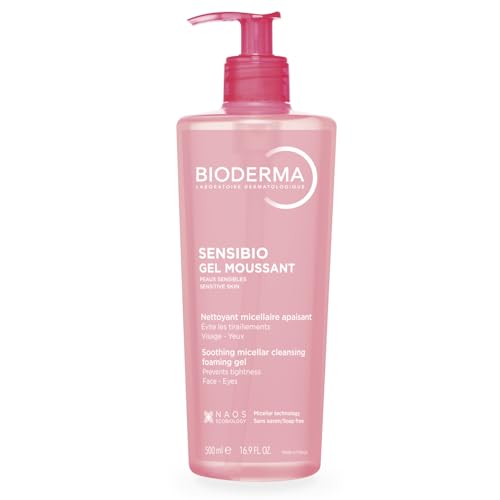
Look first for specific evidence instead of relying only on a product’s word “gentle.” Aveeno is listed as hypoallergenic and non-comedogenic. PHYSIOGEL is described as hypoallergenic and sensitive-skin tested. La Roche-Posay lists dermatologist and allergy testing on sensitive skin, while RoC identifies its cleanser as hypoallergenic and suitable for sensitive skin. Bioderma’s Sensibio product is directly positioned for sensitive skin and is described as non-stripping.
These labels describe the supplied product specifications; they do not guarantee that every individual will tolerate every formula. If your skin is reactive, introduce one new cleanser at a time and follow the product directions. Stop using a product if irritation occurs, particularly when a formula contains more specialized ingredients.
Consider fragrance and ingredient exclusions
Fragrance-free documentation can be an important filter for a sensitive-skin routine. Aveeno, Eucerin, La Roche-Posay, PHYSIOGEL, RoC, Honest Beauty, and Illiyoon each provide relevant fragrance-free or synthetic-fragrance-free information in the supplied evidence. Honest Beauty is especially transparent about exclusions, listing parabens, phthalates, SLS, SLES, PEGs, dyes, and synthetic fragrances among its “made without” details.
Eucerin also specifies that its gel is free of oil, alcohol, soap, and parabens. La Roche-Posay adds sulfate-free, soap-free, oil-free, fragrance-free, and non-comedogenic specifications. These details help you compare formulas without assuming that all sensitive-skin cleansers are identical.
COSRX has a more specialized ingredient profile, with tea-tree oil and BHA in a low-pH gel. That may appeal to someone looking beyond basic cleansing, but it is not the same design as a minimalist fragrance-free formula. Read the ingredient list on the current packaging if you need to avoid a particular ingredient.
Match cleansing power to your routine
For light daily buildup, most of the selected gels provide a straightforward cleansing role. Good Molecules describes removal of impurities, while Honest Beauty describes washing away dirt and impurities. Aveeno is positioned as a daily cleanser, and Eucerin specifies removal of dirt, oil, and makeup.
If makeup or sunscreen removal is a key requirement, look for direct documentation. Bioderma describes makeup removal, La Roche-Posay lists makeup and impurity cleansing, and Illiyoon describes makeup and sunscreen removal.
A cleanser’s listing claim still does not establish that it will remove every product in one pass. Heavy or water-resistant makeup may require a separate removal step, but that possibility should be treated as a routine consideration rather than an assumed performance result.
Look for hydration and barrier support
Sensitive skin often benefits from a cleanser that does not center its description on aggressive degreasing. Aveeno identifies oat and feverfew and says the cleanser helps preserve the moisture barrier. PHYSIOGEL names ceramide NP, glycerin, and BioMimetic Technology. Eucerin combines hyaluronic acid with an APG Cleansing Complex and describes a non-drying formula.
RoC’s product positioning centers on barrier renewal and hydration, while La Roche-Posay lists ceramide-3, niacinamide, and prebiotic thermal water. Illiyoon documents hyaluronic acid and phytosterols in a low-pH gel-to-foam cleanser. These are useful specification differences when deciding whether your priority is moisture support, a foaming finish, or broader cleansing coverage.
Ingredient presence does not prove a clinical outcome for every user. The practical takeaway is to compare the ingredients and formula descriptions with your existing routine, especially if you already use leave-on exfoliants or other potentially irritating products.
Aveeno directs users to massage one to two pumps onto damp skin and rinse. Eucerin similarly describes morning-and-evening use with gentle massage over wet skin. Bioderma and COSRX also provide daily-use directions, while Good Molecules recommends massaging onto damp skin before rinsing.
A pump or bottle size may matter for how easily a cleanser fits beside a sink or travels, but the supplied evidence does not establish dispensing quality or portability. Focus on the documented size, use instructions, and whether the format matches your routine. A cleanser that is technically suitable but awkward for your preferred washing method may be less convenient in practice.
How the ranking works
The public editorial criteria are sensitive-skin suitability, cleansing function, barrier and hydration support, formula transparency, and routine versatility. Each product receives a score from 0.0 to 10.0 for every criterion, with the published weights totaling 100. No customer sentiment, popularity information, or marketplace signal appears in those criteria. The resulting list is a structured comparison of the supplied evidence, not a laboratory test or personal-use review.
Final Recommendation
Aveeno Calm + Restore Nourishing Oat Cleanser ranks first overall in this specification-based comparison under the published weighted criteria.
Aveeno Calm + Restore Nourishing Oat Cleanser is the first overall specification-based choice among these best facial cleansing gels for sensitive skin. Its combination of fragrance-free, hypoallergenic, non-comedogenic specifications, prebiotic oat, feverfew, and moisture-barrier positioning gives it the broadest documented fit for a gentle daily routine.
Choose PHYSIOGEL if ceramide NP, glycerin, and sensitive-skin testing are more important to you than a milky texture. La Roche-Posay is a strong specification match for normal-to-oily sensitive skin and makeup or oil cleansing. Eucerin is the clearest low-lather hydrating gel option, while RoC and Illiyoon suit shoppers who prefer gel-to-foam cleansing.
Honest Beauty is notable for its explicit ingredient exclusions and plant extracts. Bioderma is a practical foaming makeup-removal choice. COSRX is the more specialized low-pH option because it includes tea-tree oil and BHA. Together, these top facial cleansing gels for sensitive skin cover several documented textures and formula priorities without treating one design as right for everyone.
Frequently Asked Questions
What should I look for in the best facial cleansing gels for sensitive skin?
Look for clear sensitive-skin suitability statements, gentle cleansing language, and formula details that match your preferences. Fragrance-free documentation, non-comedogenic specifications, hypoallergenic positioning, and named hydration-supporting ingredients can make comparison easier. Aveeno, PHYSIOGEL, Eucerin, and La Roche-Posay provide especially detailed evidence in these areas. Still, a specification cannot predict individual tolerance, so check the current ingredient list and introduce a new product cautiously.
Is a foaming gel suitable for sensitive skin?
A foaming gel can be suitable when the formula is specifically positioned for sensitive skin and is not described as stripping. Bioderma, RoC, Illiyoon, and La Roche-Posay document foaming or gel-to-foam formats alongside sensitive-skin or barrier-related information. The amount of foam alone does not determine suitability. Consider the full formula, including fragrance information, named ingredients, cleansing claims, and your own response to foaming products.
Which selected cleanser is best for dry sensitive skin?
PHYSIOGEL and Aveeno have the clearest hydration-focused evidence in this selection. PHYSIOGEL lists ceramide NP, glycerin, BioMimetic Technology, and a gel-to-foam design. Aveeno lists prebiotic oat, feverfew, and moisture-barrier preservation in a milky cleanser. Eucerin is another useful option because its gel includes hyaluronic acid and is described as non-drying. These are evidence-based matches, not guarantees of a particular result.
Can these facial gels remove makeup and sunscreen?
Several selected products document makeup or sunscreen cleansing. Eucerin lists dirt, oil, and makeup removal; Bioderma lists makeup removal; La Roche-Posay lists makeup and impurities; and Illiyoon lists makeup and sunscreen. The evidence does not establish removal of every waterproof or long-wear product in one wash. If your routine includes resilient makeup or sunscreen, follow the cleanser’s directions and consider whether your routine requires a separate removal step.
Should a sensitive-skin cleanser have a low pH?
Low-pH positioning can be one useful specification, but it is not the only selection factor. COSRX and Illiyoon explicitly describe low-pH designs, while PHYSIOGEL describes its cleanser as pH-balanced and RoC discusses barrier balance. Compare pH information with fragrance details, cleansing texture, hydration support, and any active ingredients.