Buying Guide
Choosing the best sensor countertop microwave ovens is primarily a specification-matching exercise. Sensor cooking can adjust cooking time, power, or both according to the food or detected moisture, but the listings differ in how many sensor programs they provide and whether they include sensor reheat. Capacity, heating architecture, controls, and exterior dimensions matter just as much when deciding which model fits a particular kitchen.
Start with the sensor system
The listings use several names for automatic cooking. Toshiba describes Smart Sensor menus and, on the ML-EM62P(SS), a humidity sensor that adjusts cooking power and time. Panasonic uses Genius Sensor or Genius Sensor 2.0, while Samsung and LG identify Sensor Cooking or sensor cook options. These are semantically related functions, but the documented program counts are not identical.
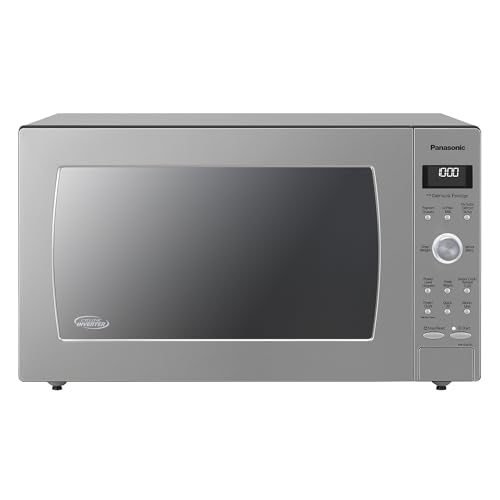
The Panasonic NN-SD975S lists 20 preset menu items, and the Panasonic NN-SN75LW family documents 20 preset smart cooking options, although the white model is not included in this comparison. The selected Panasonic NN-SN76LS lists 15 options, while several 1.2-cubic-foot Panasonic models list 14. Toshiba’s large ML-EM62P(SS) lists 23 menus, and the LG MSER2090S lists seven sensor cook options. More listed programs can make automatic cooking more flexible, but the menu categories still need to match the foods you regularly prepare.
Compare inverter and conventional heating
Inverter technology is explicitly documented for the Toshiba ML-EM45PIT(SS), Panasonic NN-SN686S, Panasonic NN-SN67QS, Panasonic NN-SN76LS, Panasonic NN-SD975S, LG MSER2090S, and Panasonic NN-SF57RM. Panasonic’s selected models further identify Cyclonic Wave or Cyclonic Inverter technology on the NN-SN76LS and NN-SD975S. These descriptions emphasize continuous or circulated power delivery for heating and defrosting.
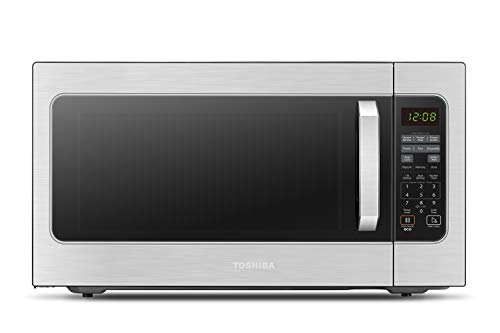
The Samsung MS19DG8500SRAA, Toshiba ML-EM45P(BS), and Toshiba ML-EM62P(SS) document sensor cooking but do not specify inverter heating in the supplied evidence. That does not establish poor operation; it simply means the specification comparison cannot award them the same documented heating-system advantage. If inverter technology is central to your decision, focus on models that name it directly.
Match capacity to cookware
Capacity ranges from 1.0 cubic foot on the Panasonic NN-SF57RM to 2.2 cubic feet on the Panasonic NN-SD975S and Toshiba ML-EM62P(SS). The 1.2-cubic-foot Panasonic models are middle-ground options, while the 1.6-cubic-foot Toshiba and Panasonic models offer more room without reaching the largest listed cavities. LG’s 2.0-cubic-foot model and Samsung’s 1.9-cubic-foot model also target larger dishes.
Turntable diameter provides another useful clue. The Toshiba ML-EM45PIT(SS) and ML-EM45P(BS) list 13.6-inch turntables, the Panasonic NN-SN686S and NN-SN67QS list 13.4-inch turntables, and the Toshiba ML-EM62P(SS) lists a 16.5-inch glass turntable. The Panasonic NN-SF57RM is different: it has a flatbed interior with a hidden turntable. Check both external width and the usable cooking surface rather than relying on capacity alone.
Examine controls and defrost functions
A sensor microwave is more useful when it also offers manual control. The selected models provide several combinations of power levels, auto defrost, multi-stage cooking, quick-start functions, memory, timers, or dedicated food buttons. The Toshiba ML-EM45P(BS) lists ten power levels, memory, multi-stage cooking, and defrost by weight or time. The Panasonic NN-SN76LS adds three-stage cooking, Quick 30, keep warm, and Turbo Defrost. The NN-SN686S includes ten power levels, delay start, quick-minute timing, and keep warm.
Preset breadth varies, so look for the controls that correspond to your routine. A dedicated popcorn or potato button may matter more than a long menu list if you frequently reheat the same foods. Keep-warm functions appear on several Panasonic models and on the NN-SD975S, while sound control is documented on both selected Toshiba models. Child locks are also listed across multiple products, but the supplied descriptions differ in how the feature is enabled or presented.
Plan the countertop space
Exterior measurements are essential because larger interiors often come with wider or deeper bodies. The Panasonic NN-SD975S lists a 23.88-inch width, while Samsung lists 23.63 inches. The Panasonic NN-SN76LS is 21.875 inches wide, and the 1.2-cubic-foot Panasonic models are about 20.7 to 20.75 inches wide.
Ventilation and clearance requirements are not supplied here, so consult the product documentation before final placement. Also note that some listings describe built-in capability or optional trim kits. The Samsung MS19DG8500SRAA and Panasonic NN-SD975S mention alternate installation options, but this comparison is limited to their countertop use.
Flatbed versus turntable layouts
The Panasonic NN-SF57RM is the only selected flatbed model. Its listing describes a hidden turntable, a clear cooking surface, and easier cleaning access. The other selected products document visible turntables, including removable, position-memory, and large glass versions. A flatbed may be attractive when wiping the floor or arranging irregular containers is important, while a conventional turntable provides a familiar rotating platform. The supplied evidence does not establish that one layout heats better than the other, so choose based on cavity access, cookware shape, and cleaning preference.
Final Recommendation
Panasonic NN-SN76LS 1.6 Cu. Ft. ranks first overall in this specification-based comparison under the published weighted criteria.
The Toshiba ML-EM45PIT(SS) is the first overall specification-based choice among the best sensor countertop microwave ovens because it combines six sensor menus, inverter heating, a 1.6-cubic-foot cavity, a removable 13.6-inch turntable, and useful sound and Eco controls. It is not the largest model, but its documented feature balance is broad.
For more menu coverage, the Panasonic NN-SN76LS and Panasonic NN-SD975S add extensive preset cooking with inverter systems, with the latter offering a 2.2-cubic-foot interior. The Toshiba ML-EM62P(SS) also serves oversized cookware with its 16.5-inch turntable and 23 menus, though inverter heating is not specified. Samsung and LG are sensible capacity-focused alternatives, while the Panasonic NN-SF57RM is the distinctive choice for a flatbed layout.
Among the top sensor countertop microwave ovens, the final decision should follow the cavity size and control features you can verify against your available space. Models with named inverter technology offer more documented heating-system detail, while the Samsung and Toshiba non-inverter entries remain notable for their sensor functions and large interiors. Always confirm the current manufacturer documentation for dimensions, clearance, and installation before placing any countertop oven.
Frequently Asked Questions
What are the best sensor countertop microwave ovens for large dishes?
The Panasonic NN-SD975S and Toshiba ML-EM62P(SS) both list 2.2 cubic feet of capacity. The Toshiba also specifies a 16.5-inch glass turntable and the ability to fit a 16-inch pizza. The Panasonic lists 20 preset menu items and Cyclonic Inverter technology. LG’s MSER2090S, at 2.0 cubic feet, and Samsung’s MS19DG8500SRAA, at 1.9 cubic feet, are slightly smaller large-capacity alternatives.
Do all sensor countertop microwaves use inverter technology?
No. Inverter technology is explicitly listed for several selected Panasonic models, the Toshiba ML-EM45PIT(SS), LG MSER2090S, and Panasonic NN-SF57RM. The Samsung MS19DG8500SRAA, Toshiba ML-EM45P(BS), and Toshiba ML-EM62P(SS) document sensor cooking but do not identify inverter heating in the supplied listing evidence. This comparison does not infer an unspecified heating system.
Is a flatbed microwave better for cleaning?
The Panasonic NN-SF57RM is the selected flatbed example, and its listing specifically describes a clear cooking surface, hidden turntable, and easier-clean interior. The other selected models document conventional turntables, including removable and position-memory designs. The evidence supports a cleaning-access distinction, but it does not support a general performance claim that flatbed designs are better in every use.
How much capacity is suitable for a smaller kitchen?
The 1.0-cubic-foot Panasonic NN-SF57RM and 1.2-cubic-foot Panasonic models have the smallest selected capacities. The NN-SN686S lists external dimensions of about 20.69 inches wide, 15.81 inches deep, and 12.25 inches high; the NN-SN67QS is about 20.75 inches wide and 11.87 inches high. Verify available clearance and the cookware you plan to use before selecting a compact model.
What should I check before installing a countertop microwave?
Check the model’s exterior width, depth, and height, then compare them with the available counter area and the manufacturer’s clearance instructions. The supplied listings do not provide universal ventilation requirements. Also distinguish countertop use from optional built-in or under-cabinet installations: the Panasonic NN-SD975S and Samsung MS19DG8500SRAA mention trim-kit possibilities, but those accessories are separate from the countertop appliance.