Buying Guide
The best cloth napkins are easier to compare when you separate fabric, dimensions, finishing, care, and visual style. The listings in this guide cover natural cotton, cotton blends, cotton-linen blends, recycled polyester, and polyester. They are all reusable square or near-square dinner napkins rather than accessories or replacement parts. Because this is a specification-based comparison, the guidance below reflects supplied listing information, not hands-on testing.
Start with the fabric
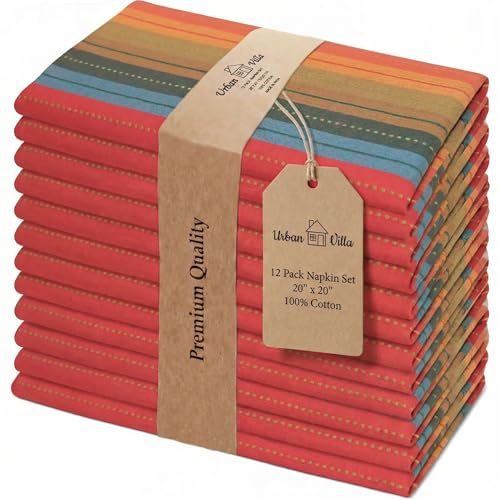
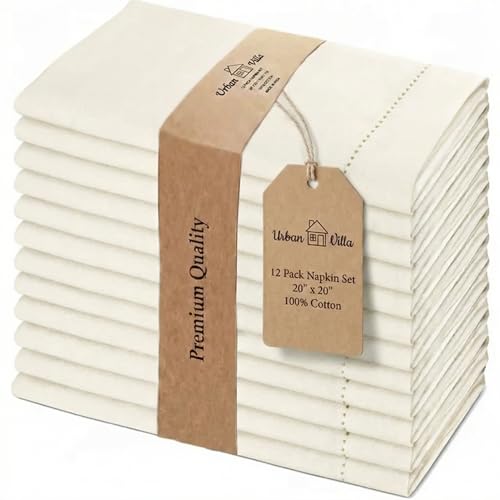
Cotton is the most frequently documented natural fiber in this group. PurpleEssences, Hausattire, Maison d’Hermine, COTTON CRAFT, Urban Villa, and Ridhi identify their napkins as 100% cotton. Cotton is a sensible starting point when a buyer wants a familiar textile for dining and a natural-fiber specification. The listings also describe several cotton options as soft or absorbent, but those descriptions come from the supplied product information rather than independent testing.
Cotton care can include trade-offs. PurpleEssences notes that the fabric may wrinkle slightly after washing, while COTTON CRAFT mentions possible minimal shrinkage. Urban Villa describes its napkins as prewashed and focused on minimal shrinkage. These details do not make one fabric universally better; they show why care instructions and finishing matter alongside fiber content.
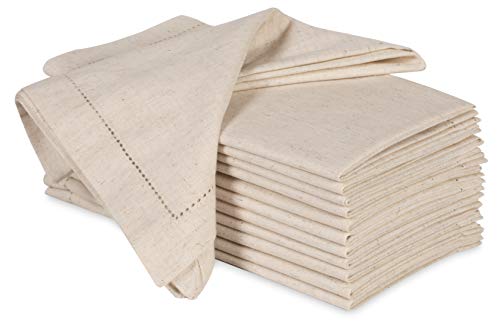
Blended fabrics offer a different specification profile. Utopia Kitchen uses a cotton-polyester blend and describes it as soft, absorbent, and quick drying. FINGERCRAFT lists a cotton-linen blend and describes the material as soft, absorbent, durable, and wrinkle free. The supplied listing does not provide exact fiber percentages for Utopia Kitchen, so shoppers who need that detail should check the current label or listing before ordering.
Polyester options emphasize a different set of characteristics. Utopia Home identifies 100% polyester and describes the napkins as wrinkle resistant. Amazon Basics identifies 100% recycled polyester and documents stain and water resistance. Polyester may be a better fit for shoppers prioritizing those stated maintenance features over a cotton specification.
Match the size to the table
Most selected options measure 17 or 18 inches square, which is a conventional dinner-napkin format in this comparison. PurpleEssences, Hausattire, Utopia Kitchen, Amazon Basics, and Ridhi are all listed at 18 inches square or close to it. Utopia Home and COTTON CRAFT use 17-by-17-inch dimensions.
The 20-inch options create a larger visual presence. Maison d’Hermine, FINGERCRAFT, and Urban Villa list 20-by-20-inch napkins. That extra surface can support more elaborate folds or a more prominent place setting, although the supplied data does not measure folded thickness, drape, or table coverage in use. Choose the larger format when the design brief calls for an oversized napkin rather than assuming it will perform better in every setting.
Look for finishing details
Construction information varies considerably across public listings. PurpleEssences and Hausattire specify mitered corners and generous hems. FINGERCRAFT lists secure stitched corners. Amazon Basics identifies a hemmed edge, and these details give more useful information than a general durability claim because they describe how the perimeter is finished.
Printed designs also have their own considerations. Hand-printed textiles may have naturally occurring dye or pattern variations, as stated in the supplied evidence for block-print options. That variation is part of the documented design description, not a guarantee of uniformity.
Check the care instructions
Care is one of the clearest ways to narrow the best cloth napkins for your routine. Utopia Kitchen, PurpleEssences, Hausattire, Amazon Basics, Maison d’Hermine, and Urban Villa all provide machine-wash guidance in their listings, though the details differ. Amazon Basics specifies machine wash and tumble dry, while Hausattire specifies cold-water washing and low-heat tumble drying. Maison d’Hermine advises washing with like colors, low tumble drying, and warm ironing if needed.
Cotton and printed handmade options may need more attention. Ridhi identifies its napkins as washable and reusable but supplies fewer detailed settings in the evidence provided. If you want the simplest documented drying routine, compare the exact instructions rather than relying on the word washable alone.
Choose the design for the occasion
Solid colors are the most adaptable starting point. PurpleEssences uses navy blue, Utopia Home uses black, Amazon Basics uses beige, and COTTON CRAFT supplies assorted solid colors. These choices can coordinate with patterned dinnerware or let the rest of the table provide the visual focus.
Stripes and florals are better when the napkin is part of the table decor. Hausattire uses a teal stripe, Urban Villa uses red stripes, and Ridhi uses an asparagus-green floral block print. Maison d’Hermine and FINGERCRAFT also document prominent patterns. For a handcrafted look, select a block-print design; for a more consistent decorative motif, a standard printed pattern may be the more predictable fit based on the listing descriptions.
Pack counts range from four to 24 in the selected group. Maison d’Hermine and Ridhi are four-piece sets, while COTTON CRAFT and Utopia Home are 24-piece sets. A four-piece set can suit a small household or a focused accent arrangement, while a larger set is more appropriate when many place settings need the same general look. Pack size should be considered with the napkin dimensions and intended occasion, not separately from them.
Final Recommendation
Hausattire Cotton Teal Salsa Stripe Napkins ranks first overall in this specification-based comparison under the published weighted criteria.
PurpleEssences is the first overall specification-based choice among these best cloth napkins because it combines 100% cotton, an 18-by-18-inch size, mitered corners, generous hems, and clearly stated machine-wash care. Hausattire is a close alternative for a striped cotton table, while Maison d’Hermine is the more decorative oversized option. For a large coordinated setting, COTTON CRAFT and Utopia Home provide 24-piece formats. Amazon Basics is the clearest choice when the documented stain- and water-resistant polyester design matters most. Together, these are top cloth napkins for different material, care, size, and style priorities rather than one universal table-setting solution.
Frequently Asked Questions
How should I choose the best cloth napkins for everyday meals?
Start with the fiber and care routine you can follow consistently. Cotton options such as PurpleEssences, Hausattire, and COTTON CRAFT document reusable construction and machine-wash guidance. Check whether the listing notes possible wrinkles or shrinkage, then choose a 17-by-17 or 18-by-18-inch format for a conventional dinner setting.
A 20-by-20-inch napkin provides a larger format for decorative folding and a more prominent place setting, but the supplied evidence does not establish that it performs better in every use. Maison d’Hermine, FINGERCRAFT, and Urban Villa document 20-inch square designs that fit formal or event-oriented table settings.
Which material is easiest to maintain?
The answer depends on the specific care instructions. Amazon Basics documents machine washing and tumble drying for its recycled-polyester napkins. Utopia Kitchen describes a cotton blend as quick drying, while several cotton products provide machine-wash directions with different drying or ironing guidance. Always follow the exact instructions for the selected item.
Not necessarily. The supplied evidence for Ridhi and other block-print designs states that hand-printed textiles can show naturally occurring dye and pattern variations. Select this design type when those documented variations suit the intended handcrafted appearance.
What size should I use for a full dinner place setting?
The selected products show that 17-by-17 and 18-by-18-inch napkins are common dinner formats, while 20-by-20-inch napkins offer a larger decorative surface. Match the size to your tableware, folding preference, and available place-setting space.