Buying Guide
The best food sifters and strainers differ mainly in mesh fineness, bowl diameter, handle design, and whether the set is intended for wet foods, dry ingredients, or both. The products above are ranked from public listing specifications only. No hands-on testing, customer sentiment, volatile marketplace information, or assumed performance has been used.
Choose the right design
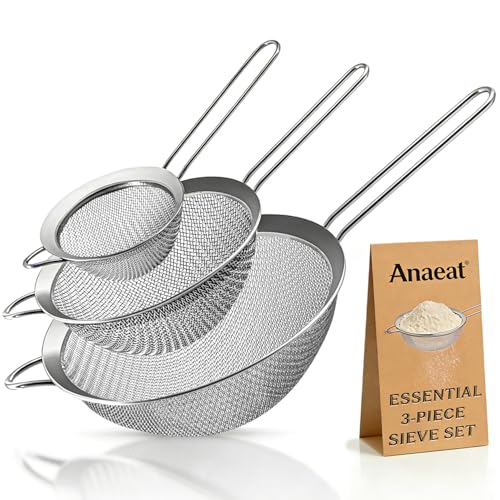
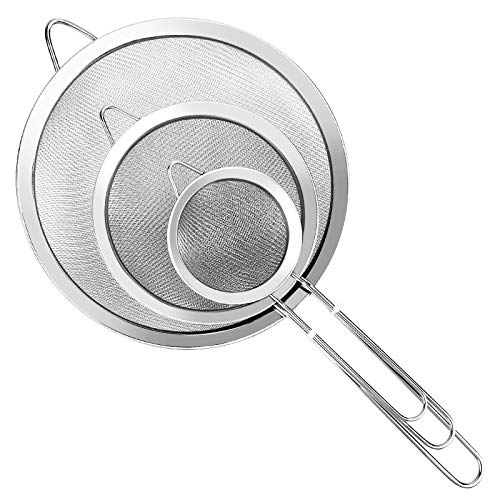
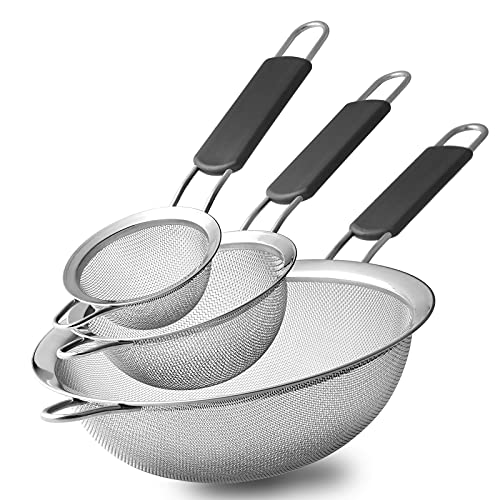
A multi-size handheld set is the most flexible format for a general kitchen. The ELASO set includes five compact diameters, while the Walfos four-piece set spans from a small 2.7-inch option to a 9.35-inch option. Three-piece sets such as YLYL, ELEEN, Anaeat, NileHome, and Fancymay provide a simpler balance of coverage and storage. These designs can address tea, powdered sugar, flour, rice, quinoa, fruit, vegetables, pasta, juice, sauces, and similar tasks when those uses are specifically listed.
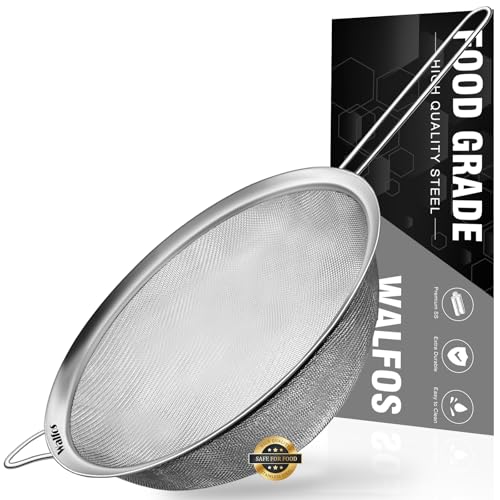
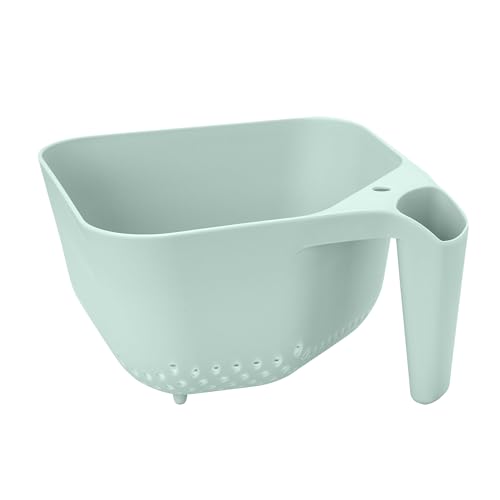
A large single strainer can be more convenient when your routine centers on rinsing grains or draining pasta. The 8.6-inch Walfos model documents a resting ear and sealed rim, which are useful structural details for working over a pot or bowl. Its single-size format is less adaptable than a set but avoids keeping several similar tools.
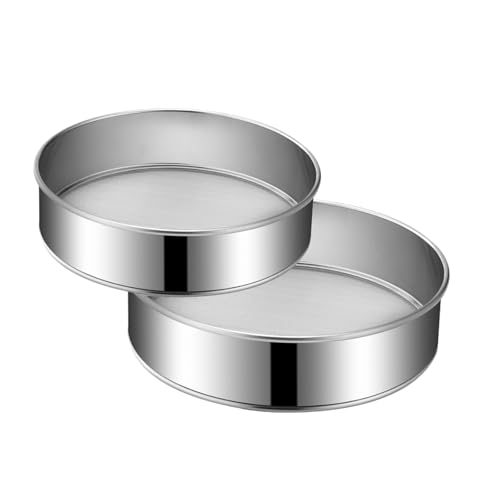
Round flour sifters are more specialized. Hamillar lists separate 40-mesh and 60-mesh screens in 8- and 10-inch diameters, making it a baking-oriented choice. VEVOR provides a 12.6-inch sieve and five mesh options. These products are better matched to dry-ingredient selection than to everyday tea or pasta work because the supplied evidence focuses on flour, sugar, spices, grains, and similar ingredients.
Mesh wording is important, but listings do not use one consistent system. Walfos identifies a 30-mesh design, Hamillar specifies 40 and 60 mesh, and VEVOR lists 10, 12, 40, 80, and 150 mesh options. Other products use terms such as fine, extra-fine, or ultra-fine mesh without a numerical count. A numerical specification gives more detail for shoppers comparing dry-ingredient screens, while a nonnumeric fine-mesh description still identifies the intended filtration style.
Extra-fine mesh is commonly documented for flour, powdered sugar, cocoa, matcha, tea leaves, juice seeds, and fine particles. However, a finer screen may be less convenient when you need to move bulky ingredients quickly. For pasta, vegetables, or larger quantities, check the listed diameter and bowl design rather than choosing solely on the word “fine.”
Check material and frame construction
Stainless steel is the dominant material in this comparison. Several listings specifically identify food-grade or 304 stainless steel, including YLYL, Hamillar, VEVOR, and the two Walfos options. Other products describe stainless-steel construction without identifying the grade. This distinction is useful when comparing documented specifications, but it should not be treated as proof of a particular lifespan beyond what the listing states.
Frame details can affect how a tool fits into a routine. Anaeat lists a sealed steel ring and double-riveted handles. Walfos lists a broad rimmed framework on its four-piece set and sealed steel rims on its large model. Fancymay documents insulated non-slip handles, while several sets list non-slip or sturdy handles without insulation. These details help distinguish products designed for controlled handling from simpler screens.
Match size to the task
Small strainers are useful for loose-leaf tea, coffee, cocktail or juice work, powdered sugar, and small amounts of flour. ELASO offers the smallest documented sizes in the selected group, and its listing specifically names tea and coffee. Medium sizes generally provide a useful middle ground for flour, quinoa, rice, berries, and sauces. Large screens are more suitable for pasta, vegetables, grains, and higher-volume rinsing.
A three-piece set is often enough for mixed cooking and baking. A five-piece set increases size choice but may add drawer clutter. A large single sieve can be the better fit when you regularly work with large quantities of dry ingredients, while a two-screen baking set can make more sense when mesh grade matters more than wet-food versatility.
Review cleaning and storage details
Cleaning claims vary by product. ELEEN, YLYL, Fancymay, NileHome, Hamillar, and the large Walfos model explicitly identify dishwasher-safe cleaning in the supplied evidence. Other listings emphasize rinsing, smooth or polished surfaces, burr-free mesh, or designs intended to reduce trapped food. These details are practical, but they do not establish identical cleaning results across products.
Storage is also worth checking before choosing a set. Hanging ears or loops appear on several selected products, including ELASO, ELEEN, Fancymay, NileHome, and both Walfos options. Hamillar states that its two round sifters stack, which may help with cabinet storage. Large screens require more vertical or horizontal room, so measure the intended drawer, rack, or cabinet area before ordering.
Final recommendation
ELASO Fine Mesh Strainer Set, 5 Sizes ranks first overall in this specification-based comparison under the published weighted criteria.
The final choice among the best food sifters and strainers depends on the documented features that match your intended use.
ELASO Fine Mesh Strainer Set, 5 Sizes is the highest-scoring specification-based choice. It combines five sizes, fine twill mesh, stainless steel, double-riveted handles, dishwasher compatibility, and hanging ears. For shoppers comparing the top food sifters and strainers, it offers extensive documented size coverage without shifting into a specialized flour-only design.
Choose the Walfos four-piece set if you want a larger maximum diameter and a stated 30-mesh screen. Choose Hamillar or VEVOR when baking and multiple dry-ingredient mesh grades are the priority. YLYL, ELEEN, Anaeat, NileHome, and Fancymay are sensible three-piece alternatives with different strengths in material detail, cleaning, handle design, or hot-food handling. The large Walfos single strainer is a focused choice for pasta, grains, and produce.
Frequently Asked Questions
What should I look for in the best food sifters and strainers?
Start with the jobs you perform most often. Look for a suitable diameter, documented mesh description, stainless-steel construction, and a handle or resting feature that fits your cookware. Sets provide flexibility, while large single screens or round flour sifters can be more appropriate for focused tasks.
Are fine-mesh strainers suitable for both wet and dry ingredients?
Many selected products are explicitly listed for both. YLYL, ELEEN, Anaeat, NileHome, and the Walfos models document combinations such as flour, powdered sugar, tea, rice, quinoa, pasta, juice, fruit, or vegetables. Always check the individual listing because a baking sieve may emphasize dry ingredients rather than draining.
Is a numerical mesh count important for baking?
It can make comparisons more specific. Hamillar lists 40- and 60-mesh screens, while VEVOR lists five mesh options. Other products use fine or extra-fine wording without a number. If you need to compare dry-ingredient fineness, numerical mesh information is useful; otherwise, diameter and construction may matter more for general kitchen work.
Should I buy a set or one large strainer?
Buy a set when you prepare varied quantities or switch between tea, baking, rinsing, and sauces. A single large model is more focused and may be easier to retrieve for pasta, grains, or produce. The Walfos 8.6-inch model documents a resting ear and large screen, while the selected multi-piece sets provide more size choices.
How should I compare cleanup and storage features?
Look for explicit dishwasher-safe wording, smooth or burr-free mesh, hanging loops, hanging ears, or stackable designs. ELASO, ELEEN, Fancymay, NileHome, and Walfos document hanging features, while Hamillar describes stackable round sifters. These features can simplify storage, but the best choice still depends on your available space and preferred cleaning routine.