Buying Guide
The best steel lateral file cabinets are defined less by appearance than by how their dimensions, drawer layout, folder supports, locking system, and slide hardware match your workspace. This comparison uses public listing specifications rather than hands-on testing or customer sentiment. Product claims can vary by listing, so treat stated load limits and dimensions as planning information and verify the current details before ordering.
Choose the drawer count and cabinet height
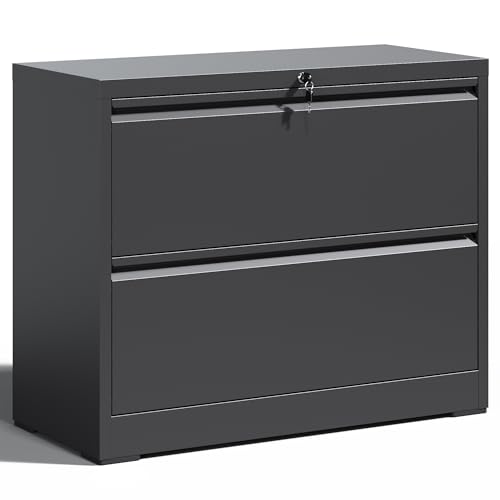
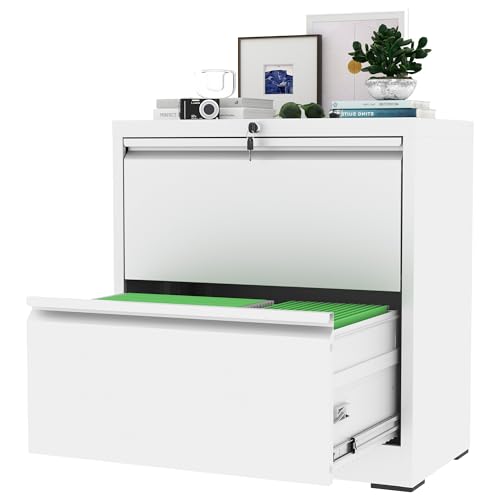
Two-drawer cabinets are generally the easiest format to place beside a desk or beneath a work surface. Letaya is listed at 29 inches high, while OPTYMIRA and FLIXELIO are listed at 28.5 inches. Greenvelly and AQY are narrower alternatives for rooms where width is limited. A low cabinet can also provide a surface for office supplies, although any equipment placed on top should stay within the documented product limits.
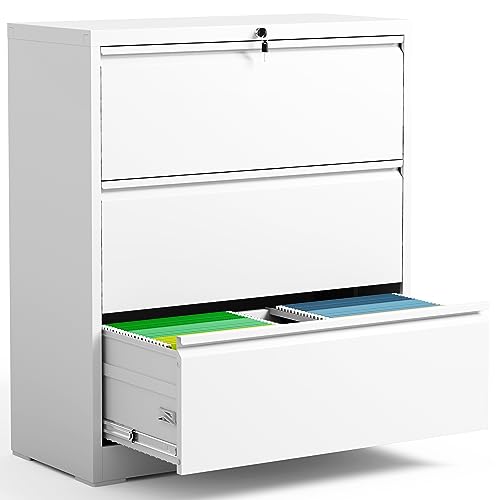
Three-drawer models add filing capacity without the full height of a four-drawer unit. IKIMI and BIZOEIRON are both listed at about 40.4 inches high. Their taller profiles may help separate active files, archived documents, and supplies, but they need more vertical clearance and may not fit below a desk.
Four-drawer cabinets are intended for larger filing collections. Yukimo is listed at 52.36 inches high, while the evidence for other four-drawer candidates also describes tall formats. Before selecting this design, measure the available height and consider how often the upper drawers will be accessed. More drawers can improve organization, but a taller cabinet may be less convenient in a compact home office.
Check width, depth, and placement
Lateral cabinets are wider than conventional vertical file cabinets, so width is a central buying consideration. The selected products range from AQY at about 26.77 inches wide to several models at approximately 35 or 36 inches. Greenvelly is listed at about 28 inches wide, making it a practical option where floor space is constrained. Letaya, Topass, and Yukimo provide broad 35- to 36-inch formats for more lateral filing room.
Depth is also important. The listed cabinets are generally around 15.7 to 16 inches deep, although exact dimensions differ. Measure the clearance behind the cabinet, including baseboards, and leave enough room to open drawers fully. A cabinet that fits its footprint but cannot open completely will not provide the access promised by full-extension slides.
Match the cabinet to your folders
The most useful evidence in this category is the documented folder-size range. Letaya, SAWJEC, Greenvelly, AQY, Topass, OPTYMIRA, IKIMI, FLIXELIO, and Yukimo identify support for combinations of Letter, Legal, A4, and F4 hanging folders. BIZOEIRON specifically documents Letter and Legal compatibility. Adjustable hanging bars or rails are helpful when a drawer must switch between formats, but the exact rail arrangement can differ by model.
If your office uses standard US Letter folders, confirm that the listing includes Letter support. Legal folders require additional width, while A4 and F4 references may matter in offices using international paperwork. Do not assume that every wide metal cabinet accepts every format simply because it is called lateral; use the listed compatibility and confirm the interior arrangement.
Look for locking and anti-tilt features
A central or interlock system can let one key secure multiple drawers. All selected products document a locking feature, though the wording and number of keys vary. SAWJEC, Letaya, OPTYMIRA, IKIMI, BIZOEIRON, AQY, and Topass specifically describe one-lock operation or central locking. These features are useful for controlling access to documents, but a cabinet lock should not be treated as a substitute for a broader records-security policy.
Anti-tilt mechanisms are another important specification. Several listings state that only one drawer can open at a time, helping reduce the chance of the cabinet becoming unstable when drawers are extended. This is a design feature, not a guarantee of safe use in every situation. Place the cabinet on a suitable, level surface, follow the assembly instructions, and avoid exceeding documented load limits.
Compare steel construction and finish
The selected cabinets describe cold-rolled or reinforced steel construction, with powder-coated surfaces appearing frequently. These descriptions indicate a metal body intended for office storage and a finish designed to resist common surface problems such as rust or scratches. Greenvelly additionally describes protective covers at the base, while FLIXELIO identifies a phosphate-free epoxy finish.
Construction claims should be read alongside the stated dimensions and weight. A lighter cabinet may be easier to position but may not have the same material specification or loading information as a heavier model. Because this is not a hands-on test, the comparison does not infer durability beyond the supplied listing evidence.
Evaluate drawer slides and assembly
Full-extension ball-bearing slides are documented on many selected products, including SAWJEC, Letaya, OPTYMIRA, IKIMI, BIZOEIRON, AQY, Topass, FLIXELIO, and Yukimo. Full extension can make the rear of a drawer more reachable. BIZOEIRON specifically describes soft-close slides, and several other listings describe quiet or smooth operation. These are useful distinctions, but they are based on published features rather than observed performance.
Every selected cabinet requires at least some assembly, and several listings include instructions, tools, labeled parts, or installation videos. Read the assembly information before ordering, especially for taller four-drawer units. Check the package for all components before beginning and make sure drawer rails are properly connected.
Final recommendation
SAWJEC 2-Drawer Lateral File Cabinet ranks first overall in this specification-based comparison under the published weighted criteria.
SAWJEC 2-Drawer Lateral File Cabinet is the first overall specification-based choice among these best steel lateral file cabinets. It has the most balanced evidence for load capacity, folder compatibility, central locking, anti-tilt operation, full-extension slides, and assembly support. Letaya is a strong alternative when a 36-inch-wide cabinet needs to sit beneath a desk. Choose OPTYMIRA for detailed wide-drawer specifications, IKIMI or BIZOEIRON for three-drawer organization, and Yukimo when four drawers are more important than a low profile. Among the top steel lateral file cabinets, Greenvelly and AQY are better suited to narrower placements, while Topass emphasizes a useful equipment-supporting top surface.
Frequently Asked Questions
Among the best steel lateral file cabinets, are steel lateral file cabinets suitable for Letter and Legal folders?
Many are, but compatibility is model-specific. SAWJEC, Letaya, OPTYMIRA, IKIMI, Topass, AQY, Greenvelly, FLIXELIO, and Yukimo document support for Letter and Legal folders. BIZOEIRON also documents both sizes. Check whether the cabinet uses adjustable hanging bars, rails, or clips and verify the exact configuration for your folders.
Is a two-drawer cabinet better than a three- or four-drawer model?
It depends on filing volume and available space. Two-drawer models are shorter and often easier to place beside or beneath a desk. Three- and four-drawer cabinets provide more category separation but are taller. Measure both height and width, then choose the smallest format that accommodates your active and archived records.
Do these cabinets require assembly?
Yes. The selected listings describe assembly requirements, with various products including instructions, tools, labeled parts, or installation videos. Set aside adequate floor space and confirm that the drawer slides and interlock components are installed correctly before loading files.
What does an anti-tilt mechanism do?
The listings commonly describe anti-tilt systems that allow only one drawer to open at a time. This can help reduce instability when a drawer is extended. It does not remove the need to assemble the cabinet correctly, keep it level, and stay within the stated load limits.
Should I choose a locking cabinet for ordinary office files?
A lock can help limit casual access to stored documents, and all selected products list a locking feature. Consider whether you need one key to secure multiple drawers, how many keys are included, and whether the cabinet supports your folder sizes. A cabinet lock is only one part of an overall document-management approach.