Buying Guide
Choosing the best straight hair pins starts with separating the pin’s silhouette from its intended hairstyle. In this comparison, the eligible products include straight wire hairpins, flat-style bobby pins, and a few designs whose listing uses “straight” while also describing a slight curve or wave. The most useful specifications are profile, length, grip structure, tip treatment, finish, and pack format.
Straight, flat, and gently shaped profiles
A genuinely straight hairpin is useful when you want to slide a long pin through a bun, braid, or updo in a controlled direction. The Amish Valley Products 2.5-inch hairpins are the clearest example: the listing identifies them as straight stainless steel hairpins and says they are made to resist bending and twisting. The Amish Valley variety pack uses the same straight-hairpin concept while adding four sizes.
Flat bobby pins are a related option. Kleravitex identifies its pins as flat style, while Diane lists flat styling on several models. These pins are generally more familiar for rollers, flyaways, and securing smaller sections. A gently curved or wave-shaped design is not identical to a straight wire, but it may still be relevant when the listing describes a flat body or a straight pin format. Heliums, for example, documents flat sides with a subtle curve, while Mia Klein describes a wave-shaped body.
Match length to the style
Length affects how much hair a pin can reach and how deeply it can pass through an updo. The 3-inch ForPro pins are among the longest documented choices in the supplied listings. Longer pins are logical candidates for substantial buns, braids, or thick sections, but the listing alone does not establish performance in every hairstyle.
The 2.5- to 2.75-inch range is more flexible for general updos. Amish Valley, Heliums, Diane, and Kleravitex all occupy this range, with different body shapes and tip treatments. Two-inch options such as Dofash and Mia Klein are more compact and may be easier to position in smaller sections or everyday styles. Always compare the stated size carefully: the Diane high-count listing contains conflicting length information between its title and feature text.
Examine grip details
Grip can come from crimping, a wave-shaped body, spring tension, or the friction created by a flat pin. ForPro specifically documents crimping and an enhanced spring. Mia Klein also lists a crimped grip, tight spring, and wave-shaped design. These details are more informative than a generic claim that a pin is secure because they explain the physical construction used to hold hair.
The Amish Valley stainless steel models take a different approach. Their listing emphasizes heavy-duty material, snag-free handling, and shape retention rather than crimping. Kleravitex combines a flat profile with reusable construction and says the pins do not easily bend out of shape. These are specification claims, not independent test results, so they should be treated as design descriptions rather than guarantees.
Consider tip treatment and removal
Rounded or coated ends are useful details when a pin will be inserted close to the scalp. ForPro and Diane 3-inch pins list ball tips. Dofash describes small round ends and a smooth coating, while Kleravitex and Diane D55045974 list rubber or simulated rubber tips. Amish Valley emphasizes smooth insertion and removal and says its design avoids cutting hair or splitting ends during removal.
Tip wording varies across listings, so do not assume that every rounded end uses the same material. A ball tip, coated tip, rubber tip, and simulated rubber tip are separate descriptions. They can all indicate an effort to reduce sharp contact, but the supplied evidence does not establish identical comfort or durability.
Match color and finish to the styling goal
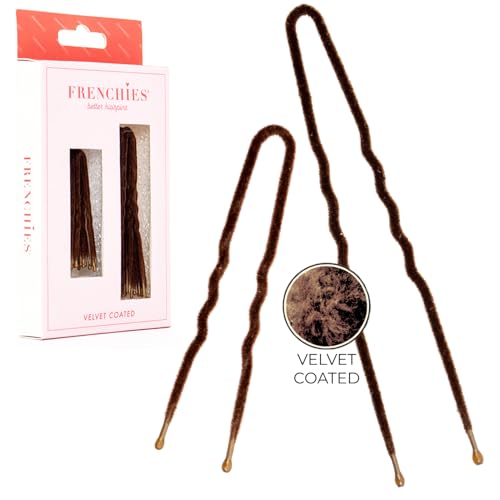
Black is the most common finish among the selected products and may be suited to dark hair or concealed styling. ForPro offers brown pins, Heliums lists dark brown, and Dofash lists brown. Diane D55045974 uses bronze, while Mia Klein uses silver. A matching finish is useful when the pin should blend into the hairstyle; silver or bronze can instead be chosen when the accessory is meant to be visible.
Finish is not only a color decision. ForPro describes brown pins as blending with hair color, Heliums uses an enamel coating, and several listings mention smooth or coated surfaces. The evidence supports comparing those stated finishes, but not assuming that one finish will remain unchanged under every use condition.
Pack size determines whether a product is suited to occasional styling, a personal kit, or repeated professional use. The selected range runs from the 24-pin Heliums format to the approximately 320-pin ForPro pack and the 1,200-count Diane listing. Amish Valley provides 12 pins in one size or 48 across four packs, while Dofash and Mia Klein offer 60-pin formats.
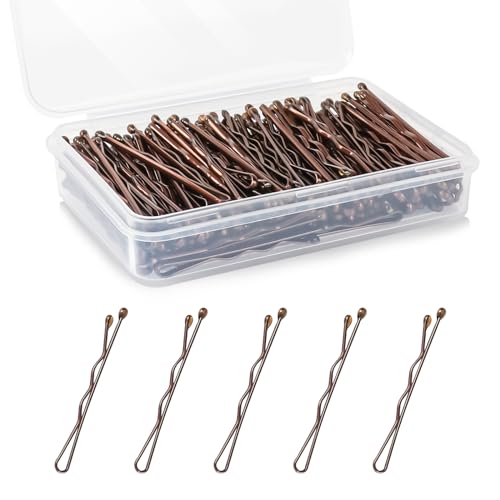
A storage box can be useful for keeping pins together. Kleravitex documents a storage box, and the evidence for other selected products identifies card or pack formats instead. Large counts can be practical, but they may be unnecessary if you only style one or two sections at a time. Compare quantity with the length and construction you actually need rather than selecting by count alone.
Final Recommendation
Amish Valley Straight Hairpin Variety Pack ranks first overall in this specification-based comparison under the published weighted criteria.
The final choice among the best straight hair pins depends on the documented features that match your intended use.
Amish Valley Straight Hairpin Variety Pack is the highest-scoring returned product and the first overall specification-based choice. Its straight stainless steel construction, four-size format, snag-free description, and shape-retention claim give it the broadest documented coverage in this comparison. For a single long pin, the Amish Valley 2.5-inch model is the more focused alternative. ForPro is the better documented bulk option, with 3-inch ball-tipped crimped pins in an approximately 320-pin pack.
The other top straight hair pins serve more specific needs. Kleravitex is a strong flat-style choice for rollers and buns, Mia Klein provides a crimped 2-inch design with ball tips, and Heliums targets fine to medium hair with an easy-open 2.5-inch body. Diane supplies several conventional flat formats, including a bronze finish and a high-count option. Dofash rounds out the list with a brown 2-inch design and smooth-coated tips.
Before choosing, confirm whether you want a truly straight wire, a flat bobby pin, or a gently curved flat body. Then check length, tip treatment, finish, and pack format against the hairstyle and amount of hair you plan to secure. Those specifications provide a more consistent basis for comparison than relying on a single generic category label.
Frequently Asked Questions
What are the best straight hair pins for thick hair?
The Amish Valley 2.5-inch stainless steel hairpins, the Amish Valley variety pack, ForPro 3-inch pins, and Kleravitex 2.75-inch jumbo flat pins are the most directly supported choices for thick hair or substantial updos. Their listings mention heavy-duty construction, long lengths, shape retention, or thick-hair use. The evidence does not establish that one option works for every density or hairstyle, so length and profile should still be matched to the intended style.
Are straight hairpins the same as bobby pins?
Not always. The Amish Valley products are explicitly described as straight hairpins, while Kleravitex and Diane use flat-style bobby-pin terminology. Both are designed to secure hair, but their profiles and handling can differ. Curved and U-shaped products are separate designs and should not be treated as identical to a straight wire pin.
Which pin length is suitable for an updo?
The supplied listings document lengths from 2 inches to 3 inches among the selected products. Two-inch pins may suit smaller sections, while 2.5- to 3-inch pins provide more reach for larger buns, braids, and updos. The correct choice depends on the amount of hair and the way the pin is inserted; the listing data alone cannot guarantee a particular hold.
Do ball-tipped or coated pins help with insertion?
Several selected products document ball, coated, rubber, or simulated rubber tips. ForPro, Diane, Dofash, Kleravitex, and Mia Klein each provide one of these tip descriptions. These features are intended to reduce sharp contact or snagging, but the materials are not identical, and the supplied data does not provide hands-on comfort testing.
How should I choose between a large pack and a smaller set?
Choose a smaller set when you need a particular length or finish for occasional styling. A larger format such as ForPro’s approximately 320 pins or Diane’s listed 1,200-count option may fit frequent styling or shared use. If organization matters, Kleravitex documents a storage box. Pack quantity should follow your routine rather than replace consideration of profile, length, grip, and tip design.