Buying Guide
Trace mineral tablets cover a wide design space, from full-spectrum ionic blends sourced from seawater to tightly curated chelate formulas aimed at specific wellness goals. The best trace mineral tablets for any reader depend on three specification-driven questions: how broad a mineral profile you want, what delivery format fits your routine, and which dietary certifications matter most.
What mineral breadth actually means
Mineral breadth describes how many trace elements a formula delivers per serving. ConcenTrace ionic tablets list 70-plus naturally occurring ionic trace minerals, while targeted formulas such as Thorne Trace Minerals focus on five chelated essentials including zinc, boron, selenium, chromium, and manganese. Broader products are useful as a foundation, while narrower products work well as targeted add-ons.
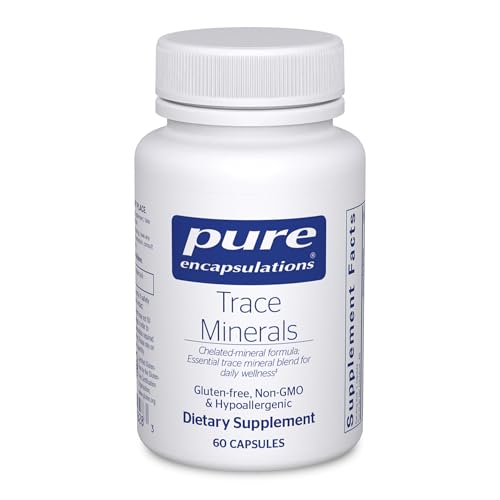
Bioavailability is the second key spec to evaluate. Ionic formats are marketed as naturally absorbed, and the ConcenTrace tablets and capsules are positioned in this category. Chelated formats use binding agents such as bisglycinate or glycinate and are documented in Thorne, Pure Encapsulations, and Klaire Labs products. Tablets can carry more minerals per pill, while capsules are often easier to swallow and may suit stacked routines.
Dietary certifications and exclusions
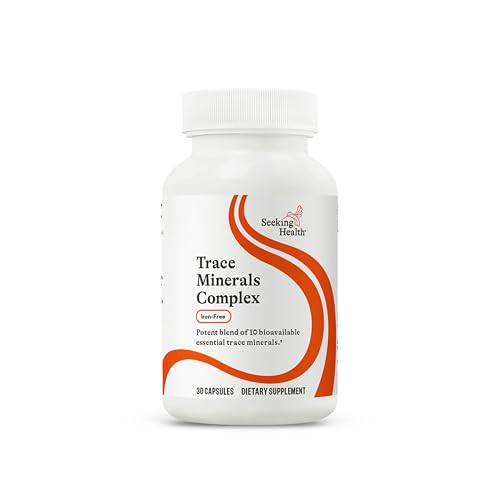
Certification lists help narrow the field. Pure Encapsulations, Thorne, and Carlyle all list free-from claims covering gluten, dairy, and soy, with Pure Encapsulations and Klaire Labs also omitting artificial colors and preservatives. Iron-free designs such as Klaire Labs LDA and Seeking Health Trace Minerals Complex give readers a way to keep iron supplementation separate.
Format choices include tablets, capsules, and capsule-based ionic complexes. Larger bottle sizes such as the 300-count ConcenTrace tablets or 200-count Carlyle tablets suit long daily routines, while 30-count options like Klaire Labs and Seeking Health support shorter trial periods. Capsule count is a clear specification that maps directly to refill frequency and daily planning.
Ingredient quality signals
Quality signals in the supplied evidence include third-party testing mentions, Certificates of Analysis, and manufacturing certifications. Thorne highlights third-party certification, Life Extension references a Certificate of Analysis for every product, and ConcenTrace notes third-party testing for purity. These statements are specification-level facts drawn directly from each product description.
Brand specialization
Brands that focus specifically on trace minerals often document the sourcing and harvesting process. Specialized brands tend to publish more granular detail on mineral form, which helps with side-by-side comparison.
How the ten picks compare
The selected top trace mineral tablets span ionic full-spectrum, chelated targeted, hypoallergenic, and whole-food formats. ConcenTrace 90 and 300 tablets lead on mineral breadth, Thorne and Pure Encapsulations lead on chelate-based absorption, and Klaire Labs and Seeking Health lead on iron-free hypoallergenic profiles. Carlyle and Standard Process round out the list with broad tablet formats and B12 combination support, respectively. Carlyle’s 200-tablet bottle is the longest tablet supply outside the ConcenTrace line, and Standard Process is the only top pick that pairs trace minerals with vitamin B12 in a single tablet.
Final recommendation
Trace Minerals ConcenTrace Ionic Trace Mineral Tablets, 300 Tablets ranks first overall in this specification-based comparison under the published weighted criteria.
The final choice among the best trace mineral tablets depends on the documented features that match your intended use.
Trace Minerals ConcenTrace Ionic Trace Mineral Tablets, 90 Tablets is the first overall specification-based choice because it combines the broadest documented ionic mineral breadth with a vegan, non-GMO, low-sodium, third-party-tested profile in a 90-tablet format. Readers wanting a longer supply of the same ionic formula can move directly to the 300-count ConcenTrace tablets without changing their daily mineral plan. For targeted chelate routines, Thorne Trace Minerals and Life Extension Only Trace Minerals stand out, and the top trace mineral tablets in the hypoallergenic category are Klaire Labs LDA and Pure Encapsulations Trace Minerals, all of which are documented in the comparison above.
Frequently Asked Questions
Among the best trace mineral tablets, how many trace minerals should a daily tablet actually provide?
There is no single correct number. Full-spectrum ionic options such as ConcenTrace list 70-plus trace minerals, while targeted chelated formulas often include five to eight named minerals. The best trace mineral tablets for a reader depend on whether a broad foundation or a focused mineral list is the priority.
What is the difference between ionic and chelated trace mineral tablets?
Ionic trace mineral tablets are formulated with minerals in ionic form, as documented for the ConcenTrace line. Chelated trace mineral tablets bind minerals to organic molecules such as bisglycinate or glycinate chelates, as described for Thorne, Pure Encapsulations, and Klaire Labs. Both formats are designed with bioavailability in mind, and the choice often comes down to personal preference and dietary goals.
Are iron-free trace mineral tablets necessary?
Iron-free trace mineral tablets suit readers who already obtain iron from a multivitamin or who need to limit iron intake for medical reasons. Klaire Labs LDA Trace Mineral Complex and Seeking Health Trace Minerals Complex both list iron-free designs in their product descriptions.
Can trace mineral tablets replace a daily multivitamin?
Trace mineral tablets focus on trace minerals specifically and often exclude macrominerals such as calcium and magnesium, as Pure Encapsulations notes in its description. A daily multivitamin may still be appropriate alongside a focused trace mineral tablet for readers seeking broader nutrient coverage.
Capsules are typically smaller and easier to swallow, and the ConcenTrace capsules and Pure Encapsulations options are described in capsule form. Tablets can pack more minerals per unit, as seen with Carlyle’s 200-tablet broad-mineral format, so the format choice depends on whether pill size or per-pill mineral density matters more to the reader.