Buying Guide
The best usda organic cornmeal is not defined by color alone. The useful distinctions in this comparison are certification wording, grind, whether the listing describes the germ or whole kernel, intended dishes, and package format. Because this is a specification-based comparison, the guidance below stays with attributes documented in the supplied product listings rather than claiming results from kitchen testing.
Start with the certification language
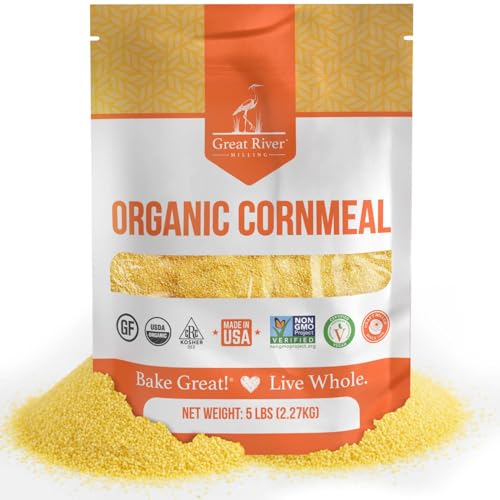
Look for an explicit USDA Organic statement when that designation is essential to your purchase. Great River Milling, Early Morning Harvest, Mulberry Lane Farms, both War Eagle Mill products, both Doudlah Farms products, and Blue Haven all include USDA Organic or USDA-certified organic language in the supplied evidence. Bob’s Red Mill is described as Certified Organic by QAI, while Food to Live is described as organic and certified Organic in its listing material. Those distinctions are worth checking against your own certification requirements.
Non-GMO language also appears frequently, including in Great River Milling, Mulberry Lane Farms, War Eagle Mill, Doudlah Farms, and Food to Live. It is a separate attribute from organic certification, so treat it as additional listing information rather than a substitute for the certification wording you want.
Match grind to the recipe
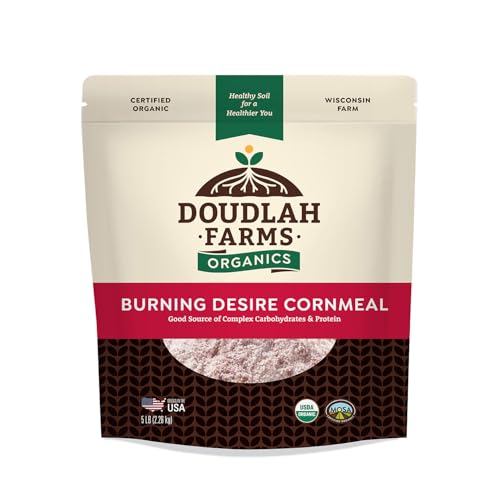
Fine-grind cornmeal is the clearest fit when a smoother texture matters. Doudlah Farms’ yellow product explicitly identifies a fine grind and names cornbread, muffins, pancakes, and baking. Medium-grind products provide a more defined texture in the listings: Great River Milling and Bob’s Red Mill both specify medium grind, while Doudlah Farms’ red cornmeal is described as medium-fine. Doudlah Farms Blue Haven is identified as medium-ground.
Coarse meal is a different direction. Food to Live’s Old Fashioned Cornmeal is presented as coarse and stone ground, with uses including rustic cornbread, polenta, porridge, pancakes, and crispy coatings. It may be a better match when you want the meal’s texture to remain noticeable. Early Morning Harvest documents a combination of corn flour and medium-grind or grit meal rather than one single grind, so it offers less narrowly defined texture guidance.
Consider whole-grain and milling details
Whole-grain wording can tell you more about the product than the color name. Mulberry Lane Farms states that its yellow cornmeal is 100% whole grain and includes the germ. Early Morning Harvest says its whole-grain meal contains the germ, endosperm, and pericarp. Bob’s Red Mill specifically says the germ and bran remain, and Food to Live describes whole-grain corn that is stone ground.
These details help distinguish products whose listings provide processing information from those that mainly identify color and certification. War Eagle Mill’s blue and yellow listings do not specify grind, stone milling, or retained grain components, so compare them primarily by variety and package structure rather than assuming a particular texture or milling method.
Choose the corn color and variety
Yellow cornmeal is the most represented format here. It appears in the products from Mulberry Lane Farms, War Eagle Mill, Doudlah Farms, and Bob’s Red Mill, with uses spanning cornbread, muffins, pancakes, polenta, and breading. This guide selects Blue Haven because its USDA Organic status and medium-ground texture are documented.
Doudlah Farms’ red product is identified as red dent corn and is listed for cornbread, grits, polenta, and fried foods. It is a useful option when you want a named red variety rather than a general yellow meal.
Pick a package that fits your routine
Package sizes range from 24 ounces to 5 pounds, with multi-bag formats also represented. Bob’s Red Mill supplies 24 ounces, while Doudlah Farms’ yellow and Blue Haven products provide 1.5 pounds. Food to Live’s coarse meal is also 1.5 pounds. These formats can make sense when you are comparing a new grind or color without committing to a large pantry quantity.
For recurring baking, Great River Milling and Mulberry Lane Farms provide 5-pound packages, and Early Morning Harvest provides 4 pounds. War Eagle Mill’s yellow and blue options each use two 48-ounce bags. Divided bags can be practical for storage, while a single larger bag may be simpler for high-volume use. The listing for Early Morning Harvest also specifically describes a resealable package.
Read dietary and handling notes carefully
Great River Milling and Food to Live explicitly describe gluten-free characteristics, while Great River Milling also lists Kosher status. Food to Live lists vegan and Kosher attributes. Bob’s Red Mill names several recipe uses but does not provide the same dietary detail in the supplied points. If a dietary or facility requirement matters, use the product’s current package information to confirm it rather than extending a claim from a similar item.
Final Recommendation
Great River Milling Organic Medium Grind Cornmeal ranks first overall in this specification-based comparison under the published weighted criteria.
Great River Milling Organic Medium Grind Cornmeal is the highest-scoring returned product and the first overall specification-based choice. Its combination of clearly listed USDA Organic attributes, a defined medium grind, a 5-pound format, and applications from cornbread to breading makes the evidence especially complete.
For fine baking, Doudlah Farms Organic Yellow Fine-Grind Cornmeal gives the clearest grind match. For a coarse stone-ground style, Food to Live Organic Old Fashioned Coarse Cornmeal documents the relevant texture and processing. Early Morning Harvest is notable for its whole-grain description and resealable bag, while Mulberry Lane Farms adds USA-grown and freshly milled wording in a 5-pound format.
Among the top usda organic cornmeal options, color is another practical divider. Blue Haven supplies a medium-ground blue variety, Doudlah Farms offers red dent corn, and War Eagle Mill provides blue and yellow multi-bag formats. The best usda organic cornmeal for your kitchen is therefore the one whose documented grind, grain processing, variety, and package size align with the dishes you actually prepare.
Frequently Asked Questions
What should I look for in the best usda organic cornmeal?
Start with explicit USDA Organic wording, then check grind and processing details. A fine grind is documented by Doudlah Farms’ yellow product, medium grind by Great River Milling and Bob’s Red Mill, and coarse stone-ground style by Food to Live. Whole-grain details such as retained germ, bran, or pericarp can further clarify what the listing describes.
Is medium-grind cornmeal suitable for more than cornbread?
The selected listings support several uses beyond cornbread. Great River Milling names polenta, muffins, pancakes, hush puppies, and breading. Bob’s Red Mill lists muffins, hush puppies, breads, cornmeal mush, breading, and dusting pizza and bread pans. Doudlah Farms’ red medium-fine meal is also listed for grits, polenta, tortillas, and fried foods.
Which selected product documents a fine texture?
Doudlah Farms Organic Yellow Fine-Grind Cornmeal is the clearest fine-texture selection because its title and description explicitly state fine grind. The listing also identifies cornbread, muffins, pancakes, and other baking uses.
What is the difference between the blue and red options here?
Doudlah Farms Blue Haven is identified as heirloom Indian dent blue corn and medium-ground, with tortillas, muffins, cookies, and cornbread listed. Doudlah Farms Organic Red Cornmeal is made from red dent corn and is described as medium-fine, with cornbread, grits, polenta, and fried foods listed. The color and named variety are the clearest documented differences.
The selected products range from 24 ounces to 5 pounds. Bob’s Red Mill is 24 ounces; Doudlah Farms and Food to Live offer 1.5-pound formats; Early Morning Harvest lists 4 pounds; and Great River Milling and Mulberry Lane Farms list 5 pounds. War Eagle Mill’s blue and yellow products are each supplied as two 48-ounce bags.