Buying Guide
The best vegetarian multi-enzyme supplements are not interchangeable. A product can be broad across macronutrients, targeted toward a particular food type, or paired with probiotics and prebiotics. This comparison uses public listing data only, so the useful question is not which product performed best in a hands-on test. Instead, look at what each label documents clearly: the enzyme range, the food components named, the vegetarian classification, formulation details, and how the serving is described.
Start with the food components covered
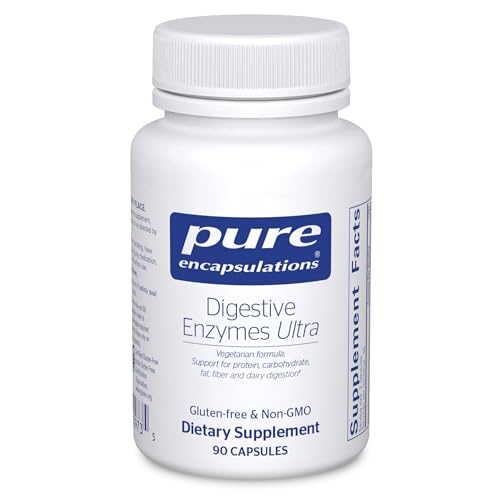
A broad formula generally makes more sense when your meals vary. Look for evidence covering proteins, carbohydrates, fats, and fiber. Natural Factors High Potency Multi Enzyme, Enzymedica Digest Complete, and NOW Foods Plant Enzymes each document broad macronutrient coverage. Pure Encapsulations Digestive Enzymes Ultra extends its description to proteins, peptides, polysaccharides, disaccharides, dairy, fiber, and complex carbohydrates.
The number of named enzymes can make comparison easier, but it should not be treated as the only measure of a formula. NOW Foods Plant Enzymes identifies lactase, protease, papain, and bromelain. Enzymedica Digest Basic + Probiotics names lipase, protease, amylase, cellulase, and lactase. Wellness Resources Digestive Helper lists 14 enzymes and connects them to gluten, casein, fats, proteins, and carbohydrates. These details help you match a product to the foods you actually want represented in the formula.
Match targeted designs to your eating pattern
Some shoppers may prefer a product with a clearly described use case rather than a general blend. Eat E-Z Ultra Advanced Digestive Enzyme is positioned for heavier, harder-to-digest meals and larger portions, with protein, carbohydrate, and fat coverage. NOW Foods Optimal Digestive System specifically mentions beans and cruciferous vegetables, making its evidence distinct for meals that include those foods.
Wellness Resources Digestive Helper is another targeted option, but its scope is broad: the listing highlights BioCore DPP IV for casein and gluten digestion, plus enzymes for fats, proteins, and carbohydrates. Ness Sugar Digest and Ness Starch Digest are also documented vegetarian multi-enzyme products in the candidate pool, but they are more focused on sugar or starch-heavy meals and were not selected for this final ten-product comparison. A targeted formula can be useful for a defined dietary focus, while a broad formula may be easier to compare against mixed meals.
Check whether the capsule and ingredient status fit
Vegetarian wording varies in specificity. Several selected products use especially clear classifications: Natural Factors is described as vegan; NOW Foods Plant Enzymes is listed as vegan and vegetarian; Enzymedica Digest Complete is vegan and Kosher; and Pure Encapsulations Digestive Enzymes Ultra is described as vegetarian. Other products state vegetarian capsules or plant-based enzymes. Read that wording carefully if you need a strict dietary designation.
Ingredient exclusions can also matter. Natural Factors states that it is free from dairy, gluten, artificial colors, preservatives, and sweeteners. NOW Foods Plant Enzymes lists soy-free and non-GMO classifications, while Pure Encapsulations describes exclusions for common allergens, artificial or unnecessary ingredients, and GMOs. Eat E-Z Ultra identifies vegetarian capsules and a clean formulation, but the supplied evidence is less detailed about individual enzyme ingredients. These are specification differences, not proof of how any product will feel or work for an individual.
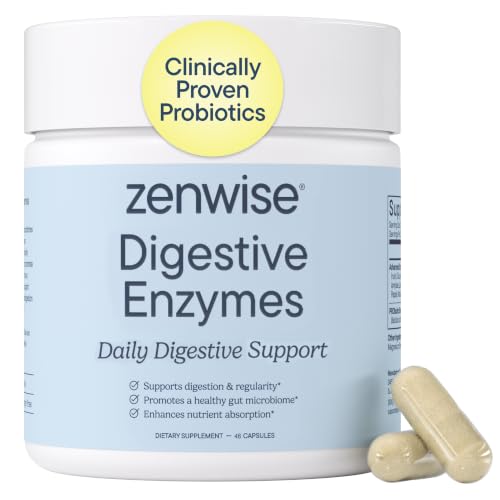
Several products add microbiome-oriented ingredients. Purity Products Advanced Digestive Enzymes includes 18 plant-based enzymes, a 1.5 billion CFU probiotic complex, and a prebiotic ingredient. Zenwise Health Digestive Enzymes combines plant-based enzymes with probiotics and prebiotics. Enzymedica Digest Basic + Probiotics adds a probiotic blend with 400 million CFU and Bacillus subtilis DE111.
These combination designs create more ingredient categories in one capsule, but they also make the product less focused than an enzyme-only formula. If you are comparing enzyme breadth, choose a listing that provides enough information to identify the blend. If you specifically want added probiotic or prebiotic components, the combination products give you documented options without assuming that every supplement should include them.
Serving instructions affect how easily a formula fits your routine. Natural Factors specifies one capsule daily with food. Purity Products describes one vegetarian capsule per day, and Zenwise Health states one capsule before a meal. Those directions are simple to compare. Wellness Resources allows one to two capsules before eating, while NOW Foods Optimal Digestive System specifies two capsules with or before each meal.
The container count also varies substantially across the selected products, from 30 capsules for Enzymedica Digest Complete and Enzymedica Digest Basic + Probiotics to 180 capsules for some products in the candidate pool. Count alone does not establish suitability, because the required serving differs. Compare the stated direction with how often you expect to use the product rather than treating capsule count as a standalone feature.
Use quality and processing details as tie-breakers
Quality-related evidence is most useful when it is specific. Wellness Resources states that the product is third-party tested for purity, potency, and quality. Natural Factors describes independent testing for GMOs and more than 800 contaminants. NOW Foods documents NPA A-rated GMP assurance, and Purity Products identifies an NSF-certified, cGMP-compliant facility in its listing.
Enzymedica Digest Complete describes a Thera-blend process that works across a range of pH levels, while Wellness Resources states activity over a pH range of 3 to 9. These statements describe formulation or manufacturing information supplied in the listings; they are not independent validation of digestive outcomes. Use them to distinguish how much technical detail a label provides, not as a guarantee.
How this comparison was scored
The editorial score uses five category-specific criteria: enzyme blend breadth at 25%, documented food-component coverage at 25%, vegetarian and ingredient clarity at 20%, formulation and quality features at 15%, and serving practicality at 15%. Each selected product received a 0.0-to-10.0 score on every criterion. Products were eligible when the supplied title, features, and specifications established a vegetarian or plant-based multi-enzyme supplement rather than a single-enzyme product or an adjacent digestive item. This is a specification-based ranking, not a clinical assessment, lab test, or customer-opinion summary.
Final Recommendation
Purity Products Advanced Digestive Enzymes ranks first overall in this specification-based comparison under the published weighted criteria.
The final choice among the best vegetarian multi-enzyme supplements depends on the documented features that match your intended use.
Wellness Resources Digestive Helper is the highest-scoring returned product and the first overall specification-based choice. Its 14-enzyme listing, BioCore DPP IV, coverage for gluten, casein, fats, proteins, and carbohydrates, vegetarian status, and stated pH range give it the most complete evidence profile in this comparison.
For a simpler routine, Natural Factors High Potency Multi Enzyme documents a vegan full-spectrum blend with one capsule daily alongside food. NOW Foods Plant Enzymes is a strong fit when lactase and named plant enzymes are important. Pure Encapsulations Digestive Enzymes Ultra is notable for broad food-component coverage and allergen-conscious positioning. Among the top vegetarian multi-enzyme supplements, the best match depends on whether you prioritize broad coverage, a named enzyme list, a targeted food focus, or added probiotic and prebiotic ingredients.
The practical next step is to compare the product description with your dietary requirements and preferred serving pattern. Keep the label distinctions in view, especially when a formula includes ingredients beyond enzymes or when the listing does not identify a complete enzyme panel.
Frequently Asked Questions
The selected products establish category fit through wording such as vegetarian capsules, vegetarian formula, vegan formula, or plant-based enzymes, combined with more than one digestive enzyme or a documented multi-enzyme blend. For example, NOW Foods Plant Enzymes names lactase, protease, papain, and bromelain, while Enzymedica Digest Basic + Probiotics names five enzymes. A single-enzyme product, such as a lipase-only formula, does not meet the same multi-enzyme standard.
Choose based on the evidence that matches your food pattern. Broad formulas such as Natural Factors High Potency Multi Enzyme and Enzymedica Digest Complete describe coverage across several macronutrients. Eat E-Z Ultra Advanced Digestive Enzyme focuses on heavier meals, while NOW Foods Optimal Digestive System specifically mentions beans and cruciferous vegetables. Wellness Resources Digestive Helper combines broad coverage with gluten and casein enzyme support.
No. Some selected products are primarily enzyme blends, while Purity Products Advanced Digestive Enzymes, Zenwise Health Digestive Enzymes, and Enzymedica Digest Basic + Probiotics also document probiotic or prebiotic ingredients. If you want an enzyme-only design, inspect the ingredient description rather than assuming that every vegetarian formula includes microbiome support.
Why do serving directions matter when comparing products?
Serving directions determine how the product fits around meals. Natural Factors and Purity Products describe one capsule daily, while Zenwise Health specifies one capsule before a meal. Wellness Resources lists one to two capsules before eating, and NOW Foods Optimal Digestive System specifies two capsules with or before each meal. A lower capsule count is not automatically better; it simply provides a different routine to evaluate against the label.