Buying Guide
Shopping for the best vegetarian vitamin d supplements means weighing how each formula handles vegetarian sourcing, form, potency, and clean-label details. The ten products below are evaluated side by side on those factors, with each entry grounded only in the supplied listing evidence. Use this guide to compare strengths and trade-offs across capsules, softgels, liquids, chewables, and gummies before deciding.
Why Vegetarian Source Matters
Vitamin D itself is a single molecule, but the ingredient used to deliver it can come from animal, fungal, or lichen origins. Vegetarian suitability hinges on the listed source: lichen-derived cholecalciferol, plant-based ergocalciferol, and vegetarian-friendly softgels are the formats most clearly aligned with non-animal sourcing. Within this guide, Deva Vegan Vitamin D3 1000 IU Tablets and the two NATURELO Lichen D3 options (2500 IU and 5000 IU) state lichen or plant sources directly, while other entries rely on vegetarian or vegan certifications and ingredient exclusions to communicate the same point.
Choosing Between D2 and D3
Ergocalciferol (D2) and cholecalciferol (D3) are the two main forms used in vegetarian vitamin D supplements. D3 is the form naturally produced in skin and is sometimes described in listings as more directly usable by the body, while D2 remains a fully vegetarian option sourced from fungi or yeast. The candidate set includes Vitamatic Vegan Vitamin D2 2400 IU Tablets as the D2 representative, while most other entries use D3. Matching the form to your dietary preferences and any practitioner guidance is the first step when narrowing options.
Potency Levels and Dose Flexibility
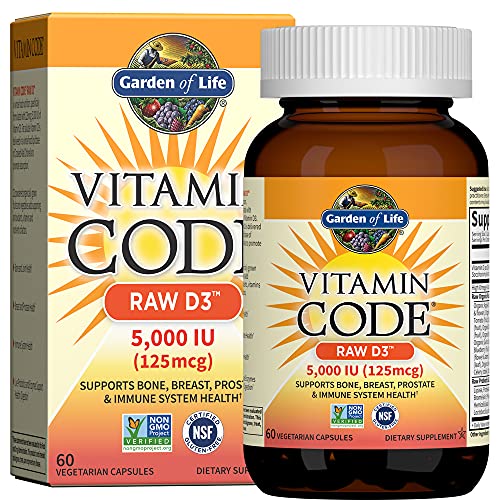
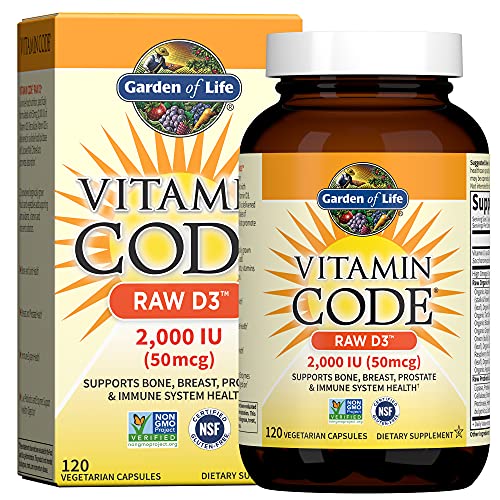
Doses across this list range from 1000 IU to 5000 IU per serving, with most products offering a single strength. Lower 1000 IU options such as Deva Vegan Vitamin D3 1000 IU Tablets, NOW Foods Vitamin D3 + K2 Capsules, and Bluebonnet EarthSweet Vitamin D3 1000 IU Chewables suit maintenance routines. Mid-tier options like NATURELO Vegan Vitamin D3 2500 IU Capsules and Garden of Life Vitamin Code Raw D3 2000 IU sit between maintenance and repletion, while higher-potency products such as NATURELO Vegan Vitamin D3 5000 IU Capsules, Garden of Life Vitamin D3 5000 IU Capsules, Carlyle Liquid Vitamin D3 5000 IU Drops, and Vitamatic Vegan Vitamin D2 2400 IU Tablets target users with documented low levels or higher needs. Liquid drops can offer additional dose flexibility because the serving can be adjusted drop by drop.
Clean-Label and Allergen Considerations
Clean-label breadth is a recurring theme in the candidate set. Most products document being free of gluten, soy, dairy, yeast, eggs, and nuts, while several also exclude artificial colors, flavors, or preservatives. NATURELO’s lichen D3 options explicitly list eight excluded categories, Vitamatic adds sugar, starch, sodium, and corn to that list, and Garden of Life’s raw D3 products emphasize the absence of high-heat processing, binders, and artificial additives. For users managing multiple sensitivities, these documented exclusions can be as important as the vitamin itself.
Each delivery format has practical trade-offs. Capsules and softgels are portable and dose-precise; softgels like Zahler Advanced Vitamin D3 3000 IU Softgels can be easier to swallow for some users. Liquids such as Carlyle Liquid Vitamin D3 5000 IU Drops suit pill-averse routines and allow flexible serving sizes, though measuring introduces some variability. Chewables like Bluebonnet EarthSweet Vitamin D3 1000 IU Chewables avoid swallowing entirely but contain sweeteners, and gummies (not selected for this top ten) generally rely on similar sweetening approaches. The best vegetarian vitamin d supplements for your routine are often the ones whose format you will actually take consistently.
A subset of products layers absorption-support ingredients around the core vitamin D. Garden of Life Vitamin D3 5000 IU Capsules and Garden of Life Vitamin Code Raw D3 2000 IU pair D3 with raw-food cofactors, probiotics, and digestive enzymes, while NOW Foods Vitamin D3 5000 IU + K2 Capsules adds K2 for users who want both nutrients in one capsule. By contrast, single-ingredient options such as Vitamatic Vegan Vitamin D2 2400 IU Tablets and Bluebonnet EarthSweet Vitamin D3 1000 IU Chewables keep the formula minimal, which may suit users who prefer fewer additives.
Manufacturing and Quality Signals
Documentation of manufacturing quality varies across the list. NOW Foods products emphasize NPA A-rated GMP certification, Garden of Life notes third-party non-GMO, gluten-free, and kosher certifications, and Bluebonnet highlights cGMP and ISO certification alongside amber-glass packaging. These details do not change the underlying vitamin D content, but they can help when comparing how each product documents its quality systems.
Final Recommendation
NATURELO Vegan Vitamin D3 5000 IU Capsules ranks first overall in this specification-based comparison under the published weighted criteria.
The final choice among the best vegetarian vitamin d supplements depends on the documented features that match your intended use.
After comparing vegetarian source clarity, form, potency, clean-label profile, format, formulation support, and manufacturing signals, NATURELO Vegan Vitamin D3 5000 IU Capsules emerges as the top vegetarian vitamin d supplements pick for users who want a clearly documented plant-based D3 at higher potency with a long 180-count supply. Users seeking a lower daily maintenance dose can step down to NATURELO Vegan Vitamin D3 2500 IU Capsules or Deva Vegan Vitamin D3 1000 IU Tablets, while those who want a D3 plus K2 combination can look to NOW Foods Vitamin D3 5000 IU + K2 Capsules. For liquid or chewable preferences, Carlyle Liquid Vitamin D3 5000 IU Drops and Bluebonnet EarthSweet Vitamin D3 1000 IU Chewables round out the top vegetarian vitamin d supplements by format.
Frequently Asked Questions
What makes a vitamin D supplement vegetarian?
A vitamin D supplement is vegetarian when its active form and supporting ingredients avoid animal-derived inputs. In this list, NATURELO Vegan Vitamin D3 5000 IU Capsules and NATURELO Vegan Vitamin D3 2500 IU Capsules state lichen as the D3 source, Vitamatic Vegan Vitamin D2 2400 IU Tablets uses a plant-based D2, and other entries rely on vegetarian or vegan certifications alongside documented exclusions of dairy, eggs, and other animal ingredients.
How do D2 and D3 differ in vegetarian supplements?
D2 (ergocalciferol) is typically produced from fungal or yeast sources and is inherently vegetarian, as shown by Vitamatic Vegan Vitamin D2 2400 IU Tablets. D3 (cholecalciferol) can be plant-based when sourced from lichen, which is how the NATURELO and Deva entries document their D3. Both are used in the best vegetarian vitamin d supplements, with the choice often driven by personal preference and any guidance from a practitioner.
Are gummies a good option among the best vegetarian vitamin d supplements?
Gummies can be a convenient option for users who avoid capsules, and they often come in flavors and formats that fit daily routines. In this guide, gummy-style entries were not selected for the top ten because chewable and liquid formats provided clearer evidence on dose precision, ingredient lists, and clean-label breadth. Users who prefer gummies can still find vegetarian D3 gummies elsewhere, but the specifications and exclusions vary widely between products.
How important is the dose strength when comparing these supplements?
Dose strength shapes how each product fits into a routine. Lower 1000 IU options such as Deva Vegan Vitamin D3 1000 IU Tablets and Bluebonnet EarthSweet Vitamin D3 1000 IU Chewables are commonly used for maintenance, while 2000 IU to 2500 IU products like Garden of Life Vitamin Code Raw D3 2000 IU and NATURELO Vegan Vitamin D3 2500 IU Capsules cover moderate use. Higher 3000 IU to 5000 IU options, including Zahler Advanced Vitamin D3 3000 IU Softgels, Carlyle Liquid Vitamin D3 5000 IU Drops, NATURELO Vegan Vitamin D3 5000 IU Capsules, and Garden of Life Vitamin D3 5000 IU Capsules, are positioned for users with greater needs, and any high-dose routine is best confirmed with a practitioner.
The best vegetarian vitamin d supplements are the ones you take consistently, so format adherence is highly personal. Capsules and softgels are portable and dose-precise, liquids allow flexible serving sizes, and chewables suit those who avoid pills. Matching the format to your routine, rather than chasing the highest IU number, tends to produce the most consistent use over time.