Buying Guide
Choosing the best water-based bristle paint brushes starts with the coating and surface, not simply the brand name. The products above range from small finishing brushes to five-inch block brushes, so the right choice depends on whether you are cutting in trim, coating furniture, staining wood, or covering a deck.
Match the brush to the coating
For water-based stains and clear finishes, the Minwax Polycrylic 1.5-Inch Wood Stain Brush is the most specifically documented option. Its nylon-and-polyester blend is designed for water-based stains and finishes, and the listing gives clear soap-and-water cleaning instructions. The Wooster Bravo Stainer is another strong match for water-based stains, sealers, and wood toners, with a bristle blend identified for staining work.
Several utility brushes document compatibility with both water-based and oil-based coatings. Coltree, Genixart, Magimate, Newkita, Bates Choice, and Mister Rui all list broad paint or stain use. This flexibility can be useful when a project includes primer, latex paint, stain, sealer, or finish. However, broad compatibility does not mean every brush has the same edge control or coverage pattern.
Choose synthetic, natural, or blended bristles
Synthetic bristles are widely represented here. Coltree, Genixart, Magimate, Bates Choice, Pro Grade, Mister Rui, and Newkita use synthetic or nylon-based descriptions. These options are especially practical when a listing explicitly includes water-based paints and water cleanup. Synthetic filaments are also available in both angled and flat formats, making it easier to choose for trim or broad application.
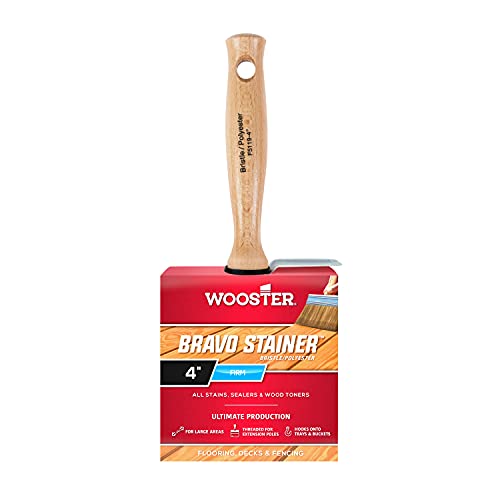
The Wooster brush uses a China bristle and sable polyester blend, while its documented use focuses on stains, sealers, and toners. Blended construction may appeal when staining is the central task, but its four-inch profile is less general-purpose than a mixed-size set. For a buyer who wants one group of brushes for walls, doors, cabinets, and trim, Coltree provides the widest documented shape and size selection in this comparison.
Select the right width and shape
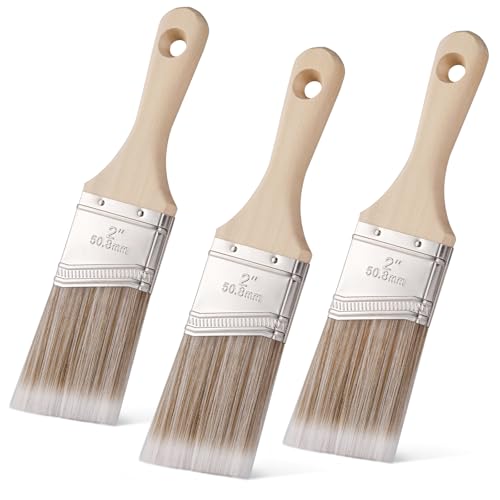
Width determines how quickly the brush covers a surface and how much control it offers. A 1.5-inch brush such as the Minwax option suits smaller wood projects and controlled finish application. Two-inch angled brushes, including the Mister Rui set, are oriented toward cut-in lines, baseboards, doors, cabinets, and corners. An angled tip can be more convenient than a straight profile when following an edge.
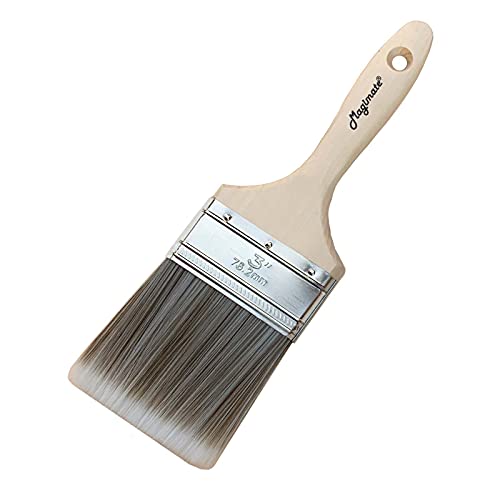
Three-inch brushes are a useful middle category. Magimate provides a three-inch straight brush for furniture, fences, wall trims, masonry, and other coating work. Bates Choice offers 1-inch, 2-inch, and 3-inch flat brushes, giving more flexibility within one set. Pro Grade uses a three-inch angled design, combining broader coverage with a tapered tip for touch-ups.
For large surfaces, the five-inch Genixart Deck Stain Brush and four-inch Wooster Bravo are the broadest focused options among the selected products. Genixart specifically describes deck, fence, wall, ceiling, and masonry applications and includes a threaded handle for an extension pole. The trade-off is maneuverability: large brushes are not the natural choice for narrow trim or detailed corners.
Consider handle and ferrule construction
A comfortable handle matters when a job involves repeated strokes. Coltree uses lightweight solid wood handles and stainless steel ferrules. Minwax specifies a natural hardwood handle and stainless steel ferrule. Magimate and Genixart also document wooden handle construction, while Pro Grade and Bates Choice describe comfort-oriented handles.
Ferrule information varies considerably across the listings. Stainless steel is specifically named for Coltree and Minwax, nickel-plated steel for Wooster, and aluminum for some products outside the selected household-focused group. Where the listing does not identify the ferrule material, the comparison does not assume a particular metal or durability level. Look for a securely retained bristle bundle and a handle shape that matches the length of your project.
Plan for cleanup and reuse
Water-based coatings are generally most convenient to clean while wet, and the listings provide several relevant instructions. Coltree says to clean with water for water-based paints. Minwax specifies soap and water, and Newkita says to wash while wet with soap and water. Genixart and Magimate describe water cleaning for water-based coatings, with solvent cleaning for other coating types where applicable.
Clean promptly rather than allowing paint to dry in the bristles. For reusable brushes, remove coating from the ferrule, rinse thoroughly, reshape where appropriate, and allow the brush to dry before storage. Always follow the coating manufacturer’s directions when the paint or finish has special cleaning requirements.
Final recommendation
Coltree 5-Piece Flat and Angle Brush Set ranks first overall in this specification-based comparison under the published weighted criteria.
Coltree 5-Piece Flat and Angle Brush Set is the first overall specification-based choice among the best water-based bristle paint brushes in this comparison. It combines explicit water-based compatibility, five useful sizes, both flat and angled profiles, solid wood handles, stainless steel ferrules, and water-cleanup guidance. It is the most adaptable selection when the project may move between walls, trim, cabinets, ceilings, and wood.
For a narrower job, choose Minwax for water-based wood stains and clear finishes, Mister Rui for trim and cut-in work, or Genixart for decks and broad surfaces. Wooster is a focused staining alternative with a four-inch head and extension-pole-compatible handle. Magimate and Bates Choice are sensible middle-width generalists, while Newkita provides a simple utility set for priming and everyday DIY work. These top water-based bristle paint brushes are not interchangeable: width, profile, and coating focus should guide the final choice.
Frequently Asked Questions
What are the best water-based bristle paint brushes for trim?
Mister Rui’s two-inch angled synthetic set is the most directly focused on trim, baseboards, doors, cabinets, corners, and cut-in lines. Coltree is more versatile if you also need flat brushes and several widths. Pro Grade is another angled option, with a three-inch profile and tapered tips described for precision and touch-up work.
Which brush is best for water-based wood stain?
The Minwax Polycrylic 1.5-Inch Wood Stain Brush is the clearest specialized choice because its listing directly identifies water-based stains and finishes and specifies soap-and-water cleanup. Wooster’s four-inch Bravo Stainer is better suited to broader stain, sealer, and wood-toner applications.
Should I choose a flat or angled brush for water-based paint?
Choose a flat brush for straightforward coverage on furniture, walls, fences, or other open areas. An angled brush is usually the more relevant design for edges, trim, corners, windows, and doors. Coltree includes both styles, while Mister Rui and Pro Grade focus on angled application.
How many brush sizes do I need?
One 1.5-inch or 2-inch brush can handle many small projects, but a set is more practical when the job includes both detail and broad surfaces. Coltree offers five sizes and two profiles; Bates Choice supplies 1-inch, 2-inch, and 3-inch flat brushes. For a deck or fence, a dedicated four-inch or five-inch brush may be more appropriate.
How should I clean a brush used with water-based paint?
Clean it promptly while the paint is wet. The selected listings commonly recommend water or soap and water for water-based coatings. Rinse the bristles thoroughly, remove residue near the ferrule, and let the brush dry before storing it. If the brush was used with a different coating, follow that coating’s specific cleaning directions.