Buying Guide
This guide compares the best wire-bead bike tires using documented wire-bead construction clarity, riding-application fit, protection and durability evidence, size and compatibility detail, and tread and technical detail.
Wire-bead tires use a steel wire in the bead rather than a folding bead. That construction is explicitly identified across the selected road, commuter, touring, hybrid, and mountain-bike products. It is only one part of fit, however. The wheel diameter, tire width, rim dimensions, frame clearance, intended terrain, and whether the tire is listed as tubeless or non-tubeless all matter before purchase.
This comparison uses public listing information rather than hands-on testing or customer-opinion summaries. Scores reflect how clearly each product documents the category-relevant characteristics supplied in the listings. They do not represent laboratory measurements or independent ride results.
Match the tire to your riding surface
Road and commuting tires generally emphasize a smoother urban tread or protection layer. The Schwalbe Marathon Plus HS 348 is listed as a 700x32 road tire with SmartGuard protection and a Reflex finish. The Continental Gator Hardshell Urban is narrower at 700x23 and focuses its description on PolyXbreaker, DuraSkin, and Hardshell coverage. These are different fit categories even though both are wire-bead road options.
For commuting and touring, the WTB All-Terrain and Panaracer Tour provide wider choices. The WTB All-Terrain uses a tightly spaced centerline with open outer knobs and is described for pavement, hardpack, commuting, touring, and urban riding. The Panaracer Tour is a 700x42C tire with an urban/commuter tread, reflective tape, and an ETRTO 42-622 specification. A 42 mm tire can offer a different clearance requirement from a 32 mm tire, so do not substitute sizes based only on wheel diameter.
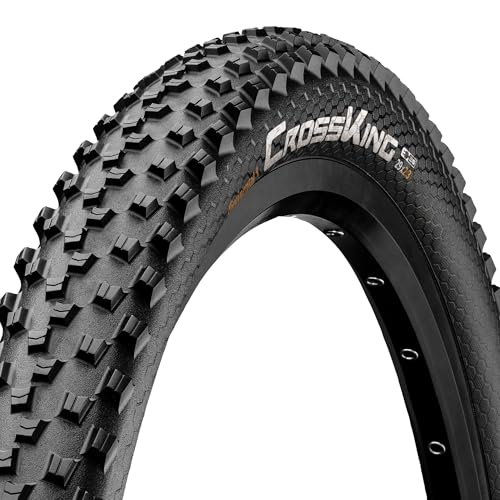
Mountain riders should start with tread and width. The Michelin Force is a 27.5x2.60 clincher aimed at all-mountain and hard-packed trail riding, with a specialized knob design and reinforced sidewalls. The Continental Cross King is a 27.5x2.30 non-tubeless tire described for competition and trail use. The Mountain King is a 29x2.30 non-tubeless option with aggressive, uniformly spaced tread. The WTB Trail Boss is a 26x2.25 tire with siped knobs and a 30 TPI wire-bead construction.
Check wheel and rim dimensions
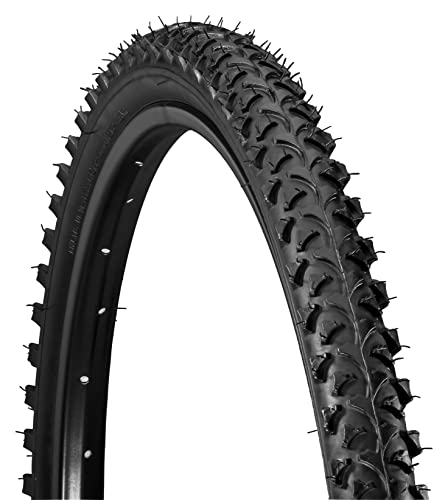
A tire must match the wheel diameter and provide enough clearance for the stated width. The selected products span 26-inch, 27.5-inch, 29-inch, and 700c formats. A 26x1.95 tire is not interchangeable with a 26x2.4 tire simply because both use a 26-inch wheel. Width affects clearance at the fork, stays, and frame, while rim width affects the tire’s intended shape and fit.
The Schwinn 26x1.95 listing is especially useful for compatibility checks because it specifies internal rim widths from 19 mm to 29 mm. The Panaracer Tour supplies both 700x42 mm and ETRTO 42-622 information. For other products, the listing primarily supplies the nominal size, so consult your bicycle or rim manufacturer when exact compatibility is uncertain.
Consider tread before casing claims
Tread descriptions help identify the riding application, but they should not be treated as independent performance testing. The WTB Trail Boss listing describes center, intermediate, and outer knob siping for braking and cornering. The WTB All-Terrain separates a tighter centerline from more open outer knobs. The Continental Race King, not selected here, would be a different low-knob concept, so it is not used as an example in this guide.
Among the selected products, the Schwalbe Marathon Plus and Continental Gator Hardshell emphasize protection more than aggressive off-road tread. The Michelin Force, Mountain King, Cross King, Kenda K816, and Trail Boss are more clearly oriented toward mountain-bike terrain based on their supplied tread and application descriptions.
Look for specific construction terms rather than relying on a generic “durable” label. SmartGuard is named for the Schwalbe Marathon Plus. The Gator Hardshell listing identifies PolyXbreaker, DuraSkin, deep casing overlap, and bead-to-bead protection. Michelin lists reinforced sidewalls and tread and sidewall protection layers for the Force. Continental lists puncture protection with the E25-rated Cross King and Mountain King structures.
The WTB All-Terrain describes a durable casing and puncture-resistant tread, while the Schwinn listing mentions steel-bead construction and outer knobs extending beyond the tire edge for sidewall safeguarding. The Kenda K816 has a clear wire bead and aggressive MTB positioning, but the supplied evidence gives less detail about protection layers. That is why its verdict is more cautious.
Understand tubeless and pressure details
A wire bead does not by itself establish tubeless compatibility. The Continental Cross King and Mountain King are explicitly listed as non-tubeless. The WTB Slick, which is not among the selected products, is also described as requiring an inner tube, so it is not used as a recommendation here. Always follow the product’s stated setup and your rim manufacturer’s instructions.
Pressure information is not supplied for every tire. The Panaracer Tour lists a maximum fill of 5.1 BAR or 75 PSI, and the Schwinn lists 40–65 PSI. These are product-specific figures, not universal recommendations. Do not transfer one tire’s pressure range to another model or size.
Final recommendation
Michelin Force 27.5 x 2.60 ranks first overall in this specification-based comparison under the published weighted criteria.
Schwalbe Marathon Plus HS 348 is the highest-scoring returned product and the first overall specification-based choice. Its wire-bead construction, SmartGuard layer, road application, reflective finish, and clear 700x32 size make it the most specification-aligned documented fit for protection-focused everyday pavement riding.
The best wire-bead bike tires for other uses depend on your setup. Choose Continental Gator Hardshell Urban when the narrow 700x23 road format and layered protection details fit your bicycle. For trail riding, Michelin Force offers the most complete technical description among the selected wide mountain options, while Continental Cross King and Mountain King provide clearly stated trail applications in 27.5 and 29-inch formats.
For mixed pavement and hardpack, WTB All-Terrain is the most directly documented hybrid choice. Panaracer Tour is a practical wider touring option with reflective tape and ETRTO sizing. The Schwinn and Kenda are straightforward 26-inch MTB choices, but their older wheel format and more limited technical detail make fit verification particularly important. These are the top wire-bead bike tires in this comparison based on supplied specifications, not independent testing.
Frequently Asked Questions
What are the best wire-bead bike tires for commuting?
The Schwalbe Marathon Plus HS 348 is the most specification-aligned documented commuting choice here because it combines a wire bead, SmartGuard protection, road sizing, and a Reflex finish. WTB All-Terrain and Panaracer Tour are alternatives when you want a more mixed-surface or wider touring format.
Are wire-bead bike tires tubeless compatible?
Not necessarily. The Continental Cross King and Mountain King listings specifically identify them as non-tubeless. Wire-bead construction describes the bead format, while tubeless compatibility is a separate product specification. Check the exact listing and rim requirements before planning a tubeless setup.
How do I choose between 26-inch, 27.5-inch, 29-inch, and 700c tires?
Match the tire diameter and width to the wheel, frame, fork, and rim. The selected products include all four formats, but they are not interchangeable merely because they are all bicycle tires. Internal rim-width information is specifically supplied for the Schwinn, while the Panaracer Tour also lists ETRTO 42-622 sizing.
What does a tire’s listed TPI mean?
TPI means threads per inch and describes casing construction. The WTB Trail Boss and Michelin Force listings identify 30 TPI, while the WTB All-Terrain, Panaracer Tour, and CST products in the candidate pool provide other casing details. TPI should be considered alongside tread, protection layers, width, and intended use rather than treated as a standalone performance guarantee.
Should I use the pressure range from another tire as a guide?
No. Pressure ranges are product-specific. The Schwinn listing gives 40–65 PSI, and the Panaracer Tour lists a maximum of 75 PSI, but those figures should not be applied to other models. Use the markings on the selected tire and the guidance from the bicycle or rim manufacturer.