Buying Guide
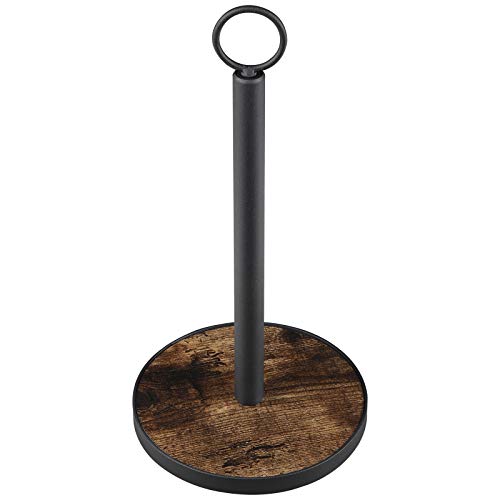
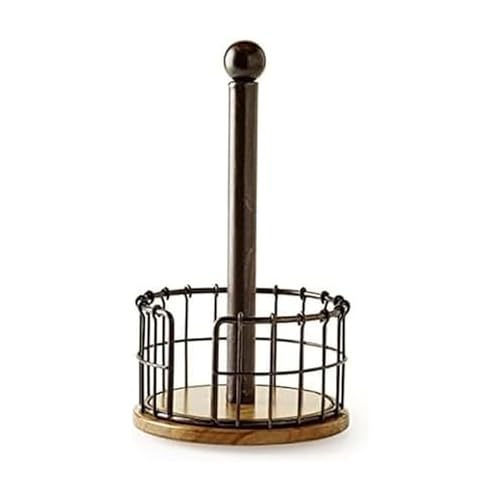
The best wooden paper towel holders should do more than add a natural accent. A useful countertop model needs enough support for the roll, a refill method that does not become frustrating, and dimensions that fit the available surface. The products in this comparison are freestanding or countertop-ready holders documented with wooden components; some also use steel, wire, marble, rubber pads, or weighted hardware.
Start with the base and countertop behavior
Stability is the first specification to examine because pulling a sheet creates sideways force. AQASMO provides the clearest combination of a built-in steel weight and non-slip pad. OROPY also documents a heavy-duty wood base and anti-slip pads, while YINMIT pairs a heavy wooden base with three pads. These details are more useful than simply calling a product sturdy because they identify how the holder is intended to stay in place.
Several other models use pads without claiming a weighted base. KitchLife’s jumbo model lists four anti-slip pads beneath a 6.5-inch base, and CHAUNCEY HOME lists four pads beneath a 6.69-inch base. NESAPTO and TONLEA document non-slip protection as well. Pads may help reduce sliding on a flat, dry counter, but the supplied listings do not establish identical performance across different surfaces. If your counter is narrow, check the base diameter before focusing on appearance.
Match capacity to the roll you use
Roll compatibility varies in practical importance. KitchLife’s jumbo model is specifically described with a large base for jumbo rolls, and Anji Mountain goes further by documenting jumbo and mega roll support. AQASMO, OROPY, CHAUNCEY HOME, YINMIT, and NESAPTO each state compatibility with standard and jumbo rolls. Those descriptions make them sensible choices for households that alternate between everyday and larger rolls.
Pfaltzgraff also lists standard and jumbo capacity, while Buruis supplies a maximum roll length and names standard-to-jumbo use. TONLEA uses broader wording about kitchen paper-roll sizes, so shoppers who need a precise jumbo or mega fit may prefer a model with more explicit capacity language. A holder that accepts the roll diameter is not necessarily a fit for every roll width; use the listing dimensions and your preferred roll packaging as the final check.
Compare wood and mixed-material construction
The wooden component can be solid acacia, beech, rubberwood, or mango wood, depending on the design. AQASMO, OROPY, KitchLife’s jumbo model, CHAUNCEY HOME, and Buruis specify acacia wood. Anji Mountain specifies FSC-certified solid wood, while NESAPTO identifies solid rubberwood. The material names help describe the product, but they do not prove that one species will last longer than another in every home.
Mixed-material designs can add different functional features. Pfaltzgraff combines acacia with a steel wire frame. YINMIT uses a wooden base and metal fence-style frame, and TONLEA uses a wood base with a steel bar. Buruis adds a marble base to its acacia wood structure. These combinations may change the holder’s visual weight, cleaning routine, or feel when moved. Choose a mixed-material model when the documented frame, handle, or base material solves a specific need rather than treating more materials as automatically better.
Decide how much assembly you want
Most selected models use simple assembly or arrive ready to use. AQASMO, KitchLife’s jumbo model, CHAUNCEY HOME, NESAPTO, and TONLEA describe tool-free setup. OROPY uses screws after the anti-skid pads are attached, and YINMIT specifies one screw. Buruis describes disassembly and assembly, while Pfaltzgraff’s listing explains the refill path rather than a detailed setup process. Anji Mountain is the clearest choice for avoiding assembly because it is listed as fully assembled.
A screw-together pole can be convenient, but assembly claims should not be confused with long-term structural testing. Follow the included instructions and make sure the post is seated securely before loading a roll. If you frequently move the holder between rooms, a model with a documented handle or portable design, such as TONLEA, may be easier to relocate.
Measure the placement area
Countertop footprint and height affect daily convenience. NESAPTO lists a 6.6-inch base, TONLEA a 6.3-inch wood base, and AQASMO a 7-inch width in its supplied specifications. OROPY lists a 7-inch base, while YINMIT lists a 7.5-inch base. These larger bases may offer more surface area but need room around them for tearing and moving the roll.
Height also matters beneath cabinets or on shallow shelves. The listings place many selected holders around 12 to 14 inches tall, including the 12.2-inch KitchLife and CHAUNCEY HOME models, the 12.4-inch NESAPTO, and the 13.26-inch Pfaltzgraff. Buruis is listed at 14.37 inches tall. Measure the vertical clearance and leave enough space to lift off or slide on a replacement roll.
Think about cleaning and wood care
Wooden surfaces generally benefit from following the supplied care directions instead of being treated like dishwasher-safe plastic. KitchLife’s listing recommends wiping with a damp cloth. NESAPTO likewise describes a damp-cloth cleaning approach. For the selected holders, use only the care guidance supplied with the product and keep wood from prolonged exposure to standing water unless the manufacturer specifically permits it.
How to choose efficiently
For maximum documented stability, start with AQASMO, OROPY, or YINMIT. For jumbo or mega rolls, compare Anji Mountain and KitchLife’s jumbo model with the other explicitly compatible options. For a smaller base, review NESAPTO or TONLEA. For a mixed-material decorative look, Pfaltzgraff or Buruis may be more suitable. The top wooden paper towel holders are not interchangeable in every kitchen, so the best match depends on roll size, counter dimensions, and whether you prefer a weighted base, open frame, or simple wood post.
Final Recommendation
AQASMO Acacia Wood Paper Towel Holder ranks first overall in this specification-based comparison under the published weighted criteria.
AQASMO Acacia Wood Paper Towel Holder is the highest-scoring returned product and the first overall specification-based choice among the best wooden paper towel holders. Its documented steel weighting, non-slip pad, solid acacia construction, open refill design, and standard-to-mega roll compatibility give it the most specification-aligned overall balance. Anji Mountain is the better fit for shoppers prioritizing FSC-certified solid wood, jumbo and mega capacity, and fully assembled delivery. OROPY is a practical farmhouse alternative with a heavy base and top hoop, while KitchLife’s jumbo model is tailored to larger rolls. Among the top wooden paper towel holders, NESAPTO and TONLEA are worth considering when footprint and relocation matter more than a weighted-base claim.
Frequently Asked Questions
What should I check before buying the best wooden paper towel holders?
Check the base width, holder height, roll capacity, and refill method first. A 7-inch or larger base may need more counter space than a 6.3-inch or 6.6-inch option. Also compare whether the listing specifically supports standard, jumbo, or mega rolls. If the holder will sit beneath cabinets, measure vertical clearance before ordering.
Are wooden paper towel holders suitable for jumbo rolls?
Some are, but the evidence varies by model. Anji Mountain explicitly lists jumbo and mega rolls, while KitchLife’s jumbo model is described with a 6.5-inch base intended for jumbo rolls. AQASMO, OROPY, CHAUNCEY HOME, YINMIT, NESAPTO, Pfaltzgraff, and Buruis also document standard-to-jumbo compatibility. Always compare your roll’s dimensions with the holder’s supplied specifications.
Several selected models describe tool-free setup, including AQASMO, KitchLife’s jumbo model, CHAUNCEY HOME, NESAPTO, and TONLEA. OROPY and YINMIT mention screw-based assembly, while Anji Mountain is listed as fully assembled. Assembly wording describes the setup process only; it does not establish how firmly a holder will remain assembled over time.
Which design is best for a small counter?
Look first at the listed base dimensions rather than the visual style. TONLEA lists a 6.3-inch wood base, NESAPTO lists a 6.6-inch base, and AQASMO and OROPY list bases around 7 inches. A smaller base may conserve space, but a larger or weighted base can offer a different stability trade-off. Leave room to pull a sheet without striking nearby items.
How should wood surfaces be cleaned?
Use the care directions supplied for the specific model. KitchLife and NESAPTO describe wiping with a damp cloth, and wood components should not be assumed to tolerate soaking. Dry the surface according to the manufacturer’s guidance, and avoid claiming dishwasher or water resistance unless the listing explicitly provides that information.