Buying Guide
The best wool throw pillows are easier to compare when you separate the fiber claim from the overall construction. Some listings describe a complete pillow with an insert, while others sell only a decorative cover. That difference affects setup, sizing, and care, even when two products use similar wool terminology.
Confirm what is actually wool
Start with the material line, not just the title. The SARO LIFESTYLE pillow lists a 100% wool cover, while the LLB cover is described as genuine sheepskin with long wool. The Trade Star and JAIPURI KILIM RUGS covers give a more specific blend of 70% jute and 30% wool. These are materially different from faux-wool products made from polyester, which were not included in this comparison.
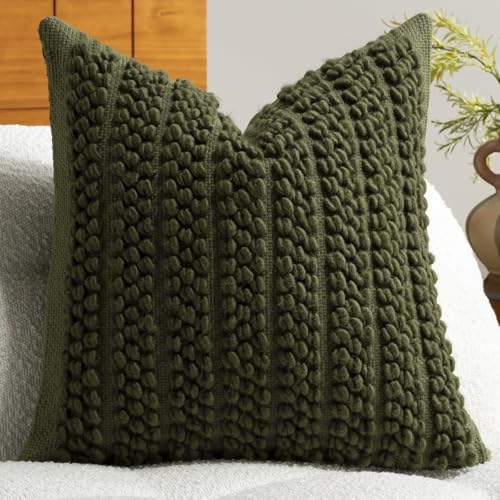
Wool can appear as yarn, boucle, lamb fur, sheepskin, or a woven blend. A hand-hooked surface, such as the Camp Wandawega design, has a different visual character from a smooth woven kilim cover. A sheepskin or lamb-fur front provides a longer pile, while boucle creates a looped texture. Choose according to the surface you want to see and touch rather than treating all wool labels as interchangeable.
Choose a construction that fits the room
Construction determines how prominently the pillow reads. The Camp Wandawega pillow uses hand-hooked wool yarn on cotton canvas backing and features a mallard duck motif. It is a focused lodge accent rather than a generic neutral. The COZYDEKO lumbar cover combines handwoven wool and cotton with braided, tufted, and woven details, giving it a layered boho appearance.
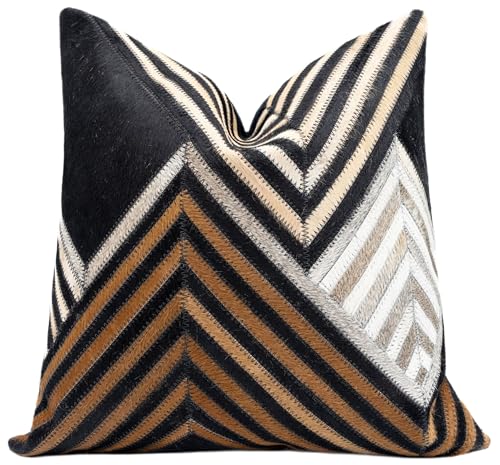
Kilim covers from RAJORA ENT US, Trade Star, and JAIPURI KILIM RUGS use handwoven or rug-inspired construction with geometric, tribal, or traditional patterns. These options can anchor a sofa arrangement, but their documented rough or durable textures may not be the first choice for resting your face. DEZENE’s boucle construction is a quieter alternative for contemporary rooms that need texture without a large pattern.
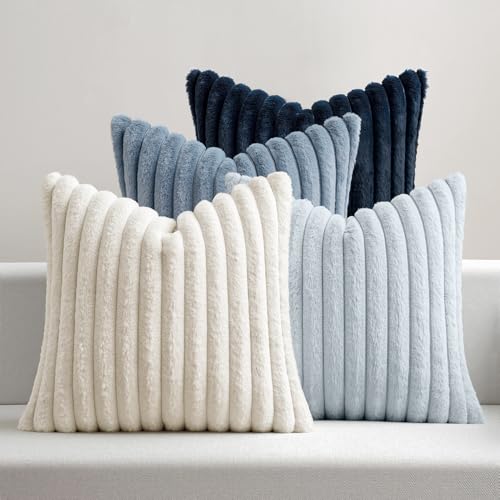
Long-pile choices create a pronounced tactile effect. LLB uses genuine sheepskin, while Seek4comfortable and ChenXRug describe natural lamb-fur fronts. Their reverse materials and backing differ, so inspect both sides when deciding whether the pillow will be displayed, leaned against, or frequently moved.
Match the shape to the furniture
A 12-by-20-inch lumbar shape works well in front of larger back cushions or along a bench. SARO LIFESTYLE and COZYDEKO document this proportion, while Camp Wandawega uses a slightly larger 16-by-20-inch oblong format. These shapes can add directional contrast to square pillows.
The most common square sizes in this selection are 18 by 18 inches. That format appears across wool boucle, sheepskin, lamb-fur, and kilim covers, making it straightforward to build a coordinated arrangement. ChenXRug’s 16-by-16-inch size is more compact and may suit an accent chair or a layered front position. Seek4comfortable documents a broader selection of sizes, which is useful when several cushions need related proportions.
Check the insert measurement carefully. A listing may refer to the insert size rather than the outer cover dimensions, and handmade construction can produce small variations. When a product is cover-only, use an insert that matches the stated dimensions rather than assuming one is supplied.
Decide between a complete pillow and a cover
Complete pillows simplify setup. Camp Wandawega includes a removable polyester insert, and SARO LIFESTYLE includes a poly-filled insert. Their listings also describe zipper access, so the cover and filler are presented as a single product.
Most of the handwoven, boucle, sheepskin, and lamb-fur entries are covers only. That format is useful if you already have suitable inserts or want to control firmness, but it adds a separate sizing decision. The product descriptions for COZYDEKO, RAJORA ENT US, Trade Star, JAIPURI KILIM RUGS, DEZENE, LLB, Seek4comfortable, and ChenXRug explicitly identify the missing insert or cover-only format.
Review closures and care instructions
A hidden or invisible zipper keeps the closure visually restrained and makes insert removal easier. Trade Star, RAJORA ENT US, DEZENE, Seek4comfortable, and ChenXRug all document zipper construction, though the exact backing materials vary. The Camp Wandawega and SARO LIFESTYLE listings also describe zipper access on complete pillows.
Care instructions range from spot cleaning to hand washing, machine washing, or dry cleaning. Wool and natural-fur surfaces should be approached according to the specific listing rather than a general fabric assumption. Trade Star recommends spot cleaning or dry cleaning, LLB describes spot-clean care, and DEZENE recommends hand washing. These instructions may be less convenient than gentle machine-care guidance documented for some covers, so consider the pillow’s location before choosing a high-maintenance texture.
Use color and pattern strategically
Neutral ivory, khaki, beige, brown, cream, taupe, and olive options can blend with existing upholstery, while the Camp Wandawega mallard motif and the kilim patterns create stronger focal points. A patterned wool-jute cover can balance plain upholstery, whereas a solid boucle or fur surface may work better when the room already contains visual detail.
For a mixed arrangement, keep either the shape or the palette consistent. For example, 18-by-18-inch covers can form the foundation, with a 12-by-20 or 16-by-20 lumbar pillow placed in front. Natural-fiber differences can then add texture without requiring every cover to use the same weave.
Final Recommendation
Camp Wandawega Mallard Wool Hook Pillow ranks first overall in this specification-based comparison under the published weighted criteria.
Camp Wandawega Mallard Wool Hook Pillow is the highest-scoring returned product and the first overall specification-based choice.
Camp Wandawega Mallard Duck Wool Hook Throw Pillow is the first overall specification-based choice among these best wool throw pillows. Its hand-hooked wool construction, included insert, removable cover, and 16-by-20-inch lumbar format give it the most complete documented profile, while the lodge motif provides a clearly defined decorating purpose.
SARO LIFESTYLE is the specification-aligned alternative when a reversible 100% wool cover and included poly-filled insert matter more than a themed pattern. For a neutral lumbar arrangement, COZYDEKO supplies the richest documented mix of braided, tufted, and woven detail. The kilim entries from RAJORA ENT US, Trade Star, and JAIPURI KILIM RUGS suit rooms that welcome handwoven pattern and firmer visual texture.
If softness and surface depth are the priority, LLB, Seek4comfortable, and ChenXRug offer genuine sheepskin or natural lamb-fur fronts. DEZENE is the more restrained choice for a modern room, with wool boucle and a neutral square profile. Together, these top wool throw pillows cover complete pillows, insert-free covers, lumbar shapes, square formats, handwoven designs, and high-pile surfaces without treating those categories as identical.
Frequently Asked Questions
Are all wool throw pillows made from 100% wool?
No. The selected listings include 100% wool, genuine sheepskin, wool-cotton, and wool-jute constructions. Trade Star and JAIPURI KILIM RUGS specify 70% jute and 30% wool, while COZYDEKO describes a wool-and-cotton blend. Check the material details when fiber composition is important.
Do the best wool throw pillows include inserts?
Some do and some do not. Camp Wandawega and SARO LIFESTYLE list included inserts. COZYDEKO, DEZENE, LLB, Seek4comfortable, ChenXRug, and the selected kilim covers are cover-only listings. Confirm the product format before planning the finished arrangement.
What size is most common in this comparison?
The 18-by-18-inch square is the most common documented size. It appears across boucle, sheepskin, lamb-fur, and kilim covers. Lumbar alternatives include 12-by-20 inches and 16-by-20 inches, while ChenXRug offers a more compact 16-by-16-inch square.
How should wool pillow covers be cleaned?
Follow the individual care instruction. The selected products mention spot cleaning, hand washing, machine washing on a gentle cycle, or dry cleaning. Natural-fur and sheepskin surfaces should not be assigned a generic care routine when the listing provides more specific guidance.
Are wool-jute kilim covers soft or textured?
They are primarily documented as handwoven, durable, or rough-textured decorative covers. Trade Star specifically describes a rough texture, and the kilim listings emphasize patterns and rug-quality construction. They may be better for visual and structural interest than for a very plush feel.