Buying Guide
Three-dimensional puzzles cover a surprisingly wide range of formats, from snap-together crystal brain teasers to multi-hour wooden model kits with gears, lights, and music. Choosing well comes down to matching the kit to the builder, the available space, and how you intend to use the finished piece. The notes below walk through the practical decisions that separate a satisfying build from a frustrating one.
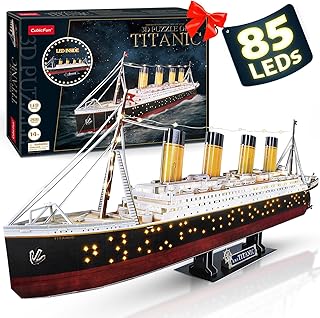
Before anything else, think about where the finished model will live. A 540-piece spherical globe or an 88 cm Titanic replica commands a shelf or a side table, while a 12-inch tree house or a small Pikachu figure fits comfortably on a desk. Wooden kits with stands, like the illuminated globe, often look best centered on a console or bookshelf where the lighting can be appreciated. If display space is limited, prioritize compact builds under roughly 30 cm tall, or kits whose pieces store neatly back in the original box for occasional display.
Piece Count, Build Time, and Skill Level
Piece count is a rough proxy for time commitment rather than difficulty. A 180-piece illuminated globe can usually be finished in a long evening, while a 360-piece pirate ship or a 540-piece globe typically spans a weekend. Mechanical kits with marble runs, music boxes, or typewriters push further, often requiring ten hours or more and a steadier hand. Beginners do best with snap-fit crystal puzzles and lower-piece wooden kits, while experienced hobbyists will appreciate the layered challenge of larger illuminated or mechanical builds.
Materials and Construction Quality
Most adult-oriented 3D puzzles fall into two material families. Laser-cut wooden kits use plywood sheets with press-out pieces that slot or glue together; quality shows up in clean cuts, snug tolerances, and clearly numbered parts. Crystal puzzles use translucent plastic pieces that interlock without adhesive, prized for their jewel-like finish and forgiving assembly. In both cases, look for listings that mention precision cutting, easy-click technology, or reinforced joins, since these phrases tend to correlate with fewer broken tabs and a sturdier final model.
Lighting, Sound, and Mechanical Features
A growing share of the best 3D puzzles include electronic or mechanical extras. LED lighting, whether warm white, green, or color-changing, turns a finished model into a nightlight or accent piece. Music boxes and mechanical movements add an interactive reward once the build is complete, though they also introduce more delicate parts that benefit from careful assembly. If you are buying for someone who enjoys tinkering, a kit with a working marble run or a wind-up mechanism offers replay value long after the last piece is placed.
Most wooden kits arrive flat-packed with a printed instruction booklet and require only a pair of cutters, sometimes included. Crystal puzzles need no tools at all. Plan for a clean, well-lit workspace with enough room to spread out the sheets and sort pieces by number or color. A small tray or muffin tin is helpful for keeping tiny components organized, and a craft knife with a fresh blade makes removing laser-cut parts easier without splintering the wood.
Maintenance and Long-Term Care
Once assembled, wooden models benefit from a light dusting with a soft brush and occasional placement away from direct sunlight, which can fade stained finishes over time. LED and music-box modules are usually sealed, but it is wise to keep batteries external and remove them when the model will sit unused for long stretches. Crystal puzzles can be wiped with a dry microfiber cloth to maintain their clarity. Storing the original box and instructions makes it far easier to disassemble and rebuild the kit later, or to pass it along.
Reading Reviews Like a Hobbyist
Review volume and rating together tell a more complete story than either alone. A kit with thousands of reviews and a 4.6- to 4.7-star average has been validated by a wide range of builders, while a smaller review base can still be trustworthy if the feedback is detailed and consistent. Look for comments that mention piece fit, clarity of instructions, and how the finished model looks on display. Recent reviews are especially useful for catching any changes in manufacturing quality, and listings with strong bought-past-month numbers suggest the kit is actively selling well.
Final Recommendation
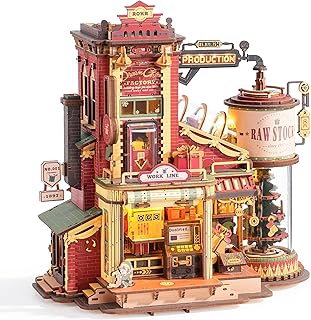
For a centerpiece display piece with broad appeal, the illuminated Titanic replica and the Ravensburger globe are the safest all-around choices, pairing large piece counts with proven reliability. If you want a themed kit that doubles as décor, the Sakura Tree House, the Christmas factory, or the countryside cottage each bring strong character to a shelf. Hobbyists who enjoy mechanical builds will get the most replay value from the marble run or the typewriter music box, while younger builders or gift recipients tend to light up around the Pikachu model or a smaller crystal puzzle. Match the kit’s complexity to the builder’s patience, confirm there is room for the finished model, and the rest of the decision usually takes care of itself.