Buying Guide
This comparison treats the best art paints as specification-based choices rather than hands-on test winners. The candidates include acrylic, oil, and watercolor products, so the right selection starts with the medium you intend to use. Acrylic dominates the list because the supplied listings document many general art and craft applications, while the Winsor & Newton products provide dedicated oil and watercolor alternatives.
Choose the paint medium first
Acrylic is the most flexible format in this selection. The listed acrylic products are water based and are described for surfaces such as canvas, wood, ceramic, glass, fabric, rocks, paper, leather, plastic, clay, and metal. Several also state fast drying, which can suit layered craft work or projects where a new coat is applied soon after the previous one. If you need a matte, semi-matte, or satin result, select a product that documents that finish rather than assuming every acrylic behaves the same way.
Oil paint has different handling characteristics. Winsor & Newton Winton is explicitly described as oil color with a stiffer consistency that retains brush and palette-knife strokes. That makes it the relevant choice here for traditional oil techniques and visible marks. The listing also says it is best used with fine art solvents, mediums, and oils, so oil painting requires a more specific supporting setup than the water-based acrylic options.
Watercolor is another distinct medium. Winsor & Newton Cotman is formulated for transparency, tinting strength, and uniform consistency. Those details point toward washes and transparent color rather than the opaque coverage associated with many acrylics. It is the focused choice for someone specifically learning watercolor rather than seeking a general craft paint.
Compare pigment and consistency claims
Pigment language can help distinguish products, but it should be read as listing evidence rather than a test result. MEEDEN states strong coloring ability and coverage in a heavy-body formula. Liquitex BASICS lists a good pigment load, while DecoArt, Shuttle Art, Artkey, and other acrylic sets describe rich or highly pigmented colors. These claims support a comparison of the supplied specifications, but they do not establish identical performance across every color.
Consistency matters as well. Heavy-body acrylics can be appropriate when you want a substantial paint feel, and Liquitex BASICS specifically says it retains peaks and brush strokes. Mont Marte and FolkArt describe creamy consistency, while Artkey uses butter-like consistency. Winton oil color is the stiffest and most medium-specific option documented in this group. Match the consistency description to the marks you want to make instead of choosing only by bottle count.
Decide how much color variety you need
A large palette can reduce the need to mix every unusual shade. MEEDEN includes 100 colors divided into regular, metallic, and fluorescent groups. Shuttle Art’s 100-color acrylic set documents 98 unique colors plus white and black. These are the broadest options for artists who want many ready-made shades.
The 36-color Shuttle Art set adds metallic gold and silver, while the 24-color products focus on a more manageable selection. Mont Marte lists many foundational colors by name, and the Cotman watercolor set includes 20 named starter colors. A smaller palette can be easier to organize and can encourage color mixing; a larger one is useful when special colors or repeated craft projects are central to your work.
Check surfaces and finish
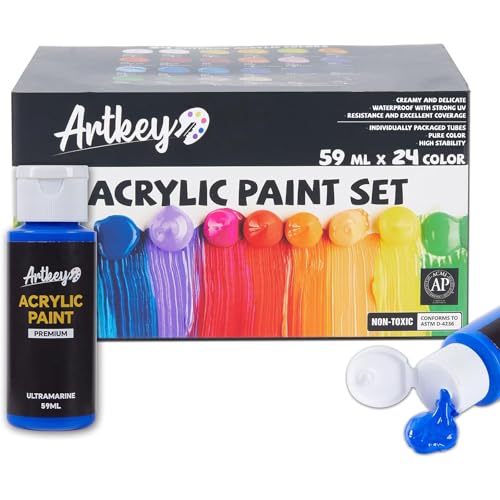
Surface compatibility is one of the most useful differences among the acrylic listings. Artkey documents an especially broad range, including canvas, fabric, wood, ceramic, glass, metal, plastic, and plaster. FolkArt lists wood, metal, glass, canvas, paper, and plastic. DecoArt specifically identifies wood, paper, canvas, and terra cotta. Shuttle Art products cover many of those surfaces and also mention rocks, leather, clay, or fabric depending on the set.
Finish is equally important. The selected products therefore support matte, semi-matte, and satin comparisons, but not a general claim that every acrylic in the category dries to one finish. Choose the stated finish closest to your intended presentation.
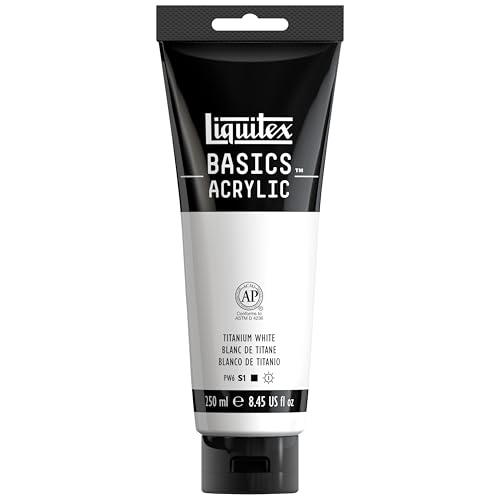
The selected products vary from 12ml tubes to 250ml single-color tubes and 60ml bottles. MEEDEN’s 12ml tubes provide many shades, whereas the 60ml Shuttle Art bottles offer more paint per color. Liquitex BASICS is a single Titanium White tube, which may make sense when one frequently used color needs a dedicated supply.
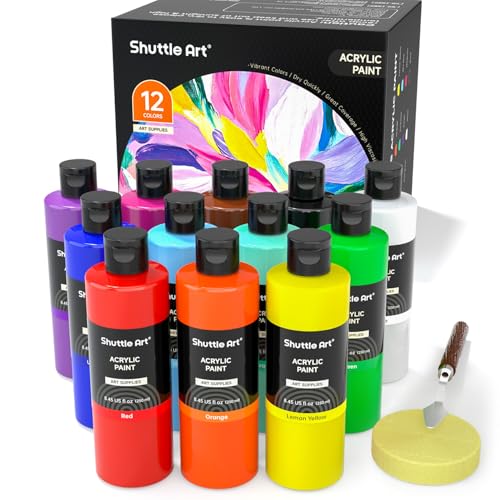
Included tools also differ. The Shuttle Art 100-color set includes brushes, sponges, a palette, and a painting knife. The 36-color set includes brushes and a palette, and FolkArt includes 10 brushes. By contrast, the Liquitex, MEEDEN, Mont Marte, Artkey, Winton, and Cotman listings focus on paint rather than documenting a comparable tool bundle. Treat included tools as convenience features, not proof of paint performance.
Review cleanup and safety details
Several acrylic listings state water-based formulas and soap-and-water cleanup while wet. Shuttle Art, FolkArt, Artkey, and Liquitex also provide safety-related information such as ASTM D-4236 conformity or non-toxic and acid-free claims. These details can matter for classrooms, family projects, and shared workspaces, but follow the product labeling and intended-use guidance for the specific item.
Oil paint should be evaluated differently because the Winton listing refers to solvents, mediums, and oils. Do not transfer acrylic cleanup assumptions to oil color. Likewise, watercolor’s transparent working properties make it a different process from either acrylic or oil.
Final Recommendation
Shuttle Art 100 Colors Acrylic Paint Set ranks first overall in this specification-based comparison under the published weighted criteria.
The final choice among the best art paints depends on the documented features that match your intended use.
MEEDEN Heavy Body Acrylic Paint Set, 100 Colors is the first overall specification-based choice. It combines the widest documented selection with regular, metallic, and fluorescent colors, plus a heavy-body consistency and stated coloring ability and coverage. Among the top art paints here, it is the most comprehensive palette for artists who want many options in one acrylic format.
Choose Shuttle Art 100 Colors instead if larger 60ml bottles and included brushes, sponges, palette, and knife are more useful than smaller tubes. Choose Liquitex BASICS Titanium White when the priority is a large dedicated white tube with a satin finish and intermixability. For a specific medium, Winton is the oil pick and Cotman is the watercolor pick. DecoArt, FolkArt, Mont Marte, Shuttle Art 36 Colors, and Artkey round out the acrylic choices with distinct finish, color-range, surface, or tool advantages.
Frequently Asked Questions
What should I look for in the best art paints for beginners?
Start with the medium and then compare consistency, color selection, surfaces, and cleanup information. Acrylic sets such as Mont Marte, FolkArt, and Artkey document broad beginner-friendly applications, while Cotman is the dedicated watercolor option and Winton is the dedicated oil option. A 24-color set is a manageable starting point; a 100-color set is better when you want many premixed shades.
Are acrylic paints suitable for more than canvas?
The selected acrylic listings document use on multiple surfaces. Artkey lists canvas, fabric, wood, ceramic, glass, metal, plastic, and plaster. FolkArt lists wood, metal, glass, canvas, paper, and plastic, while DecoArt lists wood, paper, canvas, and terra cotta. Always check the product directions for the specific surface and preparation method.
Which selected paint has a matte finish?
DecoArt Americana and FolkArt document matte finishes. Mont Marte specifies semi-matte, and Liquitex BASICS specifies satin. These are product-specific descriptions, so select according to the finish you want rather than assuming all acrylic paints dry alike.
What is the difference between oil and watercolor in this selection?
Winton is an oil color set with a stiff consistency that retains brush and palette-knife strokes, and its listing refers to solvents and mediums. Cotman is a watercolor set formulated for transparency, tinting strength, and uniform consistency. They are distinct working systems, so choose based on the medium and technique you plan to use.