Buying Guide
This guide compares the best student art paints using documented pigment quality evidence, medium range breadth, surface compatibility, non-toxic safety documentation, included accessories and surfaces, portability and storage, and kit completeness for beginners.
Why Specification Matters for the best student art paints
The best student art paints are not chosen by buzz but by documented specs: pigment load, medium type, surface compatibility, and safety certification. A specification-based comparison lets you weigh a 36-color acrylic tube set against a 50-color watercolor pan set using the same evidence language, so the final choice reflects classroom needs rather than branding. For student work, three documentation points deserve close attention: ASTM D-4236 or equivalent non-toxic certification, the actual volume of paint per tube or pan, and the list of surfaces the manufacturer lists in the spec sheet.
Match the Medium to the Assignment
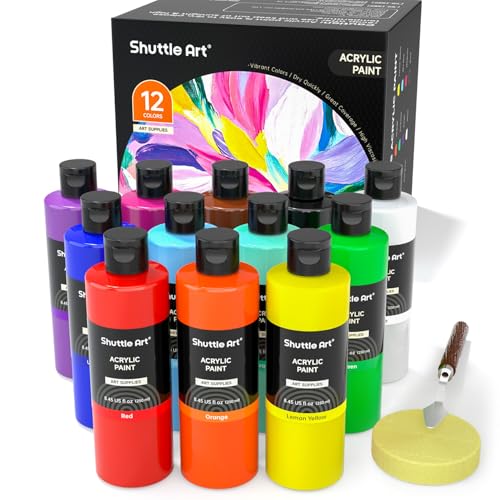
Each painting medium behaves differently on paper, canvas, and mixed surfaces, and the right student kit starts with the right medium. Acrylic tubes and bottles deliver opaque, fast-drying color that works on canvas, wood, and fabric, which is why sets like the TMOL acrylic set and the HUAL acrylic set list compatibility with multiple materials in their evidence. Watercolor pan kits such as the ARTISTRO set, the Grabie 50 color tin, and the Artecho 48 color set emphasize transparency, portability, and paper-focused work. Oil pastels like the Artecho 48 color set cover dry medium assignments where brushes and water cups are not available.
Pigment Quality Evidence
Pigment quality is documented through statements about high pigment load, fade resistance, vibrancy, and binder consistency rather than marketing language. The ARTISTRO pan set lists high-pigment blendable paint and seamless transitions, while the TMOL acrylic set documents fade-resistant colors and a buttery tube consistency. Watercolor tins like the Grabie set describe semi-transparent pigment activation with just a few drops of water. When a spec sheet specifies pigment grinding, transparency, or fade resistance, that evidence carries more weight than a generic color claim.
Safety Documentation for Classrooms
Shared classrooms and younger students require non-toxic documentation that can be cited. ASTM D-4236 is the most common standard across the returned products, appearing in the ARTISTRO set, the TMOL acrylic set, the ESRICH set, the HUAL set, the Artecho watercolor set, and the GETHPEN watercolor set. When the spec lists both standards, the set is well documented for shared classroom use, but always confirm the specific standard is printed on the current packaging.
Included Accessories and Surfaces
A student kit that bundles surfaces and easels saves a separate shopping trip and improves consistency for graded assignments. The Nicpro 68 piece set bundles eight 8 by 10 inch cotton canvas panels, a foldable table easel, and an acrylic paper pad in one box. The ESRICH acrylic set adds a wooden tabletop easel, palette knives, and sponges to its 36 paint tubes, and the koseibal acrylic set includes three pre-drawn outline canvases for guided technique practice.
Portability and Storage
Students who carry supplies between home, classroom, and studio need documented portability. Watercolor tins like the ARTISTRO set, the Grabie metal case, and the Artecho travel case are sized for backpacks and lock shut for transport.
Surface Compatibility Across Materials
Surface compatibility is documented through the manufacturer list of supported materials, and acrylic sets typically list the widest range. The HUAL acrylic set explicitly lists canvas, wood, glass, fabric, stone, ceramic, clay, shoe, plastic, and paper, which is the broadest surface spec in the returned list. Watercolor tins are designed primarily for watercolor paper but the lighter pans work in sketchbooks. Oil pastels can mark paper, cardstock, and some boards, but the spec sheet rarely lists fabric or glass, so confirm before assigning mixed-media work.
Final Recommendation
ARTISTRO Vivid Watercolor Paint Set with Palette and Brush Pens ranks first overall in this specification-based comparison under the published weighted criteria.
Based purely on the supplied evidence and category-specific scoring, the TMOL Acrylic Paint Set, 24 Colors (2 oz/Bottle) stands as the first overall specification-based choice for the best student art paints because it combines documented ASTM D-4236 non-toxic compliance, 24 fade-resistant 60-milliliter bottles, and a fast-drying formula that supports immediate layering on canvas, wood, ceramic, and fabric. For students who need a portable watercolor option, the ARTISTRO Vivid Watercolor Paint Set and the Grabie 50 color tin deliver documented dual safety certification and integrated mixing palettes, making them strong runner-up choices among the top student art paints for travel or outdoor sketching. Students working on canvas assignments can also rely on the Nicpro 68 piece acrylic canvas set, whose eight 100 percent cotton canvas panels and folding table easel complete a full session in one box. Across all of these options, the spec-driven criteria keep the comparison grounded in what each manufacturer documents, so the right kit is the one whose pigment, medium, surface, and accessory list matches your assignment and your classroom setup.
Frequently Asked Questions
Among the best student art paints, which medium is most versatile for student art paints?
Acrylic sets documented for canvas, wood, and fabric, such as the HUAL acrylic set and the TMOL acrylic set, cover the widest material range in their specifications, making acrylic the most documented versatile medium among the best student art paints. Watercolor tins like the ARTISTRO set and the Grabie 50 color set are best when assignments focus on paper-based techniques.
Are ASTM D-4236 and EN71 certifications enough to confirm classroom safety?
ASTM D-4236 and EN71 are the two safety standards most commonly documented across the returned student paint sets, including the ARTISTRO pan set, the ESRICH acrylic set, and the GETHPEN watercolor set. They confirm non-toxic labeling for art materials, but age recommendations on each packaging still need to match the grade level using the paints.
Do student acrylic kits include surfaces and easels?
Several kits do, including the Nicpro 68 piece set with eight 8 by 10 inch cotton canvas panels, the ESRICH set with a wooden tabletop easel, and the koseibal set with pre-printed outline canvases. Other acrylic sets, such as the TMOL 24 color set and the HUAL 24 color set, ship only with paints and brushes, so canvas panels and easels must be sourced separately.
How does pigment quality show up in the specifications?
Pigment quality evidence appears as statements about high pigment load, fade resistance, transparency, and buttery consistency in the manufacturer description. The Grabie 50 color tin lists semi-transparent pigment activation, the TMOL acrylic set documents fade-resistant color, and the ARTISTRO set specifies high-pigment blendable paint, all of which are evidence-based claims rather than subjective impressions.
What is the difference between pan watercolor and tube watercolor for students?
Pan watercolor sets like the Artecho 48 color set and the ARTISTRO pan set are documented as compact and portable, activating with a few drops of water and suiting sketch-style work. Tube watercolor is rarely sold in student kits within this comparison, so for transportable field sketching or classroom use, pan watercolor is the more documented format among the top student art paints listed here.