Buying Guide
Choosing the right air conditioning tube depends on the type of equipment you own, the distance to your vent or drain point, and the physical constraints of your space. This guide breaks down the key factors to consider before selecting a replacement or upgrade.
Sizing and Capacity
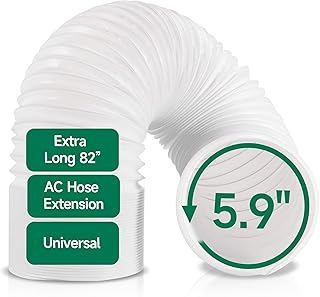
Air conditioning tubes are not one-size-fits-all. Portable AC units almost always rely on a 5.9-inch diameter exhaust hose, which has become the industry standard. If your original hose used a 5-inch port, verify whether an adapter is included or if you need a separate transition piece. For mini split installations, line sets are sold by tubing diameter and BTU capacity. A 1/4-inch and 3/8-inch pair is typically rated for a 9,000 BTU system, while larger capacities require thicker lines. Drain hoses are generally more forgiving, but a diameter that is too narrow can cause backups, and one that is too wide may not seat securely in the drain pan outlet.
Length is just as important as diameter. A hose that is too short will strain the connection and create gaps, while excess tubing can sag, kink, or trap heat near the unit. Measure the straight-line distance from the AC exhaust port to the window bracket, then add a small buffer for routing around furniture. If you frequently move the unit between rooms, consider a moderate-length hose that is easy to coil rather than an extra-long tube that becomes unwieldy.
Feature Tradeoffs
Universal replacement hoses offer broad compatibility, but they may not lock as tightly as an OEM-branded tube. Anti-clockwise or counterclockwise threading is the most common direction for portable AC exhaust ports, yet some manufacturers use clockwise fittings. Check your owner’s manual or the threads on your existing hose before ordering. Kits that include a window seal are convenient for renters or seasonal users because they eliminate the need to buy separate mounting hardware. However, if you already have a bracket, a standalone hose is often the cleaner choice.
Material quality also varies. Multi-layer hoses with internal wire ribbing tend to resist collapsing and hold their shape better than thin vinyl tubes. For drain applications, look for smooth interior walls that resist algae and sediment accumulation. Copper line sets should arrive pre-flared and insulated; uninsulated or bare tubing forces you to handle extra steps on site and increases the risk of condensation damage.
Installation and Setup Considerations
Most portable AC exhaust hoses twist onto the rear port with a quarter-turn locking motion. If the fit feels loose, inspect the gasket or threading direction rather than forcing the connection. When routing the tube to a window, keep bends gradual. Sharp corners restrict airflow and can cause the internal compressor to work harder, reducing cooling efficiency.
For mini split line sets, plan the path before uncoiling the copper. Kinks in refrigerant tubing are permanent and can choke the system. Support the lines every few feet with appropriate clamps and avoid contact with sharp metal edges. Drain hoses must slope downward toward the exit point. A flat or upward run will allow water to pool and eventually trigger an overflow sensor or leak into the surrounding area.
Maintenance and Reliability Signals
Inspect your air conditioning tubes at the start and end of each cooling season. Exhaust hoses can develop micro-tears near the collar from repeated twisting, while drain lines may clog with dust or biological growth. Running a thin brush or a stream of diluted cleaner through a drain hose once a year is usually enough to keep it clear.
Reliable products tend to have consistent feedback about fit and longevity. When reading reviews, prioritize comments that mention the exact model the buyer paired with the hose. A tube that fits a 14,000 BTU dual-hose unit may behave differently on a compact 8,000 BTU model. Look for patterns regarding thread engagement, collar durability, and whether the hose retains its shape in warm ambient temperatures.
How to Compare Reviews
High review counts generally indicate a proven product, but dig into the distribution. A 4.6-star average with thousands of ratings usually signals broad satisfaction, while a similar score on a handful of reviews may reflect limited testing. Pay attention to recent purchase velocity; strong ongoing sales suggest the manufacturer has maintained quality over time rather than relying on an old batch of favorable ratings.
For line sets and automotive-style orifice tubes, technical accuracy matters more than mass appeal. Buyers in these categories often note whether the flares were clean, the insulation was intact on arrival, and the stated diameters matched their gauges. If you see repeated complaints about leaks at the flare nut, consider a different SKU even if the overall star rating is acceptable.
Final Recommendation
If you need a straightforward replacement for a portable unit, prioritize a 5.9-inch diameter hose with counterclockwise threading and enough length to reach your window without stretching. Our top-ranked option excels in this role thanks to its extended reach and robust collar. For buyers starting from scratch or dealing with an irregular window layout, a kit that bundles the hose with an adjustable seal simplifies the project and reduces the chance of compatibility issues.
Those maintaining a mini split or heat pump should focus on copper line sets with pre-flared ends and adequate insulation for the rated BTU. Drainage upgrades are best handled by smooth, flexible tubing that can be routed discreetly to a floor drain or condensate pump. By matching the tube type to your equipment and measuring your space carefully, you can restore airflow efficiency and avoid the frustration of returns or improvised fixes.