Buying Guide
Finding the right air tool hose starts with matching the hose to your compressor, your tools, and the way you work. A hose that works well in a stationary shop may be the wrong choice for a mobile jobsite, and a lightweight recoil line may not deliver enough air for high-consumption impact wrenches. This guide breaks down the key factors to consider before you buy.
Sizing and Capacity
The two most important numbers on any air tool hose are the inner diameter and the length. Common diameters are 1/4 inch, 3/8 inch, and 1/2 inch. A 1/4-inch hose is fine for low-demand tools like brad nailers, tire inflators, and blow guns. If you run impact wrenches, ratchets, or paint sprayers, a 3/8-inch hose is the safer standard because it moves more air with less pressure drop. For continuous-duty shop tools or long runs, a 1/2-inch hose provides maximum airflow, though it adds weight and bulk.
Length matters just as much. A 25-foot hose is easy to coil and store, and it reduces pressure loss, but it tethers you close to the compressor. A 50-foot hose is the most versatile length for home shops and smaller commercial bays. If you need to cover a large shop or outdoor workspace, 100-foot hoses exist, but they can be heavy and prone to tangling unless you choose a lightweight hybrid model.
Pay attention to the maximum working pressure, usually listed in PSI. Most air tool hoses are rated to 250 or 300 PSI, which is well above the output of standard portable compressors. If you run a high-output two-stage compressor, confirm that the hose can handle the peak pressure without ballooning or failing at the fittings.
Material Tradeoffs
Air tool hoses come in three main materials: rubber, PVC, and polyurethane, plus hybrid polymers that blend two or more materials. Each has distinct advantages.
Rubber hoses are the traditional choice for shop environments. They resist kinking, tolerate hot and cold temperatures, and hold up against oil and grease. The downside is weight; a 50-foot rubber hose can be tiring to drag around. Rubber also tends to mark floors if the surface is light colored.
PVC hoses are lighter and often less expensive, but they stiffen in cold weather and can kink if you try to coil them too tightly. They work best in climate-controlled garages where weight savings matter more than extreme durability.
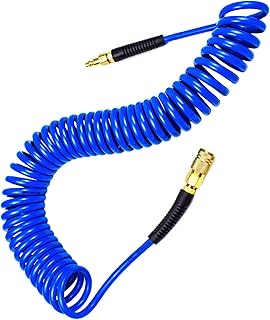
Polyurethane hoses are the lightest of the group. Recoil polyurethane hoses are popular for trim carpenters and finish work because they stay off the floor and take up almost no storage space. However, pure polyurethane can feel stiff in cold temperatures and may not resist abrasion as well as rubber or hybrid blends.
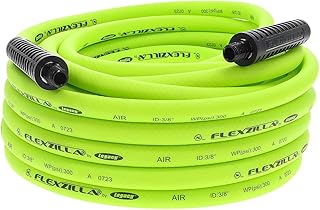
Hybrid polymer hoses attempt to capture the best traits of rubber and PVC. They remain flexible in freezing weather, resist kinking, and weigh significantly less than all-rubber constructions. For most users, a hybrid hose offers the best balance of handling and longevity.
Fittings and Connections
Most consumer air tool hoses ship with 1/4-inch MNPT brass fittings. Brass resists corrosion and seals reliably with Teflon tape or thread sealant. Some hoses include industrial quick couplers or universal connectors. If your tools use a different profile, verify compatibility or plan to swap the fittings.
Bend restrictors are small but valuable. These reinforced sleeves at the hose ends reduce strain where the hose meets the fitting. Without them, repeated pulling and coiling can cause the hose to crack near the collar. If a hose does not include restrictors, aftermarket spring guards are inexpensive and easy to install.
For setups where the hose connects directly to a wall-mounted reel or a stationary compressor, a short lead-in hose or whip hose can reduce vibration transfer and make the main hose easier to connect. Lead-in hoses are typically three to six feet long and often include a swivel fitting to prevent twisting.
Installation and Setup Considerations
Before you connect a new hose, inspect the threads and seating surfaces. Small metal shavings or damaged threads can cause leaks that waste CFM and make tools underperform. Apply thread sealant to the mating threads, but avoid over-tightening, which can crack brass fittings or distort the hose collar.
Route the hose away from sharp edges, welding spatter, and traffic areas where vehicles or carts might roll over it. If you work in an automotive shop, consider a hose with an abrasion-resistant cover or invest in a protective sleeve. Even a durable rubber hose will eventually fail if it rubs against metal framing every day.
If you use multiple tools, a hose with quick-connect fittings saves time. Keep the coupler on the hose and matching plugs on every tool. That way you can swap from an impact gun to a blow gun in seconds without shutting down the compressor.
Maintenance and Reliability
Air tool hoses are low-maintenance, but a few habits extend their life. Drain your compressor tank regularly to reduce moisture in the line. Excess water can rust steel fittings and degrade internal tube materials over time. In humid climates, an inline water separator helps protect both the hose and the tools.
Coil the hose after each use. Leaving it in a heap on the floor invites kinks, tripping hazards, and damage from foot traffic. For rubber and hybrid hoses, a wide loop coil prevents memory from setting in. For recoil polyurethane hoses, avoid stretching them beyond their natural working length, which can weaken the coil memory and cause permanent deformation.
Inspect fittings periodically for cracks, leaks, or thread damage. A hissing connection is not just annoying; it robs your tool of power. Replace damaged fittings rather than trying to repair them with tape alone. If the hose cover shows abrasion down to the reinforcement braid, retire it before a blowout occurs.
How to Compare Reviews
When reading user feedback on air tool hoses, focus on patterns rather than isolated complaints. A single report of a leaking fitting may be an anomaly, but repeated mentions of cracked collars or kinking in cold weather indicate a real design weakness.
Look for reviews that mention the specific tools and climate where the hose was used. A reviewer in Arizona may praise a PVC hose for flexibility, while a reviewer in Minnesota may report the same model turning rigid in winter. Prioritize feedback from users whose setup resembles yours.
Review photos can reveal long-term wear. If multiple buyers post images of frayed covers or separated fittings after a few months, treat that as a reliability signal. Conversely, consistent praise for lay-flat behavior, light weight, and durable fittings is a strong endorsement.
Final Recommendation
If you need one versatile hose for a home or professional shop, a 3/8-inch by 50-foot hybrid polymer hose is the safest starting point. It moves enough air for most impact and fastening tools, stays manageable in cold weather, and resists the kinks that plague cheaper PVC lines. For users who work exclusively with trim nailers or inflation tools, a 1/4-inch by 25-foot hybrid or recoil polyurethane hose is lighter and easier to store.
When durability is the top priority and weight is less of a concern, a Made-in-USA rubber hose with brass fittings offers proven longevity in oily, high-traffic environments. If you are setting up a new compressor and do not yet own fittings or accessories, a kit that bundles a hose with connectors and a blow gun can save time and ensure everything matches out of the box.
Match the diameter to your tools, the length to your workspace, and the material to your climate. With those three variables aligned, any of the highly ranked options above will deliver consistent, leak-free performance.