Buying Guide
Choosing the right arthritis gloves is less about brand hype and more about how a glove fits, compresses, and holds up through daily wear. The best arthritis gloves should feel snug enough to support sore joints without restricting circulation, and they should let you keep doing the things you love, whether that is typing at a keyboard, crocheting a blanket, or simply opening a jar. Below is a practical framework for narrowing down the options in this list.
Sizing and Fit
Compression only works when the glove fits correctly. Measure the circumference of your hand at the knuckles and compare it against the brand’s sizing chart before ordering. A glove that is too small can pinch or overheat the hand, while one that is too large will not deliver meaningful compression. Several listings on this page come in multiple sizes, including small, medium, and large, so prioritize a model that offers your specific size rather than guessing. If you are between sizes, many users prefer to size down for firmer support, but only if the fingertips do not feel cramped.
Compression Level vs. Comfort
Compression gloves generally fall into light, medium, and firm categories. Light compression is best for all-day wear, typing, and mild swelling. Medium compression suits moderate rheumatoid or osteoarthritis symptoms and is the most common level in this list. Firm or high-tension compression is reserved for users who want deeper joint support and do not mind a tighter feel. If you are new to compression gloves, start with a medium level and adjust based on how your hands respond after a few hours of wear.
Fingerless vs. Full-Finger Designs
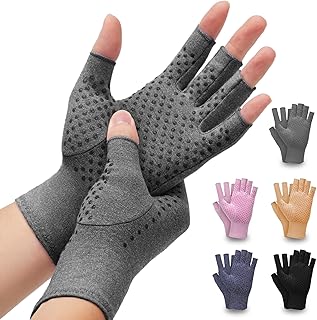
Almost every glove in this roundup is fingerless, and for good reason. Fingerless arthritis gloves preserve dexterity for typing, phone use, crafting, and gripping utensils, while still compressing the knuckles and wrist where arthritis pain often concentrates. Full-finger gloves exist but tend to be warmer and less practical for screen-based tasks. If your symptoms are mainly in the fingers themselves, look for a glove with an open fingertip that still wraps the base of each finger.
Material and Breathability
Most arthritis gloves use a blend of nylon, spandex, and sometimes cotton or copper-infused fibers. Breathable knits reduce sweat during long wear, which matters if you plan to keep the gloves on through a workday. Copper-infused fabrics are popular for odor control and a cooler feel, though the copper itself does not change compression. If you live in a warm climate or tend to run hot, prioritize a lightweight, breathable weave over a thicker one.
Wrist Support and Carpal Tunnel
Several gloves on this list, including the Copper Compression and Vive models, add reinforced wrist panels that double as light wrist braces. This is helpful if you also current Amazon listing detail with carpal tunnel, tendonitis, or general wrist fatigue. If your pain is concentrated in the wrist rather than the knuckles, choose a glove with a structured wrist panel. If your pain is mainly in the finger joints, a simpler fingerless sleeve may be more comfortable.
Grip and Texture
Standard compression gloves can feel slippery on phones, pens, or steering wheels. Textured palm designs, like the Vive gloves with grips, solve this by adding silicone or fabric texture to the palm. If you plan to wear gloves while driving, gaming, or handling tools, a grippy palm is worth prioritizing. For desk work and typing, a smooth palm is usually fine.
Single Pair vs. Multi-Pack
Because compression gloves are worn close to the skin, they need to be washed regularly. A two-pair pack, such as the DRNAIETY options, lets you rotate pairs between washes and extends the lifespan of each glove. Multi-packs are also a smart choice if you want different sizes for different family members, or if you simply want a backup pair on hand.
Maintenance and Care
To extend the life of any compression glove, hand wash it in cool water with a mild detergent and lay it flat to dry. Avoid bleach, fabric softeners, and high heat, which can break down the elastic fibers that provide compression. Replace gloves when the fabric feels loose, the stitching frays, or the compression noticeably fades, usually after several months of regular wear.
Reading Reviews Critically
When comparing reviews, look beyond the star rating. Pay attention to comments about sizing accuracy, durability after multiple washes, and whether the compression holds up over time. Reviews that mention specific activities, such as crocheting for hours or typing through a workday, are more useful than generic praise. Be cautious of reviews that focus only on appearance or color, since those do not reflect therapeutic performance.
Reliability Signals to Look For
Strong indicators of a reliable glove include a large number of reviews, consistent ratings across multiple sizes, and clear information about materials and care. Listings that have been available for several years and continue to accumulate reviews tend to be more dependable than brand-new entries with limited feedback. Active savings, such as coupons or percentage current Amazon listing detail, can also signal that a brand is confident in repeat purchases.
Final Recommendation
If you want the most well-rounded option, start with the Copper Compression Fingerless Gloves in your preferred size. They combine a massive review base, wrist support, and a fingerless design that works for nearly any daily activity. If budget is the priority, the Vive Fingerless Gloves deliver solid compression at a lower current Amazon listing detail. For users who want a textured grip, the Vive Arthritis Gloves with Grips are the clear pick, while the DRNAIETY two-pair packs are ideal if you want rotation between washes or a backup pair. Match the glove to your main activity, confirm your size, and you will have a reliable tool for managing everyday hand discomfort.