Buying Guide
Choosing the best airtight canning lids starts with identifying the jar mouth and the sealing method. A lid that fits a 70 mm regular-mouth jar will not replace an 86 mm wide-mouth lid, and a reusable vacuum lid serves a different purpose from a conventional metal canning lid. The products above are ranked from supplied specifications, not hands-on testing or customer sentiment.
Match the lid to the jar mouth
Regular-mouth jars commonly use a 70 mm format. The FORJARS regular-mouth packs, Dalzom, EvaHab, and Topbooc all identify regular-mouth compatibility, with measurements around 2.7 to 2.76 inches. These are suitable starting points when your jars use the narrower opening. Check the jar and lid dimensions before ordering because names such as regular and wide are more useful than brand names alone.
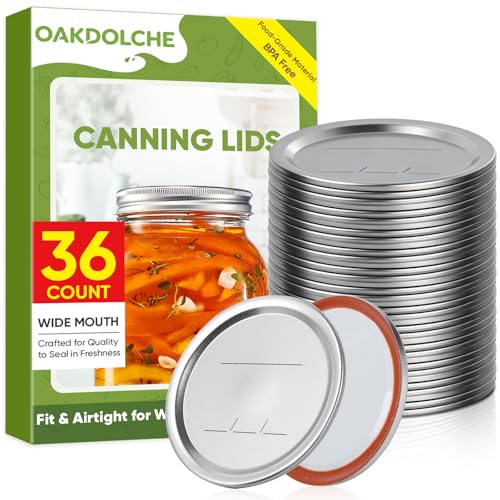
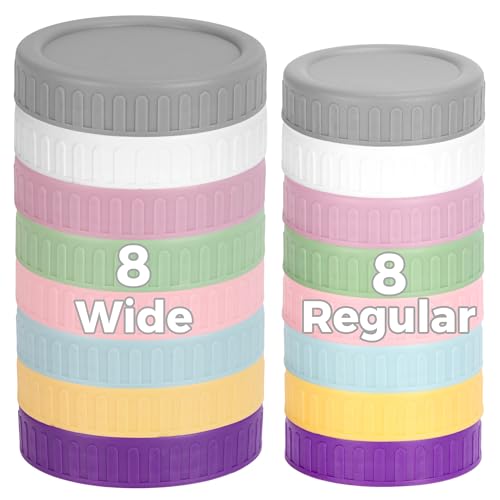
Wide-mouth jars require a larger lid. The FORJARS wide-mouth pack and OAKDOLCHE both document an 86 mm format. Palksky also identifies a wide-mouth design, while the wotierbog set includes both regular- and wide-mouth pieces. A mixed-size pack can be convenient, but it may leave unused lids if most of your jars use only one opening.
Compare sealing systems
Silicone is the most common sealing element in this selection. FORJARS, Dalzom, OAKDOLCHE, EvaHab, and Topbooc describe silicone seals, gaskets, or sealing rings. These listings position the products for airtight storage or canning-related use. The seal is only one part of the setup, however: a compatible band or ring may be required to hold a conventional lid in place.
The wotierbog design is different. Its one-way air valves are intended to work with electronic mason-jar vacuum sealers, and the listing explicitly says the lids are not for pressure canning. That makes them a specialized choice rather than a universal replacement. If your priority is vacuum-assisted storage, the valve is the relevant feature; if your priority is pressure canning, this option should be excluded.
Decide whether bands are needed
Several products are lid-only packs. FORJARS regular-mouth 100-pack, FORJARS wide-mouth 50-pack, OAKDOLCHE, Dalzom, EvaHab, and Topbooc do not include bands according to their supplied descriptions or titles. These packs make sense when you already have compatible bands or need replacement sealing disks.
The FORJARS 12-set regular-mouth option and Palksky wide-mouth set include bands or rings. That can simplify shopping and ensure the lid and retaining component are designed as a set. The trade-off is quantity: complete sets generally provide fewer lid assemblies than bulk lid-only packages.
Consider material and care
Metal lids dominate the traditional options. The FORJARS products describe food-grade, rust-resistant metal; Dalzom identifies food-grade metal; OAKDOLCHE specifies thick tinplate; and Topbooc also identifies tinplate. These descriptions support comparison of construction, but they do not establish independent durability testing. Treat material claims as listing specifications rather than proven long-term performance.
Stainless steel is the defining material for Palksky, which may appeal to shoppers seeking a rust-resistant metal set. AOZITA uses BPA-free plastic and documents dishwasher, refrigerator, and freezer use. Plastic caps are convenient for everyday storage, but the supplied evidence emphasizes leakproof storage rather than traditional canning processes.
Reusable status also varies. Dalzom explicitly describes its lids as one-time use, while wotierbog and AOZITA describe reusable designs. Topbooc and EvaHab make broader reuse-oriented claims. Follow the product’s stated use instructions and distinguish pantry or refrigerator storage from heat-processing methods.
Use pack size as a practical filter
Pack size matters when replacing many lids at once. Topbooc offers 150 regular-mouth lids, EvaHab 128, and FORJARS 100. These are useful for large inventories, seasonal projects, or frequent replacement. Dalzom’s 72 and FORJARS’ 50 wide-mouth lids occupy a middle ground. OAKDOLCHE provides 36 wide-mouth lids, while the complete-ring and Palksky sets are smaller.
A large pack is not automatically the right choice. If you use only a few jars, a smaller set with bands may reduce unused inventory. If you own both jar sizes, AOZITA or wotierbog can cover more of your collection, but each is designed around a different sealing approach.
Check the intended preservation method
The phrase best airtight canning lids can describe several product types, from replacement metal disks to reusable storage caps. Read the use-case language closely. Traditional canning-related listings include the FORJARS, Dalzom, OAKDOLCHE, EvaHab, and Topbooc metal lids. Vacuum-sealing lids such as wotierbog should be considered separately because the listing excludes pressure canning. AOZITA is positioned around refrigerator, freezer, dry, and liquid storage.
Before buying, confirm the jar mouth, whether bands are required, whether the lid is single-use or reusable, and whether the intended food-preservation method is documented. Avoid assuming that an airtight storage claim makes a lid suitable for every canning process.
Final recommendation
FORJARS Regular Mouth Canning Lids, 100-Pack ranks first overall in this specification-based comparison under the published weighted criteria.
The final choice among the best airtight canning lids depends on the documented features that match your intended use.
FORJARS Regular Mouth Canning Lids, 100-Pack is the highest-scoring returned product and the first overall specification-based choice. It combines a clearly identified 70 mm fit, silicone seals, food-grade rust-resistant metal, and a substantial pack size. For wide-mouth jars, the FORJARS Wide Mouth Canning Lids, 50-Pack is the most specification-aligned bulk alternative, while the FORJARS Regular Mouth Lids and Rings, 12 Sets is more convenient when bands are also needed.
Among the top airtight canning lids, wotierbog is the specialized pick for electronic vacuum-sealer users, and AOZITA is the flexible mixed-size choice for refrigerator and freezer storage. OAKDOLCHE is useful when labeling matters, while Palksky is the compact stainless-steel set. The highest-count options from Topbooc and EvaHab make sense for large regular-mouth replacement needs. Match the recommendation to the jar size and method rather than choosing by pack count alone.
Frequently Asked Questions
Among the best airtight canning lids, what size lid fits a regular-mouth Mason jar?
The regular-mouth products in this comparison identify sizes around 70 mm or 2.76 inches. FORJARS, Dalzom, EvaHab, and Topbooc are listed for regular-mouth jars. Check the diameter and your jar manufacturer before ordering, especially if the jar is from an uncommon line.
Do all airtight canning lids include bands?
No. Many bulk packs in this comparison contain lids only. FORJARS’ 12-set regular-mouth product includes bands, and Palksky lists lids and rings together. The 100-count FORJARS pack, OAKDOLCHE, Dalzom, EvaHab, and Topbooc are examples where bands are not included or are not part of the stated package.
Are vacuum-sealing lids suitable for pressure canning?
Not necessarily. The wotierbog listing specifically says its vacuum lids are not for pressure canning. They are designed for electronic vacuum sealers and should be evaluated as a separate storage system. Follow the product’s stated limitations and use the lid only for the method documented by its listing.
Are reusable plastic caps the same as traditional canning lids?
No. AOZITA’s plastic caps are described for airtight, leakproof refrigerator, freezer, dry, and liquid storage. Traditional metal replacement lids are a different design and use category. Choose based on whether you need everyday storage or a lid documented for your intended canning process.
What should I check before ordering?
Confirm the jar mouth size, lid quantity, material, seal type, whether bands are included, and the documented use case. Also check whether the product is one-time use, reusable, or intended for vacuum sealing. These details help narrow the best airtight canning lids for your actual jars and storage routine.