Buying Guide
The best motion alarm detectors differ mainly in how they sense movement, how they deliver alerts, and where they can be installed. The products in this comparison fall into four practical groups: standalone indoor sirens, receiver-based driveway systems, solar outdoor alarms, and hub-connected smart sensors. Start by deciding whether the alert should be heard at the sensor, carried to an indoor receiver, or delivered through a connected home platform.
Match the detector to the monitored space
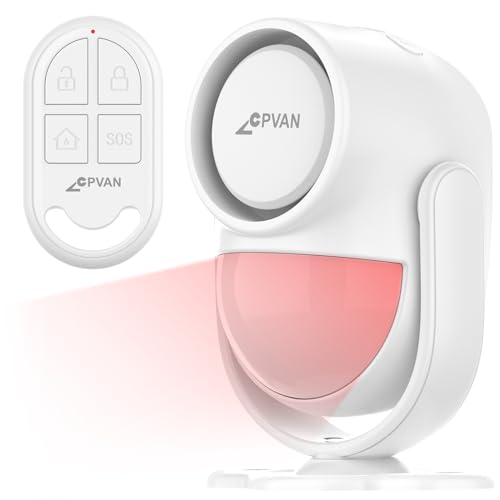
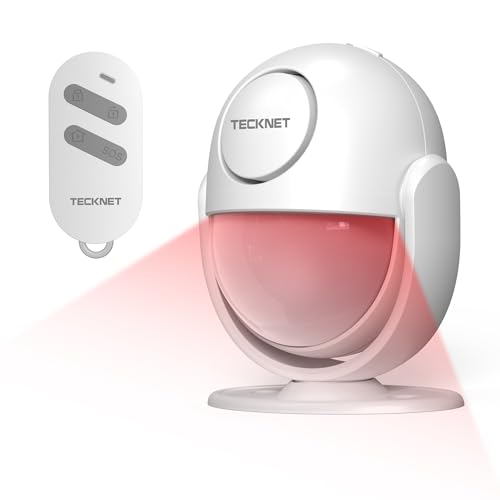
For a room, garage, shed, van, or stairway, a local PIR siren is usually the simplest design. The CPVAN CP2 Pro lists a 40-foot range and a 125dB siren, while the TECKNET TK-HA001 covers 16 to 26 feet across a 120-degree angle. Both offer alarm and gentler chime modes. These formats are useful when the person setting the detector needs a direct audible warning without an app or hub.
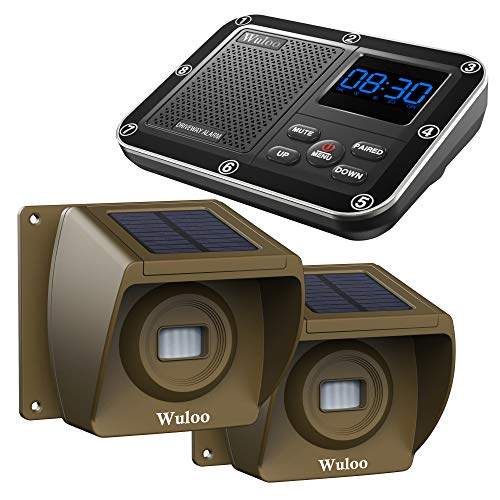
A driveway or large property needs a different arrangement. HTZSAFE, eMACROS, and Wuloo place the motion sensor outdoors and send the alert to a receiver. HTZSAFE lists detection from 25 to 70 feet and transmission up to one-half mile. eMACROS also lists one-half-mile open-area communication and includes two sensors. Wuloo lists a one-third-mile range and expansion for up to eight additional sensors. Practical coverage depends on terrain, structures, and sensor placement, so the stated open-area figures should be treated as comparison specifications rather than field-test results.
Compare detection range and angle
A longer sensing distance is not automatically better. A sensor aimed across a driveway may benefit from a 50- or 70-foot setting, while a doorway sensor may need a narrower zone to limit activity outside the entry point. HTZSAFE provides three sensitivity levels, and eMACROS provides high and low settings. The Tapo T100 allows three-, five-, or seven-meter detection settings and has an adjustable viewing angle.
Indoor units generally document shorter ranges. METAK lists a 26-foot diameter range and a 110-degree angle. EverNary lists 16.4 feet and 110 degrees, which is more appropriate for a bedroom, bedside, or nearby doorway than a broad yard. eufy E20 does not state a numeric detection distance in the supplied listing, but it does document pet-friendly human detection and a 656-foot open-air HomeBase connection. Keep sensing distance separate from wireless transmission distance: one describes where movement is detected, while the other describes how far the signal may travel to a receiver or hub.
Decide how the alert should work
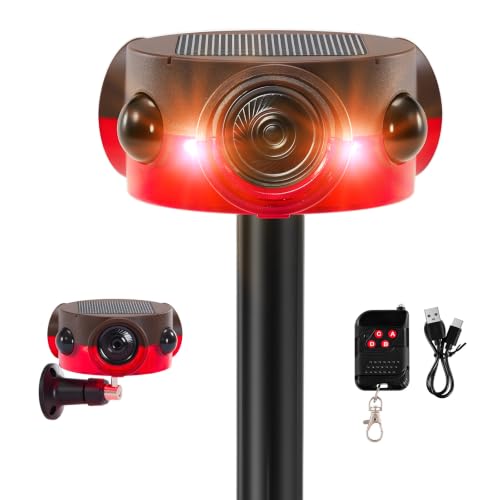
Sound-only alarms are direct and do not depend on another device. CPVAN and TECKNET both combine loud sirens with chime modes, and TECKNET adds a strobe light. Outdoor alarm designs can offer more visible and audible choices. COTINSE lists a 120dB siren, six red strobe LEDs, 14 preset sounds, three volume levels, and silent flash-only operation. It also supports a custom 30-second recording, which can make the alert more specific to the property.
Receiver systems move the alert indoors. These options can be preferable when the sensor is installed outside or away from a bedroom. Smart sensors work differently: eufy E20 and Tapo T100 rely on their respective hubs for connected functions, and the Tapo listing specifically documents app notifications and smart actions rather than a built-in siren.
Check power and installation requirements
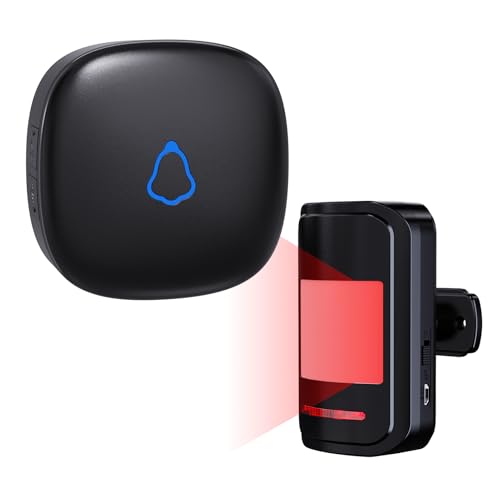
Power affects where the detector can go and how often it needs attention. TECKNET supports AAA batteries or plug-in operation. METAK supports AAA batteries or Micro USB power. EverNary supports batteries or USB cable operation. These choices help when an outlet is close by but also preserve battery placement flexibility.
Solar systems are designed for outdoor locations. HTZSAFE, eMACROS, and Wuloo document solar charging with rechargeable batteries. Solar operation still depends on suitable exposure and correct positioning, so check the mounting location before selecting this design.
Mounting options range from adhesive and screws to brackets, stakes, and tabletop placement. CPVAN supports adhesive, screws, or a shelf, while COTINSE includes outdoor mounting hardware and HTZSAFE can be placed on walls, fence posts, or trees. The intended surface and viewing direction matter because PIR detectors respond to moving heat sources within their field.
Consider expansion and ecosystem limits
If one sensor is enough, a standalone unit may avoid unnecessary system requirements. For several entrances, expansion can be more important. METAK supports up to 20 sensors on one receiver. EverNary lists up to 20 transmitters per receiver and up to 20 receivers per transmitter. HTZSAFE supports up to four sensors and unlimited receivers, while Wuloo supports up to eight additional sensors.
Smart-home models offer a different kind of expansion. Tapo T100 can participate in Tapo smart actions, but it requires a Tapo H100 hub and secured 2.4GHz Wi-Fi. eufy E20 requires a compatible HomeBase. Read these requirements before choosing a connected sensor, particularly if the intended location does not already use that ecosystem.
Installation checklist
Before mounting, identify the direction of normal movement, the desired detection boundary, and the location where the alert will be heard. Avoid aiming outdoor high-sensitivity sensors toward frequent moving objects when the listing warns that leaves or traffic may trigger them. For receiver systems, measure the practical path between sensor and receiver rather than relying only on open-area figures. For smart sensors, confirm hub compatibility and network requirements. Finally, test the alert mode, volume, and detection setting after installation.
Final Recommendation
HTZSAFE Solar Wireless Driveway Alarm ranks first overall in this specification-based comparison under the published weighted criteria.
It is a suitable option for garages, sheds, vehicles, and other indoor spaces.
Wuloo is the better fit for a growing multi-sensor layout. COTINSE adds sound customization, custom recording, strobe LEDs, and IP65 weather resistance for outdoor alerting.
eufy E20 is suited to pet-aware eufy HomeBase installations, and Tapo T100 is the connected choice for Tapo notifications and smart actions. These are the top motion alarm detectors here for different documented use cases, not identical substitutes.
The best motion alarm detectors are selected by matching detection distance, alert path, power source, and system requirements to the installation. A local siren is direct, a receiver system extends awareness across a property, and a hub-based sensor adds automation when the required ecosystem is already available.
Frequently Asked Questions
What are the best motion alarm detectors for a garage?
The CPVAN CP2 Pro and TECKNET TK-HA001 are well matched to indoor garage use based on their PIR sensing, local sirens, remote controls, and battery operation. CPVAN lists a 40-foot detection range, while TECKNET lists 16 to 26 feet and a 120-degree angle. Choose according to the size and layout of the garage.
Do the best motion alarm detectors need Wi-Fi?
No. CPVAN and TECKNET are described as standalone wireless alarms, and eMACROS explicitly states that it does not support Wi-Fi, Bluetooth, or smartphone app connectivity. Tapo T100 is different: it requires a Tapo hub and secured 2.4GHz Wi-Fi for app notifications and smart actions.
Which selected detector is designed for a long driveway?
HTZSAFE lists detection from 25 to 70 feet and wireless communication up to one-half mile. eMACROS also lists one-half-mile open-area transmission and includes two sensors. Wuloo lists a one-third-mile range and supports additional sensors. Terrain, walls, trees, and other obstructions can affect the practical signal path.
Are solar motion alarms suitable for outdoor use?
HTZSAFE, eMACROS, and Wuloo use solar charging, while COTINSE adds USB-C backup charging and an IP65-rated casing. Installation still requires suitable sunlight and careful positioning, and the sensing area should be checked for unwanted movement.
Can one receiver support several motion sensors?
Yes. METAK lists support for up to 20 sensors on one receiver. EverNary lists up to 20 transmitters per receiver and up to 20 receivers per transmitter. HTZSAFE supports up to four sensors and unlimited receivers, while Wuloo supports up to eight additional sensors.