Buying Guide
The best aluminum decorative tiles are not all built or installed the same way. The supplied listings include individual subway pieces, large peel-and-stick sheets, geometric mosaics, relief designs, and printed decorative panels. Start by matching the tile format to the wall area and the look you want, then verify the surface and environmental limits before you buy.
Choose the construction carefully
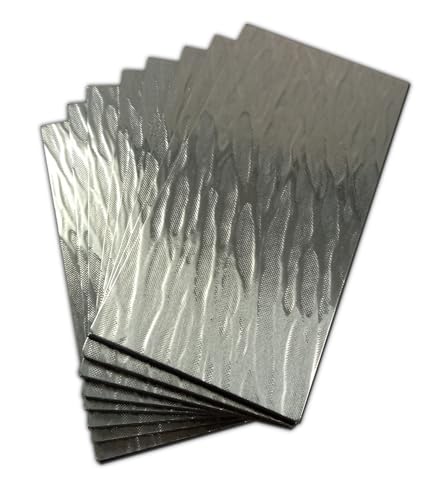
Some listings describe a brushed or frosted aluminum surface, while others identify aluminum composite, aluminum-plastic, or a combination of metal blocks and resin. That distinction matters. SODI MOSAIC combines brushed aluminum blocks with copper-bronze resin relief, creating a highly decorative result but not an all-metal construction. The weimeisc Light Gold Subway Tiles are described as aluminum composite with a 3D metal texture. By contrast, Crystiles and the XUANINY subway-style options identify aluminum or a brushed aluminum surface more directly.
If a solid-metal appearance is your priority, give more weight to listings that explicitly describe the surface as aluminum. If pattern and texture matter more, composite or mixed-material construction may offer more visual detail. Avoid treating every metallic-looking product as identical; the construction language is one of the most useful specification differences in this category.
Large sheets can simplify alignment and reduce the number of individual pieces. The weimeisc Printed Frosted Golden Tiles and XUANINY Bronze Mosaic Wall Sticker both state coverage of roughly 9 square feet per package, making them suitable starting points for broader backsplash areas. SODI MOSAIC uses five approximately 12-inch sheets, but its stated coverage is about 5 square feet.
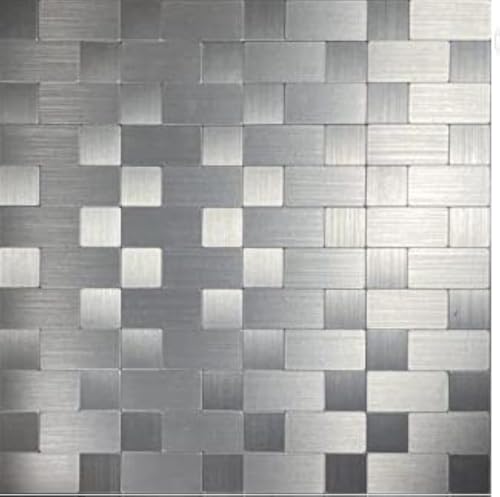
Individual pieces give you more control over spacing and pattern direction. Crystiles, the XUANINY 32-Piece option, and weimeisc Light Gold Subway Tiles use 3-by-6-inch pieces. That format is familiar for subway layouts and can be useful around outlets, corners, or short backsplash runs. The Wall Wear tiles use 8-by-8-inch squares, which can suit a smaller accent zone, while the long silver-grey sheets create a different horizontal rhythm.
Always compare stated coverage with the dimensions because package descriptions are not fully consistent across listings. Allow extra material for cuts, edges, and pattern matching. Several listings recommend buying overage, and one specifically suggests purchasing at least 10% extra.
Check the installation surface
Most of these products use peel-and-stick backing, which can avoid separate glue and grout. That convenience does not remove surface preparation. XUANINY, weimeisc, and other listings repeatedly specify a clean, dry, smooth, or flat surface free from dust and oil.
The Wall Wear listing is especially relevant for renters because it describes clean removal from most properly prepared surfaces. That should still be treated as a product-specific claim rather than a guarantee for every paint or wall finish. Test a tile or follow the manufacturer’s preparation instructions when the wall material is uncertain.
For cutting, several selected products mention scissors, utility knives, tin snips, or hand saws. Individual pieces may be easier to position around obstacles, while sheets can speed installation across an uninterrupted area. SODI MOSAIC uses mesh backing that can be cut with a utility knife, but its relief finish also comes with a non-sanded-grout recommendation.
Consider water and heat limits
Many selected products are described as waterproof, water resistant, moisture resistant, oil proof, or heat resistant. These terms are useful, but they do not mean the tiles are suitable for every wet or hot location. XUANINY listings state that the products should not contact an open flame directly or be submerged. The weimeisc Light Gold listing likewise says the tiles should not be submerged, and Wall Wear describes water resistance rather than unlimited water exposure.
For a kitchen backsplash, bathroom wall, laundry area, or fireplace surround, read the specific application language and keep the tiles away from direct flame. Wipeable surfaces can help with routine cleaning, but the evidence supplied here does not establish long-term performance, adhesion life, or suitability for a particular building code.
Pick the decorative direction
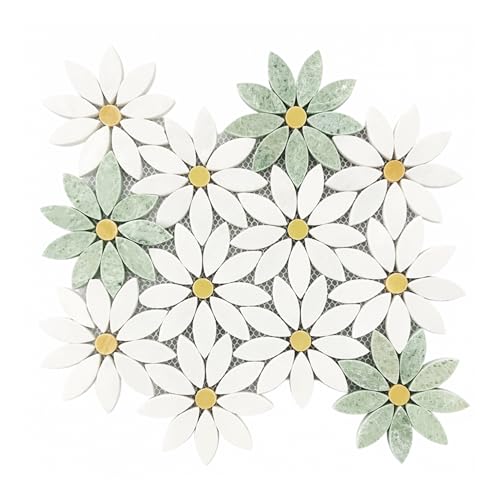
For ornate traditional styling, SODI MOSAIC uses historic floral relief and copper-bronze coloring. For bold modern contrast, XUANINY Black offers a black brushed-metal look. The XUANINY Square and Rectangle design brings geometric variation, while XUANINY Bronze adds mirror-chip details. Wall Wear is the clearest botanical choice, with sage-green and gold leaves. Gold and silver options provide more restrained ways to coordinate with cabinetry, appliances, or surrounding tile.
The top aluminum decorative tiles therefore depend on both construction and design. A highly textured finish may become the focal point, while a plain brushed surface can work as a quieter background. Request or review a sample when color matching is important, especially where a listing describes printed, frosted, relief, or reflective details.
Compare adhesive convenience with finish requirements
Peel-and-stick tiles are attractive for small renovations because the listings describe no extra glue and, in many cases, no grout. However, adhesive performance depends on preparation, wall flatness, and environmental exposure. A sheet that is easy to cut may still need careful alignment. A grout-free design may be faster to install, while a mesh-backed mosaic may offer better control over a complex pattern.
Before ordering, measure the wall, calculate coverage, identify outlets and corners, and confirm that the finish and package format are available in one coordinated purchase. These steps help prevent visible color differences, unnecessary seams, and shortages.
Final Recommendation
weimeisc Printed Frosted Golden Tiles ranks first overall in this specification-based comparison under the published weighted criteria.
SODI MOSAIC Copper Bronze Relief Tile is the first overall specification-based choice among these best aluminum decorative tiles. Its documented brushed aluminum blocks, ornate relief, mesh-mounted sheets, and stated heat and moisture resistance give it the most specification-aligned combination of decorative distinction and installation information, although the resin relief means it is not an all-aluminum tile.
For larger areas, weimeisc Printed Frosted Golden Tiles and XUANINY Bronze Mosaic Wall Sticker offer the clearest stated coverage. For classic individual subway pieces, Crystiles is a straightforward brushed-aluminum option, while weimeisc Light Gold Subway Tiles offer more individual pieces and a warmer finish. Wall Wear is the most distinctive selection for a botanical accent, and XUANINY Black is a focused choice for a dark modern palette.
The top aluminum decorative tiles should still be selected by surface condition, package coverage, and exposure limits rather than appearance alone. Confirm measurements, prepare the wall, allow for cuts, and keep adhesive decorative tiles away from direct flame or immersion unless the product documentation explicitly permits the application.
Frequently Asked Questions
Are aluminum decorative tiles suitable for a kitchen backsplash?
Several selected listings identify kitchen backsplashes as suitable indoor applications and describe resistance to moisture, water, oil, or heat. That does not make them suitable for direct flame or submersion. Use them on an appropriately prepared wall and follow the product’s specific limitations around stoves, sinks, and cleaning.
What surface is needed for peel-and-stick tiles?
The recurring requirement in the listings is a clean, dry, smooth, even, or flat surface free from dust and oil. Textured, rough, oily, or uneven walls may prevent proper adhesion. Wall Wear additionally describes removal from most properly prepared surfaces, but results can vary with the wall finish.
Yes. Several listings recommend extra material for waste, and one advises purchasing at least 10% more. Measure the full installation area, account for outlets and corners, and compare that figure with the stated package coverage. Do not rely on the number of pieces alone when sheet sizes differ.
Which best aluminum decorative tiles are easiest to cut?
The listings mention scissors, utility knives, tin snips, or hand saws depending on the product. Individual 3-by-6-inch pieces can offer flexible placement, while sheet products may need trimming around edges. SODI MOSAIC specifically describes cutting its mesh backing with a utility knife and recommends non-sanded grout for its finish.
Can these tiles be used around a fireplace?
Some selected listings name fireplace surrounds or fireplace applications, but the same listings warn against direct flame contact or submersion. Confirm the exact clearance and installation requirements for your fireplace before choosing a product. A decorative tile’s stated heat resistance should not be interpreted as approval for direct flame exposure.