Buying Guide
Choosing the best aluminum stockpots means looking past shiny exteriors and focusing on the engineering numbers that actually drive cooking performance. Aluminum is popular for stockpots because it heats quickly and spreads heat well, but the differences between a thin spun pot and a heavy-gauge or cast aluminum design are substantial. Below is a specification-first walkthrough of the features that matter when comparing the top aluminum stockpots available for 2026.
Gauge and Wall Thickness
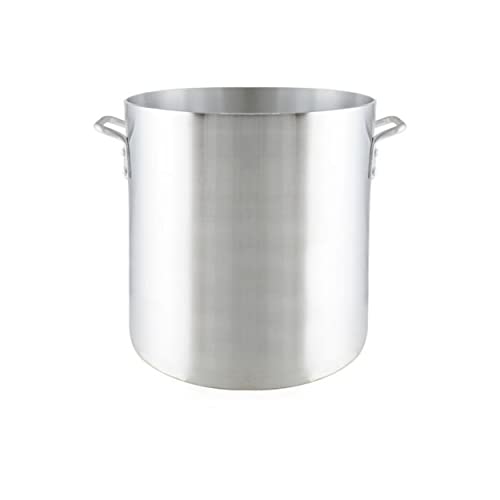
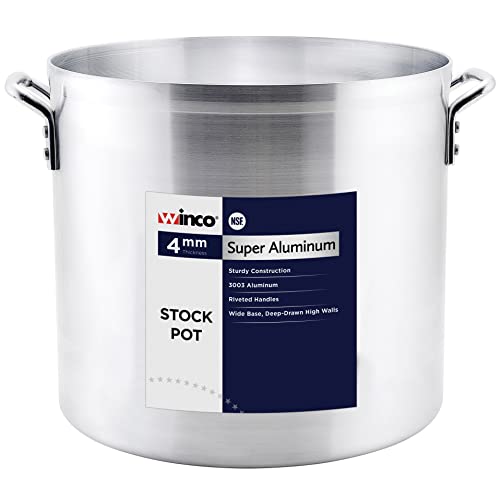
The single most important specification on any aluminum stockpot is wall thickness, because it controls both dent resistance and heat retention. Thin aluminum heats fast but develops hot spots and warps over time, while thicker aluminum smooths out temperature swings. The TrueCraftware 80 qt model lists a 6mm wall thickness, and several Winco and Winware professional pots are built from 4mm thick 3003 aluminum. Lighter cast aluminum pots such as the MAGNAWARE 10-quart rely on thick cast walls instead of rolled sheet, which gives a different feel but similar steady heat.
Heat Distribution Design
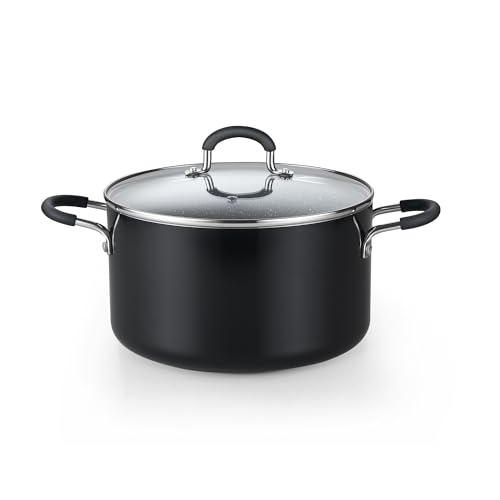
Aluminum is prized for thermal conductivity, so the question is how the design supports even heating across the entire cooking surface. Heavy-gauge bases, deep-drawn bodies, and cast aluminum walls all contribute. For example, the Winco Super 40-Quart specifies a 4mm reinforced bottom specifically to reduce hot spots, while the Cook N Home 6-quart uses a heavy-gauge aluminum core and the VEVOR 6-quart uses a multi-layer composite base for even simmering. Look for clear descriptions of reinforced bottoms or composite cores when comparing the best aluminum stockpots side by side.
Capacity Range
Stockpot sizing covers everything from 4.7-quart home models to 80-quart commercial tanks, and the right size depends on your typical batch. At the top end, the Winco 60-Quart and TrueCraftware 80 qt support catering and large-batch operations.
Stovetop Compatibility
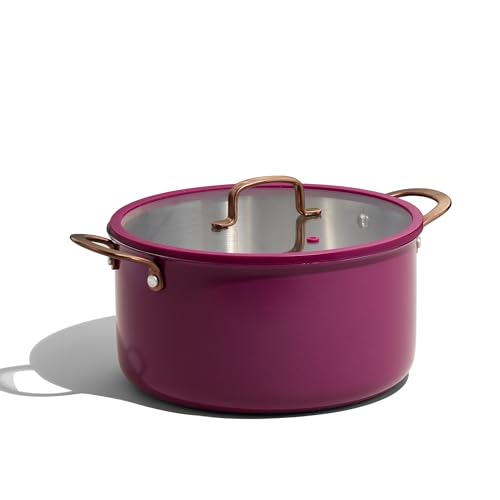
Aluminum itself is not magnetic, so traditional spun aluminum pots do not work on induction ranges unless a bonded steel base is added. The Cook N Home 6-quart, VEVOR 6-quart, and ACTIV CUISINE 8.5 qt are explicitly listed as induction-compatible. Commercial 3003 aluminum pots such as the Winco Super 40-Quart and Winware Professional 60-Quart are generally intended for gas ranges in restaurant settings, so induction buyers should verify the base construction before choosing.
Handle and Lid Engineering
Full stockpots can weigh 40 pounds or more, so handle design is not a cosmetic detail. Riveted handles, like those on the Winco Super 40-Quart and TrueCraftware 80 qt, are preferred for heavy loads, while silicone-wrapped handles on the Cook N Home 6-quart add grip and heat insulation. Cast aluminum designs such as the MAGNAWARE 10-quart use silicone handle covers for extra comfort. A matching lid matters too: most commercial aluminum stockpot listings do not include a cover, while home-oriented pots like the MAGNAWARE, Cook N Home, VEVOR, and ACTIV CUISINE ship with lids.
Build Certifications and Alloys
NSF certification is a strong signal for buyers who need a commercial-grade aluminum stockpot. The Winco Super 40-Quart, Winco 60-Quart, Winco Elemental 80 qt, and TrueCraftware 80 qt all carry NSF listings, while home pots document non-toxic coatings such as the PFOA- and PFAS-free ceramic surfaces on the VEVOR 6-quart. For buyers comparing the aluminum stockpots, alloy numbers like 3000-series and 3003 aluminum also indicate consistent composition suitable for repeated cooking.
Dishwasher and Oven Safety
Cleanup and finishing options round out a stockpot’s usability. Several commercial aluminum pots are intended for hand washing to preserve their finish, while home models such as the Cook N Home 6-quart are dishwasher safe. Always match the listed temperature limits to your cooking style.
Matching Design to Cooking Style
Map the pot to what you actually cook. Home soup makers should look at 6- to 12-quart cast aluminum or nonstick options, canning enthusiasts usually want 10- to 16-quart capacity with sturdy riveted handles, and seafood boils or stock-heavy kitchens benefit from 40-quart and up commercial pots. Among the best aluminum stockpots, the Winco 60-Quart is a flexible middle ground for buyers who occasionally cook for a crowd but still want a manageable pot.
Final Recommendation
TrueCraftware 80 qt Heavy-Duty Aluminum Stock Pot ranks first overall in this specification-based comparison under the published weighted criteria.
The final choice among the best aluminum stockpots depends on the documented features that match your intended use.
After weighing gauge, capacity, base design, and certifications, the Winco 60-Quart Aluminum Stock Pot is the most specification-aligned specification-based choice in this lineup. Its 4mm reinforced rim and bottom, 3003 aluminum body, and improved thicker handles give it the durability profile of a true commercial aluminum stockpot, while its 60-quart capacity is large enough for batch cooking without becoming as storage-heavy as 80-quart alternatives. For shoppers narrowing the field down to the top aluminum stockpots, this model delivers the cleanest mix of thickness, capacity, and NSF-supported construction that should appeal to both serious home cooks and small commercial kitchens. Buyers who need a home-focused pick with induction compatibility and a nonstick interior should look at the Cook N Home 6-quart or VEVOR 6-quart as compact alternatives, while the TrueCraftware 80 qt stands out when maximum volume and 6mm walls are the priority.
Frequently Asked Questions
What wall thickness should I look for in the best aluminum stockpots?
Look for at least 4mm on the bottom and rim for serious cooking, which is what the Winco Super 40-Quart, Winco 60-Quart, and Winware Professional 60-Quart provide. Thinner walls are fine for occasional use, but heavy-gauge or cast aluminum walls hold shape better and distribute heat more evenly during long simmers.
Are aluminum stockpots compatible with induction cooktops?
Traditional spun aluminum does not work on induction because the metal is not magnetic. Some aluminum stockpots use a bonded stainless steel base to enable induction, and the Cook N Home 6-quart, VEVOR 6-quart, and ACTIV CUISINE 8.5 qt are all listed as induction compatible. Commercial 3003 aluminum pots without a bonded base are usually limited to gas and electric ranges.
How do I choose between cast aluminum and sheet aluminum stockpots?
Cast aluminum stockpots, such as the MAGNAWARE 10-quart, have thicker walls that retain heat well and resist denting, making them well suited for slow simmers and stove-to-table presentation. Sheet or spun aluminum stockpots with reinforced bottoms, like the Winco Super 40-Quart, are typically lighter and can be produced in larger sizes for commercial batch cooking.
Do aluminum stockpots need a lid?
A matching lid helps bring stocks to a boil quickly, retains moisture, and reduces evaporation during reductions. Several of the aluminum stockpots in this guide ship with lids, including the MAGNAWARE 10-quart, Cook N Home 6-quart, VEVOR 6-quart, and ACTIV CUISINE 8.5 qt. Commercial pots such as the Winco Super 40-Quart and TrueCraftware 80 qt often list the body only, so a compatible cover may need to be sourced separately.
Is NSF certification important for home cooks buying the best aluminum stockpots?
NSF certification mainly signals that a pot meets public-health sanitation standards, which matters most in restaurants and institutional kitchens. For home use, it is a useful indicator of build quality rather than a requirement, and home-focused buyers can prioritize features like a nonstick ceramic interior, induction-compatible base, and dishwasher-safe construction instead.