Buying Guide
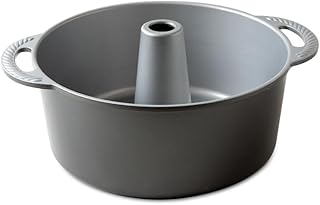
Choosing among the best angel food cake pans means balancing material, construction style, and the kind of baking you do most often. Unlike standard round cake pans, angel food pans rely on a central tube to conduct heat into the center of a tall, airy batter. That tube also provides structural support while the cake cools upside down, which is why pan geometry matters just as much as the metal itself.
Sizing and Capacity
Most full-size angel food cake pans hold between 16 and 18 cups of batter. A true angel food recipe produces a tall, spongy cake that needs vertical room to expand, so shorter pans can cause overflow or doming that collapses once removed from the oven. If you frequently bake for gatherings, a 16-cup or larger pan is the safest starting point. Smaller households may consider a standard 9- or 10-inch diameter tube pan, but make sure the sidewalls are at least four inches tall to support the rise.
Mini tube pans and sets of small molds are available, yet they behave differently in the oven. Because they heat through faster, the crust can set before the interior fully expands, producing a denser crumb. For classic angel food texture, a full-size pan is generally the better investment.
One-Piece vs. Two-Piece vs. Removable Bottom
One-piece tube pans are the traditional choice. They have no seams, so batter cannot leak, and they often cool more evenly because the metal is continuous. The tradeoff is extraction: you must cool the cake upside down, often suspended by the pan’s feet or a bottle through the center tube, then carefully cut the cake free from the sides.
Two-piece pans, or pans with a removable bottom, separate into an outer ring and a central cone. This design makes it easier to push the cake out gently without digging along the walls. However, thin batters can seep through the seam during baking if the fit is loose. When evaluating a two-piece model, look for tight tolerances between the base and the wall, and avoid moving the pan roughly before the batter sets.
Removable-bottom pans offer a middle path. The tube and sidewall remain one piece, but the base drops out. They work well for angel food and also adapt to denser pound cakes or chiffon cakes that benefit from a clean bottom release.
Material Tradeoffs
Aluminum remains the most popular material for tube pans because it heats rapidly and evenly. Natural or anodized aluminum resists rust and avoids the chemical concerns some bakers have with synthetic nonstick coatings. Anodized surfaces are harder than raw aluminum, so they withstand knife cuts and scrubbing better, though they still benefit from hand washing.
Nonstick carbon steel or coated steel pans release cakes with minimal coaxing, which is helpful for sticky, sugar-heavy angel food batter. The downside is that nonstick surfaces can degrade over time, especially under high heat or metal utensils. If you choose nonstick, use silicone or wooden tools and avoid aerosol baking sprays, which can leave residue that bakes into the coating.
Stainless steel options are less common but highly durable. They tolerate aggressive cleaning and dishwasher cycles, yet they do not conduct heat as evenly as aluminum. Bakers using stainless steel may need to rotate the pan midway through baking to prevent uneven browning.
Cooling Feet and Post-Bake Handling
Angel food cake must cool upside down to prevent the delicate structure from collapsing under its own weight. Some pans include built-in cooling feet that let you invert the entire pan so air circulates underneath. If your chosen pan lacks feet, you will need to suspend the center tube over a heavy bottle or similar object. Pans with feet simplify the process and reduce the risk of the cake touching a countertop and steaming itself soggy.
Maintenance and Longevity
Hand washing is the safest route for any tube pan, even those labeled dishwasher safe. Harsh detergents and high water pressure can erode nonstick coatings or discolor aluminum. After each use, soak the pan to loosen any clinging crumbs, then wash with a soft sponge. Avoid abrasive pads on nonstick or anodized surfaces.
For one-piece aluminum pans, occasional darkening is normal and does not affect performance. If you notice flaking, warping, or a loose fit on a two-piece pan, it is time to replace the pan, because compromised seams lead to leaking batter and uneven rises.
How to Compare Reviews
When reading user feedback on angel food cake pans, focus on comments that mention the specific traits that matter for this style of baking. Look for notes about whether the cake rose to the rim, whether the crumb released cleanly from the tube, and how easy it was to cool the cake upside down. Reviews that mention pound cakes or coffee cakes are still useful, but angel food batter is far more delicate, so prioritize feedback from bakers who used the pan for high-egg-white recipes.
Pay attention to repeated complaints about leaking seams on two-piece models or about rust along rolled rims. A handful of negative reviews about user error is normal, but a consistent pattern of structural issues should steer you toward a different option.
Final Recommendation
If you bake angel food regularly and want the most straightforward experience, a dedicated one-piece aluminum tube pan from a reputable bakeware brand offers the best balance of heat conductivity and durability. For bakers who value easy release and versatility across chiffon, sponge, and pound cakes, a two-piece or removable-bottom nonstick pan is worth the extra care during assembly and cleaning.
Among the ranked products, choose the two-piece nonstick option with cooling feet if you prioritize convenience and minimal sticking. Opt for the classic one-piece aluminum pan if you prefer a seamless surface that will last for years with basic maintenance. And if you want a single pan that transitions between dense holiday pound cakes and airy summer angel food, the heavy-duty cast-aluminum model with extra capacity provides the most flexibility without sacrificing structure.