Buying Guide
The best amd ryzen 7 processors are not interchangeable despite sharing the Ryzen 7 name. The supplied models cover Zen 3, Zen 4, and Zen 5 designs, while the platform split between AM4 and AM5 affects compatible motherboards and memory. Start by identifying the socket already in your system, or choose the platform that fits the rest of a new build.
AM5 appears in the Ryzen 7 9800X3D, Ryzen 7 9850X3D, Ryzen 7 7800X3D, Ryzen 7 9700X, Ryzen 7 8700G, Ryzen 7 7700X, and Ryzen 7 7700 listings. The selected AM5 products document DDR5 support, and some specify PCIe 5.0 support on compatible motherboards. That makes AM5 the relevant design family when you want the newer socket and DDR5 memory ecosystem.
AM4 appears in the Ryzen 7 5800X3D, Ryzen 7 5700X3D, and Ryzen 7 5800XT listings. These models document DDR4 support, with PCIe 4.0 noted for the AM4 processors where supplied. AM4 can therefore be the practical path when the existing motherboard and memory already use that socket. Confirm motherboard compatibility before selecting any processor, since the listing evidence does not establish universal support across every board.
Match cache design to the workload
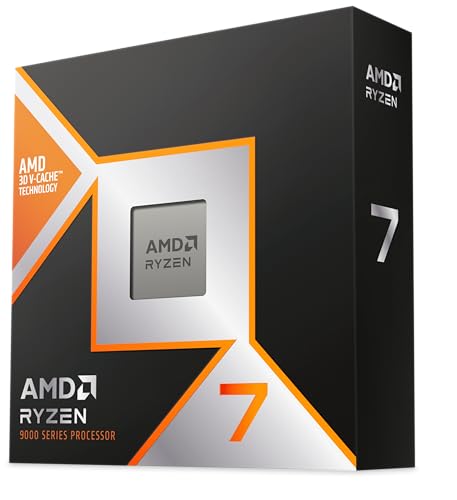
Cache is a major differentiator in this group. The Ryzen 7 9800X3D documents 96MB of L3 cache and next-generation 3D V-Cache. The Ryzen 7 7800X3D also lists 96MB of L3 cache, while the Ryzen 7 5800X3D lists 100MB total cache and AMD 3D V-Cache technology. The Ryzen 7 5700X3D lists 96MB of L3 cache.
These cache-focused models are easy to identify by the X3D designation. If your selection process prioritizes a large documented cache configuration, compare these models first. Do not assume that a model without an X3D label has the same cache arrangement; the supplied listings show different cache totals for the Ryzen 7 9700X, Ryzen 7 7700X, and Ryzen 7 5800XT.
Compare architecture and boost clocks
The Ryzen 7 9800X3D and Ryzen 7 9700X use Zen 5 according to their listings. The Ryzen 7 8700G, Ryzen 7 7700X, and Ryzen 7 7700 are associated with Zen 4 in the supplied evidence, while the Ryzen 7 5800XT, Ryzen 7 5800X3D, and Ryzen 7 5700X3D belong to the AM4 generation of options. Architecture should be considered alongside socket compatibility rather than in isolation.
Listed maximum boost clocks range from 4.1GHz on the Ryzen 7 5700X3D to 5.5GHz on the Ryzen 7 9700X. The Ryzen 7 7700X lists 5.4GHz, the Ryzen 7 9800X3D lists up to 5.2GHz, and the Ryzen 7 8700G lists 5.1GHz. These are specification figures, not independent measurements, so use them to compare the published designs rather than to predict a particular application result.
Decide whether integrated graphics matter
The Ryzen 7 7800X3D listing specifies an AMD Radeon Graphics controller, and the Ryzen 7 8700G is explicitly presented with processor graphics. This distinction matters when a desktop will operate without a separate graphics card or when display output is needed for setup and troubleshooting. The supplied evidence does not document integrated graphics for every selected processor, so avoid treating the feature as universal across the range.
The Ryzen 7 8700G is the clearest graphics-oriented choice in this comparison because its listing directly emphasizes processor graphics and includes a Wraith Spire cooler. The Ryzen 7 7800X3D also documents Radeon Graphics, while the other selected listings should be checked individually rather than assumed to include the same capability.
Account for cooling hardware
Several selected processors are sold without a cooler. The Ryzen 7 9800X3D, Ryzen 7 9700X, Ryzen 7 7700X, Ryzen 7 5800X3D, and Ryzen 7 5700X3D listings explicitly state that a cooler is not included, with the AM4 X3D listings adding cooling guidance. This means the processor choice and cooling plan should be considered together.
The Ryzen 7 8700G lists an AMD Wraith Spire cooler, the Ryzen 7 7700 lists a Wraith Prism RGB cooler, and the Ryzen 7 5800XT lists an AMD Wraith Prism RGB cooler. Included hardware is a documented package difference, but cooler suitability can depend on the complete system and intended settings. The listings do not provide independent thermal testing, so this guide does not make temperature claims.
Check memory and expansion support
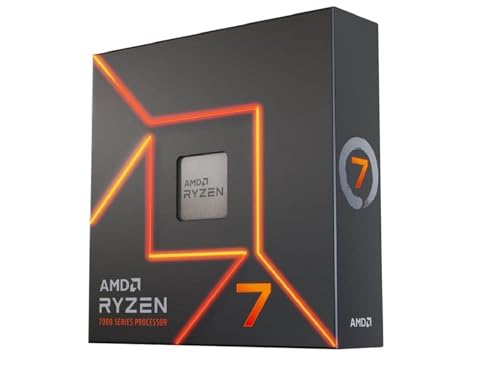
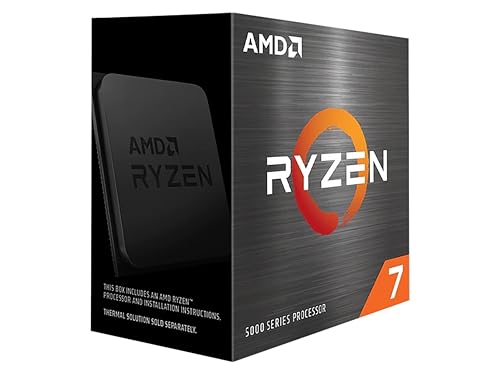
The selected processors document two main memory families. AM5 models such as the Ryzen 7 9700X specify DDR5-5600, while the Ryzen 7 7700X specifies DDR5-5200 and the Ryzen 7 8700G specifies DDR5 support. AM4 selections such as the Ryzen 7 5800X3D and Ryzen 7 5800XT specify DDR4-3200. Match the processor to the memory already installed or planned for the motherboard.
PCIe details also vary. The Ryzen 7 9700X and Ryzen 7 7700X listings mention PCIe 5.0 on select compatible boards. The Ryzen 7 5800X3D and Ryzen 7 5800XT listings mention PCIe 4.0, with motherboard conditions applying to the documented configurations. These platform notes are useful for planning graphics-card and storage compatibility, but they do not replace the motherboard manufacturer’s specifications.
Final recommendation
AMD Ryzen 7 9800X3D ranks first overall in this specification-based comparison under the published weighted criteria.
AMD Ryzen 7 9800X3D is the first overall specification-based choice among these best amd ryzen 7 processors. Its Zen 5 architecture, 96MB L3 cache, 8 cores, 16 threads, AM5 compatibility, and 5.2GHz listed boost form the most complete high-end gaming-oriented profile in the supplied evidence.
The top amd ryzen 7 processors depend on the rest of the build. Choose the Ryzen 7 9700X for its Zen 5 design and 5.5GHz listed boost, the Ryzen 7 8700G when documented integrated graphics and an included cooler are central, or the Ryzen 7 7800X3D for its AM5 and 96MB L3 cache combination. For established AM4 systems, compare the Ryzen 7 5800X3D, Ryzen 7 5700X3D, and Ryzen 7 5800XT according to cache, clock, PCIe, memory, and cooler requirements. The Ryzen 7 9850X3D is notable as the newest dated listing, but its sparse specification record calls for additional confirmation before a final build decision.
Frequently Asked Questions
What should I check before choosing among the best amd ryzen 7 processors?
Check the processor’s socket, required memory type, motherboard support, cooling package, cache design, and whether integrated graphics are documented. AM5 models in this selection use DDR5-related specifications, while the AM4 models list DDR4 support. Also confirm whether the chosen processor includes a cooler or requires a separate cooling solution.
Is AM5 or AM4 the better fit for a Ryzen 7 desktop?
The correct fit depends on the motherboard and memory you plan to use. AM5 is documented for the Ryzen 7 9800X3D, Ryzen 7 9700X, Ryzen 7 8700G, Ryzen 7 7700X, and other selected newer models. AM4 is documented for the Ryzen 7 5800X3D, Ryzen 7 5700X3D, and Ryzen 7 5800XT. Neither socket should be treated as compatible with the other.
Which selected model documents integrated graphics?
The Ryzen 7 8700G listing explicitly highlights processor graphics and identifies an AMD Radeon graphics capability. The Ryzen 7 7800X3D listing also specifies an AMD Radeon Graphics controller. The supplied evidence does not document integrated graphics for every selected model, so review the individual processor and motherboard specifications when display output without a separate graphics card is important.
What does the X3D label indicate in this comparison?
The X3D label identifies models whose supplied listings document a 3D V-Cache or large-cache design. The Ryzen 7 9800X3D and Ryzen 7 7800X3D list 96MB of L3 cache, while the Ryzen 7 5800X3D lists 100MB total cache and 3D V-Cache technology. The Ryzen 7 5700X3D lists 96MB of L3 cache. Compare the complete specification sheet rather than relying on the label alone.
Do all selected processors include a cooler?
No. The Ryzen 7 8700G, Ryzen 7 7700, and Ryzen 7 5800XT listings specify included AMD coolers. The Ryzen 7 9800X3D, Ryzen 7 9700X, Ryzen 7 7700X, Ryzen 7 5800X3D, and Ryzen 7 5700X3D listings state that a cooler is not included or provide cooling guidance. Verify the package contents for the exact processor listing before completing a build.