Buying Guide
The best animal-skin area rugs are defined less by one universal material than by the combination of silhouette, surface, size, backing, and care instructions. The products in this comparison range from printed faux cowhide and leopard designs to a bear-shaped faux rug, a deer-inspired oversized rug, a zebra pattern, and genuine sheepskin. Because this is a specification-based guide, the practical distinctions below come from the supplied listings rather than hands-on testing.
Choose the animal design first
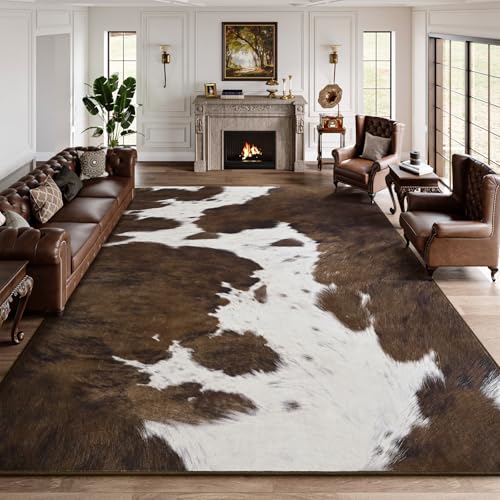
Cowhide-inspired rugs are the broadest group here. NativeSkins uses a black cowhide print, while JONIYEAR and AROGAN use brown or multicolor cow-print styling. These options suit western, farmhouse, rustic, and eclectic rooms, but their visual impact differs. A dark cowhide design can create contrast against light flooring, while brown, beige, and gold spotting may blend more naturally with wood tones and warm upholstery.
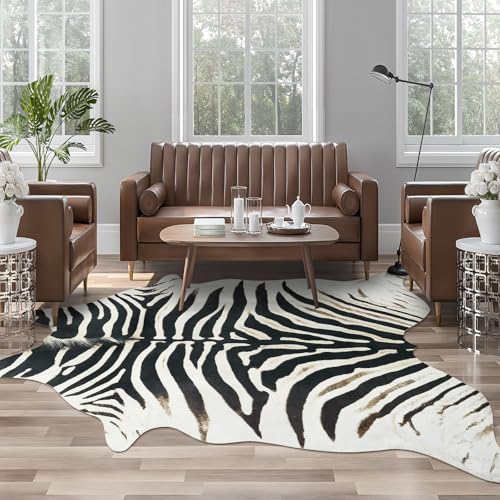
For a more distinctive focal point, AbunHeri documents a brown bear shape, WMT NVMTER supplies a sika deer-inspired print, and AROGAN offers a black-and-white zebra design. Leopard and cheetah patterns appear in the selections from yingda1992, Seek4comfortable, and WARM HAVEN. These patterns are intentionally prominent, so measure the room and consider whether the rug will sit beneath furniture or remain visible around it.
Match size to the placement zone
The largest documented option is the WMT NVMTER deer-print rug at 6'2" x 8'2". It is the better fit when the goal is to define a broad living-room or bedroom area. JONIYEAR measures 4'9" x 6'5", NativeSkins is 4'7" x 6'7", and several leopard or cheetah choices are close to 5 x 7 feet. These dimensions can provide a substantial visual anchor without requiring wall-to-wall carpet.
Medium choices include the AROGAN zebra rug at 4'7" x 5'2" and the selected leopard rug at about 5.2 x 6.5 feet. They are useful beside a bed, in front of a chair, or in a compact seating area. AOGELAN is much smaller at approximately 2 x 3 feet, making it better for a reading nook, chair, bedside position, or decorative layer. Check the listed dimensions against door swings, table legs, and clearance beneath nearby furniture.
Decide between low-profile and plush surfaces
Surface height changes both appearance and placement. NativeSkins documents ultra-soft, high-density fibers and a 0.25-inch height, giving it a relatively low profile. The selected yingda1992 leopard rug is also described with an especially thin construction. These formats may be easier to position under furniture and can create a printed-hide appearance without a tall pile.
At the opposite end, AbunHeri specifies 2.4-inch faux sheepskin fur, while AOGELAN lists 2-to-3-inch wool. These rugs emphasize texture and warmth, making them natural choices for bedrooms, nurseries, and seating areas where the pile remains visible. JONIYEAR and the selected cheetah rugs sit between those extremes with fluffy or thick-fur surfaces. A deeper surface can look more dimensional, but it may also deserve more attention when vacuuming and may not suit every doorway or furniture edge.
Check the backing before skipping a rug pad
Backing details are important because animal-shaped rugs often have irregular edges. NativeSkins describes faux suede backing and weighted construction. AROGAN’s cowhide rug specifies a PVC-grip base, while the zebra rug, the selected leopard rug, and AbunHeri’s bear rug document suede or slip-resistant backing. These statements support a more informed choice than relying on appearance alone.
Other selected rugs do not provide equally detailed floor-grip information. JONIYEAR and the large deer-print rug describe the surface and cleaning more fully than the underside. In those cases, placement on a smooth floor should be evaluated carefully, and a compatible rug pad may be worth considering. A listing’s non-slip wording is useful evidence, but it is not a substitute for checking the floor type and the manufacturer’s instructions.
Compare cleaning instructions carefully
Care is one of the clearest differences among faux animal rugs. AROGAN’s cowhide rug, JONIYEAR, the large deer-print rug, AbunHeri, and the selected cheetah options document machine washing in some form. NativeSkins emphasizes vacuuming, shaking, folding, and rolling. The selected yingda1992 leopard rug specifies water, sweeping, hand washing, or dry cleaning and says not to machine wash. AOGELAN is a natural sheepskin product, so its material and construction should be treated differently from synthetic washable rugs.
Always follow the specific listing’s instructions rather than assuming that every faux fur or faux suede rug can go in a washer. Also account for drying space, fold creases, and the need to air-dry some pieces. WARM HAVEN explicitly notes that folded packaging may leave creases that relax after several days, and similar packaging considerations are mentioned for other selected rugs.
Final recommendation
AbunHeri Brown Bear Faux Skin Rug ranks first overall in this specification-based comparison under the published weighted criteria.
NativeSkins Faux Cowhide Rug – Midnight Black is the highest-scoring returned product and the first overall specification-based choice. Its large size, soft high-density surface, three-layer support, weighted build, and faux suede backing give it the most balanced documented specification set. It is especially suitable for shoppers seeking the best animal-skin area rugs in a low-profile faux cowhide format.
Choose JONIYEAR when plush texture and machine-wash guidance are more important than a documented non-slip underside. Select WMT NVMTER when maximum floor coverage or a deer-inspired design is the priority. AbunHeri is the texture specialist, while AROGAN’s cowhide option is a sensible choice for a washable rug with a PVC-grip base. For a natural-material accent, AOGELAN provides genuine sheepskin in a compact single-pelt format.
The top animal-skin area rugs in this comparison are not interchangeable: size, pile height, backing, and cleaning requirements can change how well each one fits a room. Confirm the final dimensions and care instructions before ordering.
Frequently Asked Questions
Are these rugs made from real animal skin?
Most selected products are described as faux, artificial, or polyester animal-print rugs. AOGELAN is the exception, with a listing that identifies it as genuine New Zealand sheepskin with a leather side and wool underside. The selected products should therefore be separated into synthetic printed or faux-fur designs and the natural sheepskin pelt rather than treated as one material category.
Which best animal-skin area rugs are easiest to clean?
The listings for AROGAN’s faux cowhide rug, JONIYEAR, WMT NVMTER, AbunHeri, Seek4comfortable, and WARM HAVEN include machine-washing guidance. NativeSkins emphasizes vacuuming, shaking, folding, or rolling instead. The selected yingda1992 leopard rug specifically excludes machine washing, and AOGELAN is a natural sheepskin product. Read the individual care directions before choosing a cleaning method.
What size should I choose for a living room?
For broad coverage, the WMT NVMTER 6'2" x 8'2" rug is the largest documented option, while the 5 x 7-foot and nearby formats from AROGAN, Seek4comfortable, WARM HAVEN, and JONIYEAR can anchor a moderate seating area. Smaller pieces such as AROGAN’s zebra rug or AOGELAN are better for accent zones. Measure the open floor and account for furniture placement before selecting a size.
Do animal-shaped rugs need a separate rug pad?
That depends on the documented underside and the floor. Several selected products specify suede, PVC-grip, or slip-resistant backing, but not every listing provides the same detail. A rug pad may still be useful on a smooth surface, particularly when the product has an irregular outline or when the room has frequent foot traffic. Check compatibility with the rug’s backing and the flooring manufacturer.
Are faux animal rugs suitable for high-traffic rooms?
Some selected listings describe durable construction, non-shedding fibers, bound edges, or use in active areas, but the supplied evidence does not establish independent wear-test results. For a busier room, prioritize a documented backing, manageable pile, and clear cleaning instructions. A low-profile option may be easier to place around furniture, while a deep-pile design can provide more texture but may require more careful upkeep.