Buying Guide
Selecting the right art tissue paper starts with understanding how you plan to use it. Tissue labeled for arts and crafts spans a surprisingly wide range of behaviors: some sheets are designed to release dye when wet, others are engineered to stay exactly where you place them, and a few are built solely to protect finished pieces in storage. Before you add a pack to your cart, consider the sheet dimensions, color format, and structural properties that will matter most in your workspace.
Sizing and Capacity
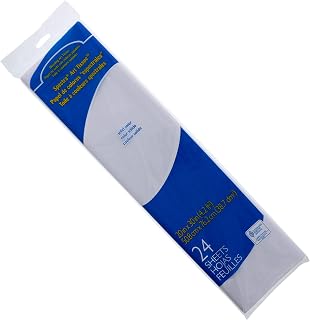
Sheet size dictates how quickly you can cover a surface and how easy the paper is to manipulate. Large-format art tissue, such as sheets measuring twenty by twenty-six inches, is ideal for bulletin boards, backdrop panels, and oversized collage work because you can cover broad areas with fewer seams. Teachers and event coordinators often prefer this scale for window displays and classroom installations. On the other hand, smaller sheets around eleven by fifteen inches or pre-cut one-inch squares are easier for children to handle and reduce waste when only a small accent is needed.
Capacity also matters if you are stocking a classroom, camp, or community center. Bulk packs with several thousand pre-cut squares can outlast dozens of individual projects, while smaller sheet counts may be perfectly adequate for a single household. Think about the number of expected users and the typical project size before deciding between a compact set and a bulk carton.
Feature Tradeoffs: Bleeding vs. Colorfast
One of the most important distinctions in art tissue is whether the paper bleeds. Bleeding tissue is coated with water-soluble dye. When you spritz it with water or brush on glue, the color migrates across the surface, creating soft watercolor effects that are difficult to replicate with paint. This makes bleeding tissue excellent for atmospheric backgrounds, textured skies, and abstract work. The tradeoff is mess: the dye can transfer to desks, clothing, and adjacent paper if you do not protect your work area.
Colorfast art tissue is designed to hold its dye under moisture. It is the better choice for layered collages, gift wrapping, and any project where precise color boundaries matter. If you are working with young children or in a space where staining is a concern, colorfast sheets will keep cleanup manageable while still providing the delicate texture that makes tissue attractive.
Setup and Workspace Considerations
Art tissue requires minimal physical setup, but preparation still affects results. For bleeding tissue projects, cover tables with a waterproof layer and keep a spray bottle and paper towels within reach. Because the dye is activated by water, humidity in the room can also affect how quickly colors spread. If you need crisp edges, apply moisture sparingly and press the tissue flat rather than saturating it.
For collage and mosaic work, organize colors into shallow trays or muffin tins before starting. Pre-cut squares save time, yet they can scatter easily in a drafty room. A shallow box lid or craft caddy keeps small pieces contained. When using large sheets, a rotary cutter and self-healing mat produce cleaner edges than scissors if you need geometric shapes.
Maintenance and Storage
Tissue paper is vulnerable to light, moisture, and crushing. Store unused sheets flat in a drawer or portfolio to prevent wrinkling and fading. If you buy a bulk bag of loose squares, transfer the contents into a rigid photo box or zip-top bags sorted by color; this prevents the edges from curling and makes inventory visible at a glance.
Finished artwork made with standard tissue should be displayed away from direct sunlight, since inexpensive dyes can fade within weeks of exposure. If you are creating pieces meant to last, look for archival or acid-free tissue both for the artwork itself and for any interleaving layers used during storage.
Reliability Signals
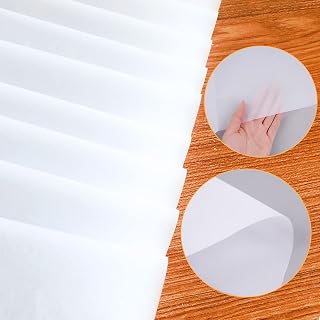
Reliable art tissue generally shows even color saturation from edge to edge and tears cleanly without excessive dust or fiber shedding. When reading listings, look for phrases like “non-bleeding,” “colorfast,” or “wet strength,” which indicate the manufacturer has formulated the paper for a specific behavior rather than repackaging generic gift wrap.
Review patterns can also reveal reliability. Comments that mention consistent dye lots, sheets arriving without creases, and colors matching the listing photos suggest a dependable supply. Conversely, frequent mentions of uneven dying, thin spots, or off-gassing odors should raise caution. For bleeding tissue in particular, reviewers often note whether the color release is vibrant or weak; this is a practical quality signal that is hard to judge from photos alone.
How to Compare Reviews
When comparing art tissue options, filter reviews by the type of project you intend to pursue. A product praised for gift wrapping may not perform well under a wet collage technique. Look for reviewers who describe the specific application you have in mind, whether that is suncatchers, paper flowers, or mixed-media layering.
Pay attention to the ratio of ratings to review length. A product with thousands of ratings and detailed written feedback usually indicates broad, sustained use. Short reviews that only state “good for crafts” are less helpful than those that mention sheet count accuracy, true color representation, or how the paper behaved with glue. If you are buying for children, prioritize reviews written by teachers or parents who mention durability in classroom settings.
Final Recommendation
The best art tissue for your project depends on the balance between creative effect and practical constraints. If you want to introduce watercolor-style painting without brushes, choose a bleeding tissue assortment with large sheets that can be torn or cut into landscape shapes. For structured classroom activities and geometric design, pre-cut mosaic squares in a high-count bulk pack will minimize prep time and maximize color variety.
Mixed-media artists who work with wet adhesives should prioritize wet-strength or natural fiber papers that resist disintegration. Those focused on preservation and presentation need archival, acid-free tissue that will not degrade the work it touches. Finally, if you need a versatile starter set for general arts and crafts, a rainbow pack of colorfast sheets in a standard size offers the most flexibility across holidays, parties, and everyday creative sessions. Match the paper’s behavior to your technique, and the finished piece will reflect both your vision and the quality of the materials beneath it.