Buying Guide
Selecting the right solvent for your oil painting practice is about more than grabbing the nearest can of thinner. The best artists paint thinners solvents vary in refinement, odor, evaporation speed, and container size, and each factor affects how your paint handles and how comfortable your studio feels. This guide breaks down what to look for so you can match a product to your workflow.
Sizing and Capacity
Artists paint thinners solvents come in volumes ranging from pocket-sized 100ml bottles to liter-sized jugs. Your choice should reflect how often you paint and how much space you have.
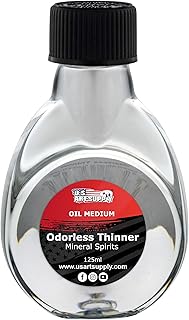
If you work large or paint daily, a 500ml to one-liter container is usually the most practical. Larger volumes mean fewer interruptions to restock, and they are more convenient when you are washing multiple brushes or thinning generous amounts of paint. For beginners or occasional painters, smaller bottles around 100ml to 125ml are easier to store, lighter to transport, and less risky to spill in a compact apartment studio.
Keep in mind that solvent does evaporate, but a tightly sealed container will keep it usable for a long time. If you choose a large format, invest in a sealed metal palette cup or a jar with a tight lid to prevent unnecessary loss between sessions.
Refinement and Purity
Not all mineral spirits are equal. Hardware-store varieties often contain higher levels of aromatic compounds that produce strong fumes and can leave residues in paint films. Artist-grade odorless mineral spirits are refined to remove these impurities, which makes them safer for indoor use and less likely to alter the sheen or drying time of your paint.
When comparing products, look for language like “purified,” “refined,” or “odorless” in the title or description. These terms usually signal that the manufacturer has distilled the solvent to a higher standard. A more refined solvent will also tend to evaporate more cleanly, which helps preserve the integrity of your paint layers over time.
Odor and Studio Ventilation
Even odorless solvents emit vapors, so ventilation remains important. That said, low-odor formulas make a noticeable difference in small studios, shared spaces, or classrooms. If you paint in a bedroom, basement, or any room without industrial airflow, prioritizing a solvent marketed as low-odor or odor-free will make long sessions far more pleasant.
Some artists are more sensitive to fumes than others. If you experience headaches or eye irritation with standard thinners, switching to a highly refined odorless product or reducing your open exposure time can help.
Evaporation Rate and Paint Handling
Solvents thin oil paint by breaking down the binder temporarily. The speed at which a solvent evaporates affects how your paint feels on the palette and canvas. Fast-evaporating spirits can make paint tacky within minutes, which is useful for underpainting but frustrating for blending. Slower-evaporating refined solvents give you more open time to work wet-into-wet.
Most artist-grade mineral spirits fall into a moderate evaporation range, suitable for general painting and glazing. If you need specific drying behavior, you may combine a standard solvent with a painting medium rather than relying on the solvent alone.
Brush Cleaning vs. Paint Thinning
Many artists use the same solvent for both thinning paint and cleaning brushes, but the demands are slightly different. For thinning, you want a clean, residue-free solvent that will not yellow or gum up over time. For cleaning, you need enough volume to swish brushes thoroughly and dissolve dried paint near the ferrule.
If you paint frequently, consider keeping a large jar of solvent dedicated to brush washing and a smaller, cleaner container for thinning paint on the palette. This two-jar approach extends the life of your thinner and keeps your colors cleaner.
Maintenance and Storage
Solvents are flammable and should be stored away from heat sources, direct sunlight, and open flames. A cool, dark cabinet is ideal. Always keep the original cap tightly closed, and consider transferring working amounts into a stainless steel brush washer with a sealed lid and removable screen. The screen helps sediment settle, keeping your usable solvent clearer for longer.
Over time, reused brush-cleaning solvent will accumulate pigment and varnish residue. When it becomes too murky to clean effectively, dispose of it according to your local hazardous waste guidelines rather than pouring it down the drain.
How to Compare Reviews
When reading customer feedback on artists paint thinners solvents, focus on comments that mention specific use cases. Look for reviews from oil painters who describe how the product performed for thinning, glazing, or brush restoration. Pay attention to repeated notes about odor strength, residue after drying, and whether the solvent separated or stayed stable in storage.
Be cautious of listings with very high ratings but only a handful of reviews. A large review count with consistent four- to five-star ratings usually indicates a more reliable product. Similarly, strong recent purchase numbers suggest that working artists are returning to buy the solvent again, which is often a better signal than a one-time rating.
Final Recommendation
If you are building a professional studio and want a solvent you can trust with archival work, choose a highly refined odorless formula in a larger size so you are never caught short during a big project. For beginners, a smaller bottle of odorless mineral spirits offers a low-risk entry point that still supports proper brush care and basic thinning.
Artists who travel to classes or paint outdoors should look for compact, leak-resistant bottles that fit in a pochade box or backpack. Meanwhile, high-volume painters will benefit from quart or liter containers paired with a good brush-washing tank to keep solvent fresh between sessions.
No matter which option you select, pair it with sensible ventilation and proper storage. The best artists paint thinners solvents are the ones that integrate cleanly into your routine, keep your brushes in top condition, and let you focus on the work rather than the fumes.