Buying Guide
The best baby quilts are easier to compare when you separate material, construction, dimensions, maintenance, and intended use. Public listing data can identify useful specifications, but it cannot confirm how a quilt feels in person or how it performs after extended use. Treat the scores above as an evidence-based way to organize documented features, not as hands-on test results.
Start with the fabric
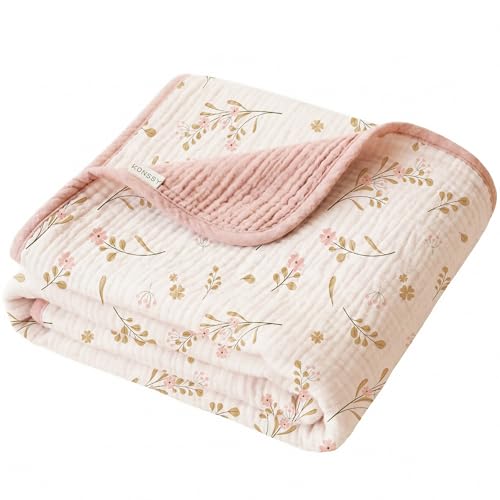
Fabric content affects breathability, care expectations, and the overall feel described by the listing. Several selected products use 100% muslin cotton, including Mebie Baby, Exemaba, Max&So, and Konssy. Muslin is repeatedly described in the supplied evidence as breathable and lightweight. That makes it a common choice for warm-weather coverage, stroller use, and layering.
Organic or certified options add another decision point. HardNok documents a blend of 70% GOTS-certified organic cotton and 30% bamboo-derived viscose, while Burt’s Bees Baby documents GOTS-certified organic cotton with a breathable jersey shell. BEILIMU documents OEKO-TEX certification for its cotton-rayon blanket. Certifications describe supplied material or testing claims in the listings; they do not replace checking the current product details before purchase.
Cotton blends can offer a different balance. MONOBLANKS lists 60% cotton and 40% polyester, and BuLuTu identifies a polyester and soy bean fiber fill. These materials may appeal to shoppers looking for a particular construction, but they are not equivalent to an all-cotton quilt. Compare the full fiber information rather than relying only on a title that says cotton.
Match the construction to the season
Layer count is one of the clearest specification differences. Max&So documents seven layers, while Exemaba, HardNok, and BEILIMU document six-layer designs. BuLuTu describes a double-layer muslin cotton design with a separate fill composition. More layers may indicate a different level of coverage or structure, but the supplied evidence does not establish a universal warmth ranking, so avoid assuming that layer count alone predicts performance.
Lightweight options can be useful for warm rooms, travel, or stroller coverage. Max&So, Exemaba, and the HardNok products are described as lightweight or breathable. The right choice depends on the environment, the child’s age, and how the quilt will be used. A quilt for supervised tummy time or a stroller cover has different practical requirements from one intended for a toddler bed.
Check dimensions carefully
Size is especially important because the selected products range from compact 30-by-40-inch formats to a 47-by-59-inch toddler quilt. Burt’s Bees Baby and Max&So provide clearly documented dimensions of 30 by 40 and 48 by 48 inches, respectively. Mebie Baby measures 47 by 47 inches, and BuLuTu offers the longest selected format at 47 by 59 inches.
Smaller quilts can be easier to fold into a diaper bag and may work well as stroller or car-seat covers. Larger square or rectangular quilts offer more coverage for toddlers, floor play, or a bed. However, a larger blanket may be less convenient for travel. Always compare the listed dimensions with the crib, stroller, playmat, or toddler bed where you plan to use it.
Review care instructions
Machine washing is documented for every selected product, but the details vary. Many listings recommend cold or gentle cycles and low-temperature tumble drying. BEILIMU advises gentle cold washing, mild detergent, no chlorine bleach, and consideration of a wash bag. Mebie Baby and Konssy provide simpler machine-wash positioning, while HardNok emphasizes gentle, low-temperature washing.
Care instructions can affect convenience as much as fabric choice. Families expecting frequent spills may prefer a quilt with explicit machine-wash and tumble-dry guidance. If preserving texture or shape matters, follow the manufacturer’s instructions rather than using a hotter cycle. Some listings say the material becomes softer after washing, but that statement is a product claim, not an independently verified test result.
Consider design and secondary uses
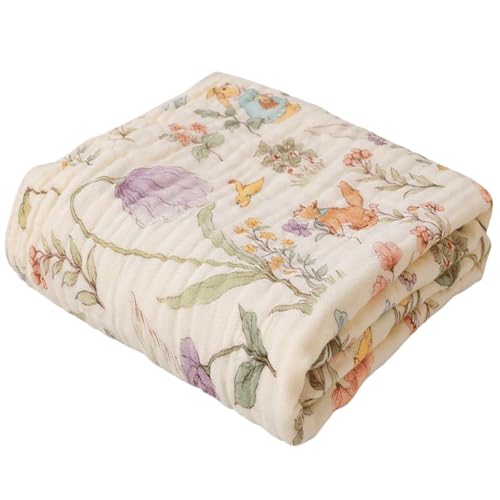
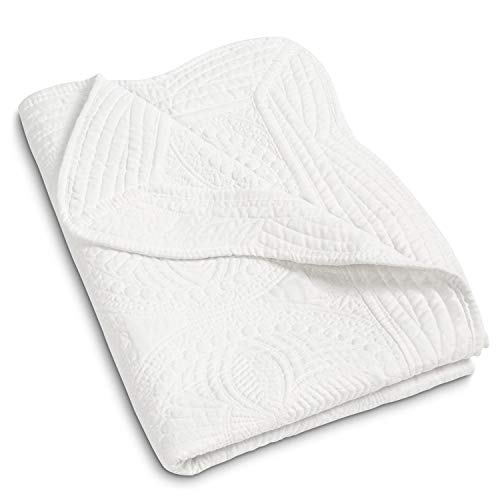
Design can be functional as well as decorative. Burt’s Bees Baby and Max&So document reversible looks, giving two visual options. Mebie Baby offers a patchwork print, MONOBLANKS uses embossed stitching and scalloped trim, and BEILIMU adds a 3D bubble texture. These details may help coordinate a nursery, but they should not outweigh material, dimensions, or care needs.
Many selected products are described for more than one use, including swaddling, stroller coverage, travel, tummy time, playmat use, or car-seat coverage. HardNok, Exemaba, Burt’s Bees Baby, and BuLuTu are particularly broadly positioned in their listings. Use those claims as planning information, and follow age-appropriate sleep and safety guidance for any blanket used around an infant.
Final recommendation
Max&So 7-Layer Reversible Muslin Baby Blanket ranks first overall in this specification-based comparison under the published weighted criteria.
The final choice among the best baby quilts depends on the documented features that match your intended use.
HardNok 6-Layer Organic Cotton Blend Quilt is the highest-scoring returned product and the first overall specification-based choice. Its documented GOTS-certified organic cotton content, six-layer weave, approximately 43-inch size, breathable construction, and multiple everyday uses create the most specification-aligned balance in this comparison.
For certified organic cotton and reversible nursery styling, Burt’s Bees Baby is a strong alternative in a more compact format. Max&So is better suited to shoppers who want a large seven-layer reversible blanket, while BuLuTu offers the longest toddler-oriented dimensions. Mebie Baby is another useful large muslin option, and Exemaba provides a balanced six-layer cotton design for newborn-to-toddler use.
The top baby quilts are not identical substitutes. Choose by the space available, the desired fiber content, the need for layered construction, and how often the quilt will be washed. If compact portability matters most, Konssy or Burt’s Bees Baby may be easier to manage. If nursery decoration is a priority, MONOBLANKS, BEILIMU, and Mebie Baby offer more pronounced visual details.
Frequently Asked Questions
How should I choose among the best baby quilts for a newborn?
Start with the listed fabric, dimensions, and care instructions. Cotton muslin options such as Exemaba, Mebie Baby, Max&So, and Konssy are described as breathable or lightweight. Confirm that the size suits your intended supervised use, and follow current infant-sleep guidance rather than treating a quilt as unrestricted crib bedding.
Are six-layer or seven-layer baby quilts automatically warmer?
Not necessarily. The listings document layer counts, but they do not provide a standardized warmth test. Max&So lists seven layers, while Exemaba, HardNok, and BEILIMU list six. Fabric blend, fill, weave, room conditions, and garment layers can all affect practical comfort, so use layer count as one comparison point rather than a guarantee.
Which selected quilts are certified?
HardNok documents 70% GOTS-certified organic cotton and 30% bamboo-derived viscose. Burt’s Bees Baby documents GOTS-certified organic cotton, and BEILIMU documents OEKO-TEX certification. These are different claims and should be read alongside the complete fiber composition and care information supplied for each product.
What size works best for stroller or travel use?
Compact formats such as the 30-by-40-inch Burt’s Bees Baby blanket or the 40-by-36-inch Konssy blanket may be easier to fold and carry. Larger options such as Mebie Baby, Max&So, and BuLuTu provide more coverage but may take more space. Compare the dimensions with your stroller, bag, or travel setup before ordering.
How often should a baby quilt be washed?
The supplied listings do not establish a universal washing schedule. They generally describe machine washing, often with a cold or gentle cycle and low-temperature drying. Follow the specific care label, wash after spills or soiling, and avoid assuming that every fabric blend can be treated identically.