Buying Guide
The best bamboo bento boxes are not one uniform product type. In the supplied listings, the category includes plastic or steel containers with natural bamboo lids, glass containers with bamboo lids, and traditional wooden Japanese-style boxes. That distinction matters because the lid material, body material, closure, and care instructions can differ substantially. This guide uses public listing specifications only; it is not a hands-on test and does not use customer opinions.
Start with the body material
A natural bamboo lid is usually paired with another food-container material. Bambuood and FATEM use 304 stainless steel, which gives shoppers a metal-body option. Bambuood adds a silicone-sealed lid, while FATEM uses two locking clips and a removable divider. These designs may suit users who want a simple, durable-feeling lunch container, but neither listing documents microwave use, so that feature should not be assumed.
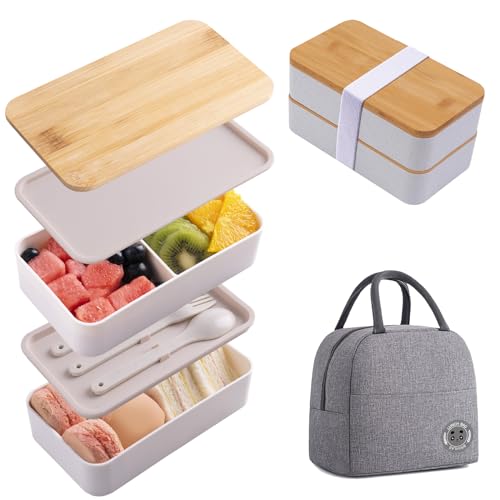
Collect Beauty and ZeramiFlow use food-grade plastic-based construction with natural bamboo lids. Collect Beauty lists food-grade PP and a 42-ounce size, while ZeramiFlow emphasizes a compact two-tier format. The Saffron & Sage set is different again: its lid is described as faux bamboo, not natural bamboo. It offers extensive temperature and cleaning claims, so it may be more convenient, but shoppers prioritizing genuine bamboo should treat it as a bamboo-look alternative.
ECOVAI uses borosilicate glass bases with bamboo lids. The listing separates the care rules clearly: the glass base is listed for microwave, oven, and dishwasher use, while the bamboo lid should be hand washed and kept away from soaking, microwave use, and prolonged moisture. This is a good example of why the lid and base should be evaluated separately.
Match capacity to the meal
Capacity is one of the easiest specifications to compare. The smaller formats include Miraclekoo at 500 milliliters and Bambuood and FATEM at approximately 28 ounces. These sizes may work for snacks, moderate lunches, or meals that do not need several large portions. ZeramiFlow is listed as medium, but its compact dimensions and two-tier structure make organization more informative than a published ounce figure.
For larger lunches, Umami and Saffron & Sage are both listed at 40 or 42 ounces, while Collect Beauty is also listed at 42 ounces. YFWOOD provides approximately 1,000 milliliters split between 450- and 550-milliliter layers. Capacity alone does not show how much usable space each compartment provides, so consider whether the layout fits your usual combination of entree, fruit, vegetables, and snacks.
Choose the right organization system
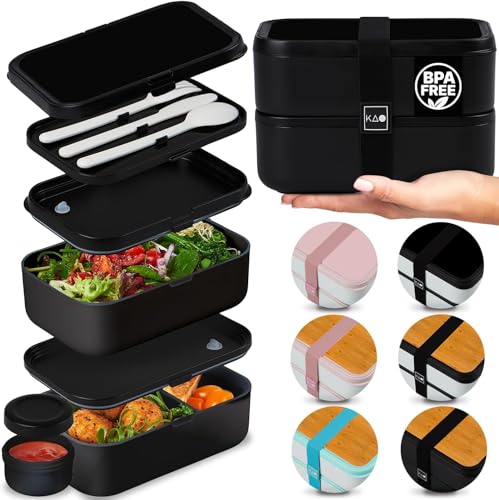
Compartments can be fixed, removable, or created by stacking separate layers. Umami includes two movable dividers, a sauce jar, and two layers. Saffron & Sage provides two stackable containers, an adjustable divider, and a sauce cup. These configurations are useful when meals vary from day to day.
Collect Beauty uses stackable compartments and includes utensils, while ZeramiFlow supplies a divider with its two-tier design. ECOVAI lists three compartments per container, which is particularly relevant for portion-separated meal prep. Traditional wooden options use a different approach: YFWOOD has two layers and a removable inner lattice, AOOSY has separable inner sections, and Miraclekoo uses one removable partition. They may be appealing for dry foods and composed meals, but their listings do not provide the same convenience claims as the plastic and glass sets.
Examine closure and liquid handling
Do not treat every divided bento as suitable for soup or sauces. ZeramiFlow explicitly says it is designed for dry and semi-dry foods and is not intended for liquids or soups. That limitation is useful because it prevents an overly broad interpretation of its compact design.
Bambuood states that its bamboo lid uses a silicone seal and is leak-proof. Umami and Saffron & Sage also state leakproof performance, with Saffron & Sage describing silicone-lined lids and ventilation locks. FATEM relies on side locking clips, but the supplied evidence does not provide a leakproof rating. The wooden boxes have securing bands or traditional fitted components, yet their listings do not establish liquid-tight performance. For wet foods, use the products with the clearest seal documentation rather than inferring performance from appearance.
Review cleaning and temperature rules
The best bamboo bento boxes for low-maintenance routines are not necessarily the ones with the most natural material. Saffron & Sage documents microwave, dishwasher, and freezer use. Umami documents microwave and dishwasher use. Collect Beauty also lists dishwasher-safe use for the container, but specifically says to remove its bamboo lid first.
Bamboo and wood generally require more careful handling in the supplied listings. ECOVAI says its bamboo lids should be hand washed and not soaked. YFWOOD says the box is not microwave-safe and should be kept dry after use. AOOSY and Miraclekoo do not provide microwave or dishwasher claims in the supplied evidence. Those boxes may still suit a traditional lunch routine, but buyers should follow the listed care guidance rather than assume modern plastic-container compatibility.
Consider what comes with the box
Accessories can change how complete a lunch system feels. Collect Beauty includes a matching lunch bag and utensils. ZeramiFlow includes utensils, a divider, and an elastic strap. Umami includes a utensil set and sauce jar, while Saffron & Sage includes a sauce cup, several utensils, chopsticks, and an elastic band. Bambuood includes bamboo cutlery.
The wooden options are more restrained. Miraclekoo includes a securing band, and the evidence for YFWOOD and AOOSY focuses on layers and removable inserts rather than bags or utensils. If the box will travel in a backpack, a documented strap or lunch bag may be more useful than a decorative finish. Also check the dimensions of the selected box against your existing lunch bag because two-tier designs can be taller than single containers.
How this comparison was scored
The editorial criteria are category-specific: material and construction, meal organization, closure and containment, care and temperature use, and portability and accessories. Scores reflect only supplied product descriptions and specifications. They do not use ratings, current listing information, purchase activity, marketplace labels, or hands-on testing. Products with natural wood rather than documented bamboo are identified plainly so readers can decide whether that broader traditional style fits their needs.
Final Recommendation
Saffron & Sage 42 oz Bento with Faux Bamboo Lid ranks first overall in this specification-based comparison under the published weighted criteria.
Bambuood Stainless Steel Bento with Bamboo Lid is the highest-scoring returned product and the first overall specification-based choice among these best bamboo bento boxes. Its combination of 304 stainless steel, a silicone-sealed bamboo lid, dishwasher-safe design, and included bamboo cutlery makes the specification set especially balanced.
Choose Umami if you need a larger two-layer layout with movable dividers, a sauce jar, and a utensil set. Choose Collect Beauty if a matching lunch bag and 42-ounce capacity are priorities. ZeramiFlow is better for compact dry or semi-dry lunches, while ECOVAI suits shoppers who prefer glass and accept hand-washing the bamboo lids. For traditional wooden construction, YFWOOD provides the clearest larger two-layer capacity, and Miraclekoo is the more compact option.
These top bamboo bento boxes differ most in care requirements and liquid handling. Before buying, confirm whether you need microwave use, dishwasher cleaning, a leak-resistant seal, or a natural bamboo lid rather than a faux-bamboo finish.
Frequently Asked Questions
What are the best bamboo bento boxes for a large lunch?
Umami, Collect Beauty, and Saffron & Sage list approximately 40 to 42 ounces and provide stackable or multi-container organization. YFWOOD lists approximately 1,000 milliliters across two wooden layers. The best choice depends on whether you prefer a natural bamboo lid, a faux-bamboo lid, or traditional wood, as well as how much care the material requires.
Are bamboo bento boxes microwave-safe?
It depends on the construction. Umami and Saffron & Sage list microwave use, but their products use bamboo-style lids or separate components that may require removal or special handling. ECOVAI lists microwave use for its glass base but not its bamboo lid. Collect Beauty says to remove its bamboo lid before dishwasher use, and YFWOOD states that its wooden box is not microwave-safe. Always follow the product-specific instructions.
Which option is best for soups or wet foods?
Bambuood, Umami, and Saffron & Sage provide the clearest containment claims, including silicone sealing or stated leakproof construction. ZeramiFlow is explicitly not intended for liquids or soups. The wooden boxes in this comparison do not have documented liquid-tight ratings, so they are better matched to dry or composed meals unless the manufacturer provides additional guidance.
What is the difference between a natural bamboo lid and faux bamboo?
A natural bamboo lid is documented for Collect Beauty, ZeramiFlow, Bambuood, FATEM, and ECOVAI. Saffron & Sage describes its lid as faux bamboo. The latter may provide a similar visual style, but it should not be treated as the same material. Lid care can also differ, so read the material and cleaning instructions together.
Do traditional wooden bento boxes count as bamboo bento boxes?
They are a related alternative rather than a direct material match. YFWOOD, AOOSY, and Miraclekoo are documented as natural wooden boxes, not bamboo boxes. They are included because they share the Japanese-style bento format and natural-material design, but the product descriptions should be read accurately: their supplied evidence does not establish bamboo construction.