Buying Guide
Choosing the best baseball mitts starts with the player rather than the brand name. First confirm the throwing hand: a right-hand-throw glove is worn on the left hand, while a left-hand-throw glove is worn on the right. The supplied listings use this convention, but hand orientation should still be checked before ordering because a correctly sized glove is not useful if it fits the wrong hand.
Match the glove to the position
Position is the most important specification after hand orientation. Outfielders generally need a longer pattern to help receive fly balls, while infielders often prefer a more compact glove for fielding and transferring the ball. The Mizuno GMVP1275P4 MVP Prime is explicitly a 12.75-inch outfield model, making its role easy to identify. The Mizuno GMVP1177P4 MVP Prime and Wilson A500 are clearly listed for infield use at 11.75 and 11.5 inches respectively.
A utility model can make sense when the player rotates positions or plays recreationally. The Rawlings Sandlot is labeled an 11.75-inch utility model and uses a Modified Trap-Eze web. The Rawlings Player Preferred is also positioned for recreational players and is offered in multiple position patterns, although the selected version is a 12-inch infield glove. These options provide broader documented use than a narrowly specialized pattern, but a dedicated position glove may still be preferable when the player has a fixed role.
Consider age and hand control
Youth sizing should not be treated as a smaller version of an adult glove. Younger players need a pattern they can close and control. The Rawlings Select Pro Lite is identified for ages 6–12 and uses a lightweight textured vinyl design with an all-leather shell and palm lining. The Mizuno Prospect is listed as an all-positions 11.5-inch model for ages 9–10, with a Tartan Flex Web and soft palm liner. The Rawlings Sure Catch is an 11-inch model for ages 7–9 and includes a heel cutout described as helping with quick closing.
The Wilson A500 adds an adjustable Quick Fit wrist system to its youth infield design. That gives the player a way to adjust the fit around the hand, while rolled dual welting is described as reinforcing the glove’s structure. These details are useful when comparing youth gloves because size alone does not explain how the glove may sit on the hand.
Compare leather and other materials
The listings show several construction approaches. Mizuno’s GMVP models use Bio Soft leather, described as balancing oil and softness with firm control. The SSK Z5 uses Premium Cowhide Nameshi Leather, while the Rawlings Sandlot and Player Preferred specify full-grain or full-grain oiled leather. These descriptions support a traditional leather-focused comparison, but they do not establish hands-on softness, long-term durability, or game performance beyond the supplied claims.
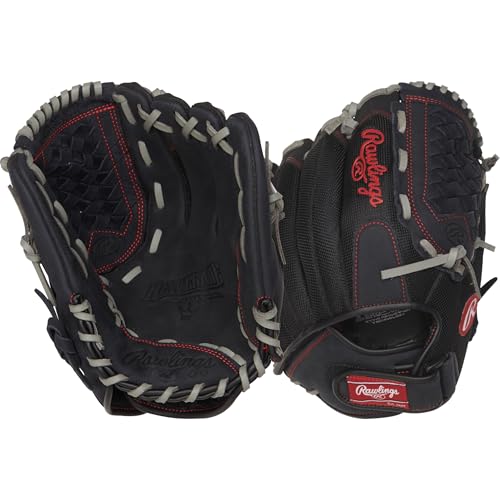
Other designs use mixed or synthetic materials for a different balance. The Rawlings Renegade combines a leather shell palm with a lightweight pro mesh back. The Select Pro Lite combines an all-leather shell and palm lining with lightweight textured vinyl. The youth-oriented materials may be useful when lower weight and easier control are priorities, but shoppers should not assume they feel identical to an all-leather glove.
Break-in language is one of the clearest practical differences in this group. The SSK Z5 is described as having an extra factory break-in process and a game-ready feel. The Rawlings Sandlot states that it arrives 80 percent broken in, while the Player Preferred and Select Pro Lite also specify an 80-percent factory break-in. The Renegade and Select Pro Lite list 90-percent factory and 10-percent player break-in.
By contrast, the Mizuno GMVP models describe a center-pocket pattern intended to support a versatile break-in but do not provide a factory percentage. The Wilson A500, Mizuno Prospect, and Sure Catch listings also do not provide a numeric factory break-in split. That does not prove they require extensive work; it simply means the public listing gives less precise break-in information. Look for a stated percentage when immediate readiness matters, and remember that a break-in claim is not the same as a hands-on test result.
Evaluate web and pocket design
Web design influences how a glove is described and how it is intended to be used, but the listing evidence should guide the comparison. The Mizuno outfield glove uses a Shock 2 web, while its infield counterpart uses a Deep 3 web. The Wilson A500 uses a classic H web and is described as creating a clear window to the ball. The Rawlings Renegade and Player Preferred use basket webs, and the Sandlot uses a Modified Trap-Eze web.
Pocket-specific details are also valuable. Mizuno’s Center Pocket Designed Patterns are intended to place the pocket under the index finger. SSK’s Dimple Sensor Technology is located in the palm catching area and is described as helping grip and transfers. Franklin products were not selected because the final comparison prioritizes the ten products with the most specification-aligned combined position, material, break-in, comfort, and design evidence. Web style should be considered alongside size and role, not as an isolated quality ranking.
Use comfort details as tie-breakers
Comfort evidence in these listings includes padded thumbs, palm pads, finger linings, wrist adjustments, and moisture-oriented liners. The Mizuno GMVP models include a PlusGrip padded thumb slot. The Sandlot lists Zero Shock palm pads and padded finger-back linings. The Renegade includes cushioned palm and index-finger pads, while the Player Preferred adds Zero Shock palm padding and an adjustable wrist strap.
For younger players, the Mizuno Prospect lists a butter-soft palm liner and Mzo lining designed to disperse perspiration. These are specification clues, not guarantees of fit. Hand shape, finger length, preferred stiffness, and throwing hand still matter.
Final recommendation
Rawlings Sandlot 11.75-Inch Baseball Glove ranks first overall in this specification-based comparison under the published weighted criteria.
The final choice among the best baseball mitts depends on the documented features that match your intended use.
The Mizuno GMVP1275P4 MVP Prime Outfield Glove is the highest-scoring returned product and the first overall specification-based choice. Its 12.75-inch outfield pattern, Bio Soft leather, professional-level lace, center-pocket design, and padded thumb give it the most complete evidence profile in this comparison.
For an infield-focused choice, the SSK Z5 Craftsman and Mizuno GMVP1177P4 MVP Prime provide the clearest position-specific specifications. The Rawlings Sandlot is the more versatile leather utility option, while the Wilson A500 is a strong youth infield alternative with adjustable wrist control and rolled welting. Among the top baseball mitts for recreational use, the Rawlings Player Preferred and Renegade stand out for their stated break-in readiness and comfort details.
Youth buyers should compare age guidance and closing design carefully. The Rawlings Select Pro Lite offers a lightweight 11.5-inch pattern for ages 6–12, the Mizuno Prospect combines an all-position design with a flexible web, and the Rawlings Sure Catch targets ages 7–9 with a heel cutout. These are evidence-based distinctions, not claims from testing. Before purchasing, verify the throwing hand, intended position, listed size, and whether the documented break-in level matches the player’s expectations.
Frequently Asked Questions
What size should I consider for baseball?
The answer depends on the player’s position and age. The selected adult and recreational models range from 11.5 to 12.75 inches, while the youth selections range from 11 to 11.5 inches. Infield models in this list include 11.5- and 11.75-inch patterns, while the Mizuno GMVP1275P4 is a 12.75-inch outfield glove. Use the listing’s position and age guidance as a starting point, then confirm that the player can close and control the glove.
Are leather mitts better for every player?
Not automatically. Leather-focused options such as the SSK Z5, Mizuno MVP Prime models, and Rawlings Sandlot document traditional leather construction, while the Wilson A500 and youth Select Pro Lite emphasize lightweight designs with different material combinations. Leather may appeal to players prioritizing a traditional construction, but younger players may benefit from a glove whose listed design emphasizes manageable weight or easier closing. The supplied information does not establish a universal best material.
Which best baseball mitts are listed as game-ready?
The SSK Z5 is described as having a game-ready feel after extra factory break-in. The Rawlings Sandlot, Player Preferred, Renegade, and Select Pro Lite also provide factory break-in percentages in their listings. These statements describe preparation before use, not independent testing. The Mizuno MVP Prime models document a center-pocket pattern for a versatile break-in but do not provide a numeric factory percentage.
How do I choose between a utility and position-specific glove?
Choose a position-specific model when the player regularly fields one position and the listing matches that role. Choose a utility design when positions change or the player participates in recreational play. The Rawlings Sandlot is explicitly an 11.75-inch utility model, whereas the Mizuno GMVP1275P4 is an outfield model and the Wilson A500 is an infield youth model. Size, web, hand orientation, and the player’s ability to control the glove should all be checked together.
What should I verify before ordering?
Verify the ASIN listing’s throwing-hand orientation, size, position, web, age guidance where provided, and break-in description. Right-hand-throw gloves are worn on the left hand; left-hand-throw gloves are worn on the right. Also compare the stated wrist, palm, thumb, and finger-lining features with the player’s fit preferences. Public listing specifications can narrow the choice, but they cannot replace checking the actual hand fit.