Buying Guide
Choosing the best bathroom ceramic tiles starts with matching the tile’s documented application to the surface you are covering. A shower wall, shower floor, bathroom floor, vanity backsplash, and decorative accent do not present the same planning needs. The products in this comparison include conventional glazed ceramic tiles, porcelain mosaics, larger-format porcelain, and decorative ceramic designs. They are not interchangeable, so review the application notes, dimensions, finish, package coverage, and installation method together.
Match the tile to the bathroom surface
For shower walls and backsplash areas, glazed square tiles are the most represented format in this selection. Tenedos, American Olean, Maasechs, DYARI, and Squarefeet Depot’s white tile are all listed for bathroom walls, shower areas, backsplashes, or related wall applications. Their smaller square formats can work well around vanities, niches, borders, and other areas where a standard grid or offset layout is useful.
For a broader floor-and-wall installation, MSI Indigo has the clearest multi-surface positioning. The listing identifies floors, walls, showers, backsplashes, fireplaces, and outdoor areas, while also describing porcelain construction and waterproof performance. Calacatta Empire is another floor-and-wall option, with a larger square format and a marble-inspired appearance. The supplied evidence does not establish identical performance for every bathroom condition, so use each product’s stated application rather than assuming that every ceramic wall tile belongs on a floor.
Shower floors deserve particular attention. Primoon and Hominter are the two selected pebble mosaics. Both use a sheet-based mosaic format, and Primoon is specifically described for shower-floor use. Hominter is listed for shower floors, bathroom walls, walk-in showers, and spa spaces. Mosaic sheets can help maintain a continuous decorative pattern around drains and corners, but they still require proper mortar, grout, substrate preparation, and installation technique.
Compare finishes and cleaning needs
Glossy finishes are common among the selected square wall tiles. They create a reflective surface and are generally described in the listings as smooth or easy to clean. Tenedos uses a glossy finish and is described as stain resistant, while Maasechs describes a smooth glazed surface that resists stains, grease, and moisture buildup. DYARI similarly emphasizes a smooth, reflective, water-resistant glaze.
A glossy surface can be a practical choice for backsplash and wall areas, but it may show water marks or reflections more readily than a matte finish. That is a design and maintenance trade-off, not a defect. MSI Indigo uses a non-reflective matte finish, and Calacatta Empire uses a matte surface that the listing says reduces glare. These options may be better suited to shoppers who want a softer visual effect rather than a highly reflective wall.
Pebble mosaics add another surface consideration. Primoon describes a flat surface that is more comfortable to step on than cobblestone, while Hominter describes smooth-edged pebble pieces with consistent sizing. Even so, pebble layouts have more grout joints than a large plain tile, which can affect cleaning time and the visual texture of the finished surface. Follow the manufacturer’s installation and grout guidance for the intended area.
Check size, thickness, and layout
Tile size affects both the appearance and the amount of cutting required. The 4.25-inch formats from Tenedos, American Olean, Maasechs, and the Squarefeet Depot white option offer a familiar square layout. DYARI is listed as a 4-by-4-inch format, while MSI and Calacatta Empire are close to 8-by-8 and 12-by-12 inches respectively. Larger tiles can create fewer visible joints, but they need careful layout planning around corners, fixtures, niches, and changes in plane.
Thickness also varies. MSI is listed at approximately 0.55 inches, Calacatta Empire at 0.31 inches, and Primoon at 6 mm. Maasechs is listed at 8 mm. These differences matter where tile meets trim, adjacent flooring, thresholds, or existing surfaces. Do not rely only on the nominal name in a product title; use the supplied dimension and thickness information when planning transitions.
Understand installation requirements
Traditional ceramic and porcelain tile normally requires a suitable setting material and grout. Primoon explicitly states that it is not peel and stick and needs mortar plus unsanded grout. MSI recommends thinset mortar for optimal adhesion. Several square-tile listings also refer to standard installation rather than a self-adhesive backing. Plan for substrate preparation, spacers or the product’s built-in spacing features, cuts, edge treatment, and curing time.
The Tenedos listing says its tiles provide one square foot per box and identifies the 4.25-inch format. The Squarefeet Depot white full box lists 12.5 square feet and 100 pieces. Primoon and Hominter both list approximately five-square-foot mosaic coverage. These details are useful for estimating material, but bathroom layouts still require a field measurement and an allowance for cuts and breakage. Order quantities based on the actual layout, not just the nominal room area.
Choose a design direction
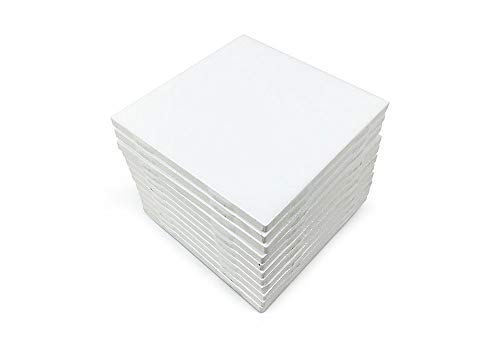
For a clean, traditional bathroom, white glossy square tiles create a familiar backdrop. The Squarefeet Depot full box is aimed at a bright-white contemporary appearance, while Tenedos provides a white option along with many other colors. For darker contrast, Maasechs and American Olean offer black square designs, with American Olean taking a more explicitly vintage direction.
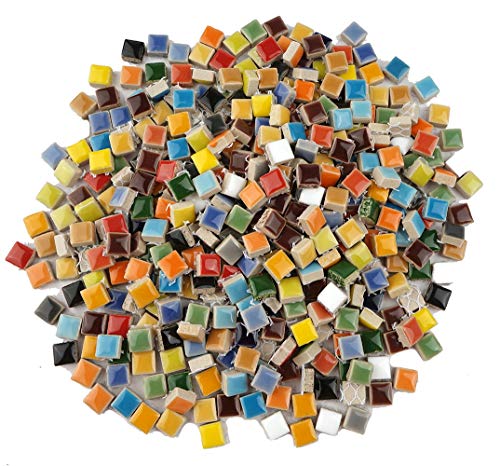
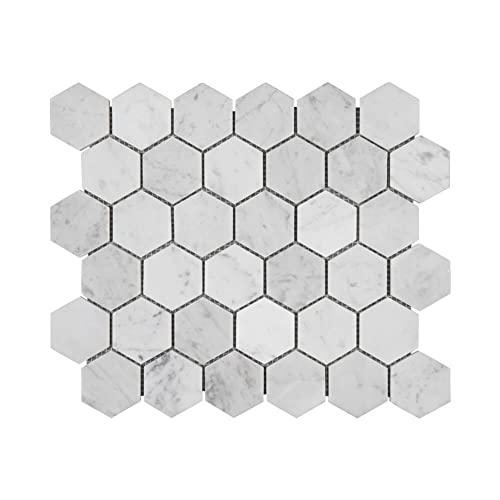
Calacatta Empire supplies a marble-look alternative with white tones and veining. MSI Indigo brings a matte indigo color and an encaustic-inspired format. DYARI’s teal green and other listed color choices are more suitable for a vivid accent wall, backsplash, or shower detail. Talavera’s mixed designs are best reserved for decorative sections where variation is part of the intended appearance. The best bathroom ceramic tiles for your project should support the room’s palette without creating a difficult match with fixtures and trim.
Final recommendation
Tenedos 4 1/4-Inch Glossy White Ceramic Tile ranks first overall in this specification-based comparison under the published weighted criteria.
MSI Indigo is the first overall specification-based choice among these best bathroom ceramic tiles because it combines documented moisture resistance, a matte finish, a useful 8-by-8-inch format, and suitability for floors, walls, showers, and backsplashes. It is followed by Tenedos for classic square wall installations, the Squarefeet Depot white full box for larger bright-white projects, and Calacatta Empire for a matte marble-look design.
For shower-floor texture, Primoon is the more directly documented choice, while Hominter offers a multicolor pebble appearance. Maasechs and American Olean cover black square styles, with American Olean leaning retro. DYARI is the most specification-aligned color-accent option, and Talavera is the most decorative sampler. These top bathroom ceramic tiles represent different use cases rather than one universal material recommendation. Confirm the intended surface, package coverage, thickness, finish, and installation requirements before purchasing.
Frequently Asked Questions
Which of the best bathroom ceramic tiles is listed for shower floors?
Primoon is specifically described for shower-floor use and is supplied as mesh-mounted pebble sheets. Hominter is also listed for shower floors and walk-in showers. Both require a conventional tile installation approach rather than adhesive application.
Are these bathroom tiles suitable for shower walls?
Several selected products are listed for shower walls or wet-area walls, including Tenedos, Maasechs, DYARI, the Squarefeet Depot white tile, American Olean, MSI Indigo, and Hominter. Always match the product’s documented application to the surface and follow appropriate installation practices.
Which tile is easiest to coordinate with a traditional bathroom?
Tenedos uses a classic 4.25-inch square format and is available in white plus many other listed colors. The Squarefeet Depot white options provide a bright, simple appearance. These designs can coordinate with traditional layouts, but grout color and fixture finishes will still affect the final look.
Should I choose glossy or matte ceramic tile?
Glossy tiles provide a reflective, smooth appearance and are often selected for walls and backsplashes. Matte tiles, such as MSI Indigo and Calacatta Empire, offer a non-reflective surface and can create a softer visual effect. The choice depends on the surface, lighting, cleaning preferences, and the look you want.
How much tile should I order?
Start with the measured installation area, then account for cuts, layout changes, and breakage. Package information varies: some products list one square foot, while others list approximately five or 12.5 square feet. Use the actual package coverage and confirm dimensions before finalizing the quantity.