Buying Guide
The best battery-powered patio wall light fixtures are useful when running cable is impractical, an outlet is unavailable, or you want to avoid cutting into an exterior wall. The products in this comparison fall into three practical groups: rechargeable lamps, conventional replaceable-battery sconces, and solar fixtures that store energy in an integrated battery. Those groups are not interchangeable, so the right choice depends on the wall location, expected use, and how often you are willing to recharge or replace batteries.
Start with the power system
Rechargeable models such as HANDSONIC, vighep, and PopoIron are useful for shaded porches and covered patios. Their listings describe USB charging and large-capacity batteries, and their bodies can be removed from the wall base for charging. This avoids dependence on direct sunlight. It does, however, create a charging routine, and the stated long motion-mode runtimes should not be treated as equivalent to continuous full-output operation.
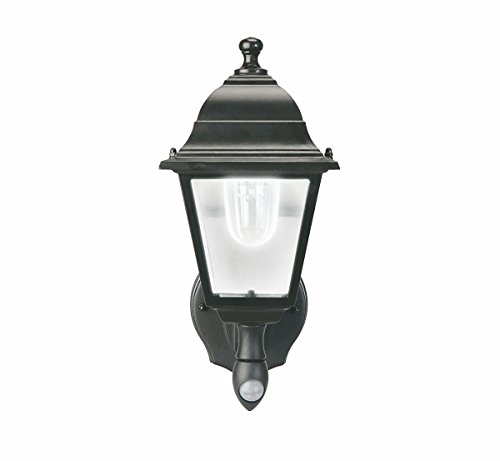
Replaceable-battery products use a different maintenance pattern. The Maxsa 44219 uses four C-cell batteries and states up to a year of operation under normal use, while ProGreen uses three AAA batteries per light. These designs can be convenient where charging cables are undesirable, but battery availability and replacement frequency become part of ownership. They may also offer less control than newer rechargeable lamps.
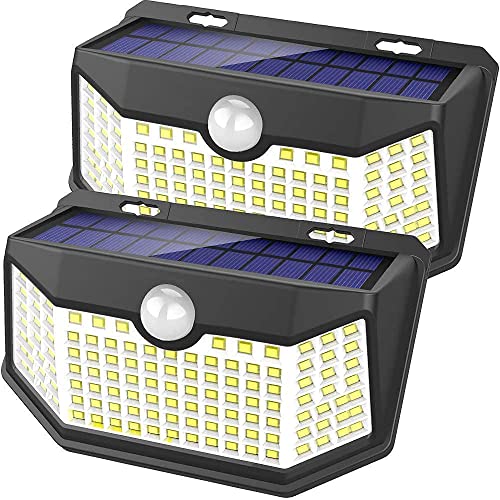
Solar products are appropriate when the mounting surface receives dependable daylight. TECKNET, CLAONER, HMCITY, Auzev, and Diyel all use solar charging, with integrated or replaceable battery components described in their listings. Solar fixtures do not need an outlet or routine cable charging, but shade from a roof, tree, north-facing wall, or nearby structure can reduce the available charge. TECKNET and Diyel both warn that cloudy weather or shaded installation can reduce charging or runtime.
Match weather protection to the mounting position
Look for an explicit ingress rating when the fixture will be exposed to rain. IP65 models such as HANDSONIC, vighep, PopoIron, CLAONER, and HMCITY are listed as protected against rain and water exposure. TECKNET is listed at IP66. These ratings provide a useful specification comparison, but they do not remove the need to follow the manufacturer’s installation instructions and keep charging covers closed where applicable.
The Maxsa 44219 and ProGreen are listed at IP44. That can be reasonable for a more sheltered porch or entryway, but it is a less protective specification than IP65 or IP66 for a wall that receives direct weather. The Auzev listing describes the fixture as waterproof but does not provide a specific IP number in the supplied specifications. Diyel is described as weather resistant without a stated IP rating. Treat those two products as style-led choices where the mounting location and solar exposure are favorable.
Decide how much control you need
For basic path or door lighting, automatic motion activation may be enough. ProGreen offers AUTO and ON modes, and the Maxsa 44219 turns on when it detects movement at night before fading after a short period. Solar options add different combinations of constant, dim-to-bright, and motion operation. Confirm that the mode you want is documented rather than assuming every solar lamp behaves the same way.
Rechargeable models provide broad control. HANDSONIC, vighep, and PopoIron list three operating modes, three color temperatures, dimming, and remote control. That makes them adaptable for a patio used both for evening seating and access lighting. Warm settings can be more appropriate for atmosphere, while neutral or cool settings may be useful near steps, garages, or work areas.
Consider output and beam direction
A lumen claim is not the only factor in useful patio lighting. Beam spread, lamp-head adjustment, and the number of fixtures also affect how evenly a wall or walkway is lit. TECKNET lists a 300-degree lighting angle and three-sided construction, while CLAONER and HMCITY list 270-degree lighting angles. These broad-spread designs can suit open walls, fences, and larger approach areas.
For directional control, HANDSONIC, vighep, and PopoIron list adjustable heads or bodies. This can help aim light away from a neighbor’s window or toward a doorway, seating area, or path. The Maxsa 44219 and the lantern-style Auzev and Diyel fixtures prioritize a conventional wall-light appearance rather than the broad articulation of a compact security lamp.
Check the mounting and charging workflow
Wireless installation does not always mean the same thing. Some fixtures use a fixed bracket, some mount directly with screws, and some support alternative attachment methods. Rechargeable vighep and PopoIron models are designed so the light body can slide off while the base remains installed. That is useful for a high wall or a location where repeated removal would be inconvenient.
Solar models should be mounted where their panels receive enough direct daylight. Screw mounting is generally the more stable option in the supplied listings. TECKNET notes that adhesive works best on smooth, clean surfaces and may be weakened by rain on rough or uneven walls. Examine the wall material before choosing tape, especially on textured masonry, painted surfaces, or locations exposed to wind.
Choose the fixture style for the space
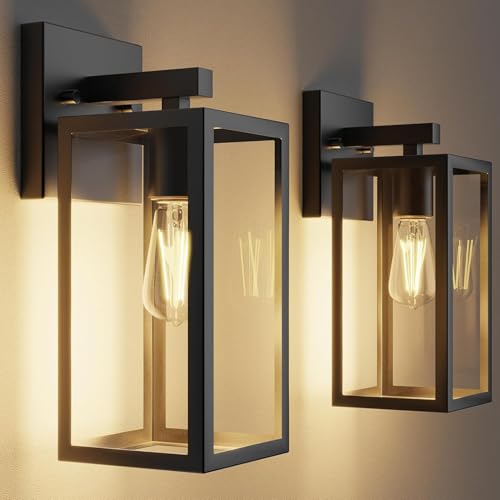
Compact black utility lamps are usually easier to place around fences, sheds, side yards, and garage entrances. Traditional sconces make a stronger visual contribution. The Maxsa 44219 uses metal and real glass, Auzev has a classic lantern profile with an open bottom, and Diyel uses a farmhouse barn-light form. These fixtures may work better when the wall light is part of the patio’s exterior design rather than only a source of motion-triggered illumination.
For a low-maintenance perimeter, a multi-pack can distribute illumination around a patio edge. CLAONER provides six solar units, HMCITY provides two, and TECKNET provides two. Distribute them to avoid dark gaps, but remember that each solar unit needs an appropriate position for charging. A pair of rechargeable lights may be preferable when the wall is shaded or when consistent settings matter more than avoiding cable charging.
Final recommendation
HANDSONIC Rechargeable Motion Sensor Wall Lamp ranks first overall in this specification-based comparison under the published weighted criteria.
HANDSONIC Rechargeable Motion Sensor Wall Lamp ranks first under the published weighted criteria.
HANDSONIC is the first specification-based choice among the best battery-powered patio wall light fixtures because its listing combines a large rechargeable battery, IP65 protection, remote control, three color temperatures, dimming, and broad angle adjustment. It is a strong fit for a shaded patio where solar charging is unreliable.
The vighep two-pack is a useful choice when you need paired coverage and want to remove each lamp for USB-C charging without disturbing the wall base. PopoIron is similarly useful when the red-alert security mode is relevant. For direct sunlight and broad coverage, TECKNET is one of the top battery-powered patio wall light fixtures in this comparison, with an IP66 rating, three-sided lighting, and a listed 300-degree spread.
Choose Maxsa when a metal-and-glass sconce is more important than advanced color control. Select Auzev or Diyel for a lantern or farmhouse appearance, and consider CLAONER or HMCITY when several solar lights are needed around a patio edge. ProGreen remains a practical basic option for smaller areas where replaceable AAA batteries and simple motion operation are acceptable.
Frequently Asked Questions
Are the best battery-powered patio wall light fixtures suitable for a covered porch?
Yes, several selected products are specifically described for covered porches, including HANDSONIC, vighep, and PopoIron. Rechargeable models are useful when a roof or nearby structure blocks sunlight. Check the product’s weather rating and place the fixture according to its instructions. A covered location may still experience wind-driven rain, so a higher stated IP rating can be useful.
Do solar wall lights count as battery-powered fixtures?
For this comparison, solar fixtures are included because their panels charge an integrated battery that powers the light after dark. They are still dependent on daylight, unlike USB-rechargeable products. TECKNET, CLAONER, HMCITY, Auzev, and Diyel all document solar charging. If the patio wall is shaded, a rechargeable model with USB charging is generally the more predictable choice.
Which controls matter most for patio use?
Motion activation is useful near doors, paths, and steps. Dimming and selectable color temperature are more helpful when the same light must serve both ambiance and practical visibility. HANDSONIC, vighep, and PopoIron list all three control types. Simpler fixtures such as ProGreen may be adequate when you only need automatic activation or a steady ON mode.
What does IP65 mean for an outdoor wall light?
IP65 is a technical protection rating indicating protection against dust and water jets under the relevant test conditions. It is not a promise that every installation will perform identically in every location. Mount the fixture securely, keep charging-port covers closed when applicable, and follow the supplied instructions. TECKNET is listed at IP66, while Maxsa and ProGreen are listed at IP44.
Should I choose one bright light or several smaller lights?
Use one adjustable or wide-angle fixture when the target area is concentrated and the wall provides a suitable mounting point. Several smaller lights can distribute illumination more evenly along fences, steps, or patio edges. CLAONER and HMCITY document multi-light sets, while TECKNET emphasizes a broad three-sided spread. Solar sets require favorable daylight at each mounting location, so a rechargeable pair may be easier for shaded areas.