Buying Guide
Choosing among the best carbon fiber phone cases starts with separating the material from the visual pattern. The listings in this comparison cover genuine carbon fiber, forged carbon fiber, aramid fiber, carbon-fiber-and-TPU hybrids, and PC cases with a carbon-fiber texture. Those descriptions are not interchangeable, so the first step is deciding whether you want a documented structural material or mainly the appearance and grip of the pattern.
Real carbon fiber, aramid fiber, and carbon texture
Several selected products identify real carbon fiber directly. The BENTOBEN cases combine it with TPU, while the Tigowos and GESIHOPY listings describe carbon fiber alongside aramid fiber and other layers. Forged carbon fiber uses a different visual treatment, with the iPhone 17 Pro Max case documenting a forged board and embedded metal foils.
Aramid fiber is another lightweight synthetic fiber used in the selected cases. Mous pairs aramid fiber with a rigid shell and impact-absorbing corners. GIMENOHIG emphasizes real aramid fiber and an unusually low listed weight. Samsung identifies aramid in its Carbon Magnet Case for the Galaxy Z Fold8 Ultra. If you prefer a woven technical-fiber finish and minimum bulk, these constructions deserve closer attention.
X-level documents a carbon-fiber pattern on durable PC rather than claiming real carbon fiber. That distinction may matter if material authenticity is central to your decision. It can still be a useful design choice when the priorities are a matte touch, grip, and a slim outline.
Protection features to compare
Protection language varies considerably. Mous provides the most detailed layered design in this group: AiroShock corners, a rigid shell, and a reinforced camera surround. Tigowos gives unusually specific raised-lip dimensions, listing 2.9 mm at the camera and 1.2 mm at the screen. GESIHOPY documents four-side coverage and a raised edge, while the selected BENTOBEN cases use carbon fiber with TPU and describe shock protection.
The forged-carbon iPhone 17 Pro Max case uses flexible TPU edges and raised lips around the camera and screen. X-level also documents raised screen and camera lips. These details are useful when you want some separation between the phone surfaces and a flat surface, but the supplied listings do not establish identical protection performance across cases. This is a specification comparison, not a hands-on drop test.
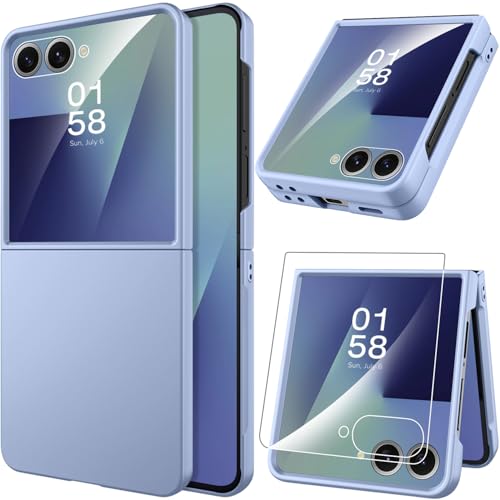
The thinnest designs make a different trade-off. GIMENOHIG lists a 0.028-pound weight and concentrates on a barely-there profile. Samsung describes its foldable case as thin and protective without bulk, but gives less detail about raised edges. A slim case may be preferable for pocket carry, while a layered bumper design may provide more documented coverage.
Magnetic and wireless charging support
Charging compatibility is a major separator among the best carbon fiber phone cases. Mous supports MagSafe, Qi2, and magnetic accessories, and the BENTOBEN, Tigowos, and GESIHOPY listings describe built-in magnets or magnetic rings for aligned charging. The Samsung case uses built-in magnets to align the Galaxy Z Fold8 Ultra for wireless charging and compatible accessories.
Other selected cases support wireless charging without documenting a magnetic ring. GIMENOHIG, X-level, and the forged-carbon case fall into this category based on their supplied descriptions. If you use magnetic mounts or snap-on accessories, look for explicit magnet or MagSafe language rather than assuming that wireless charging support includes magnetic attachment.
Fit, cutouts, and model checks
Exact phone compatibility should come before finish or material. The selected products are model-specific: examples include iPhone 15, iPhone 16, iPhone 16 Pro, iPhone 16 Pro Max, iPhone 15 Pro Max, iPhone 17 Pro Max, and Galaxy Z Fold8 Ultra. Screen size and camera layouts can differ even within one phone generation.
The BENTOBEN, GESIHOPY, X-level, Tigowos, and forged-carbon listings mention precise openings or access to ports and buttons. Mous specifically addresses the Camera Control button with a reinforced surround. Samsung’s case is designed for the Z Fold8 Ultra, where foldable-phone fit is especially important. Before selecting a case, match the exact model name and size shown in the product listing to the device in hand.
Finish, grip, and daily handling
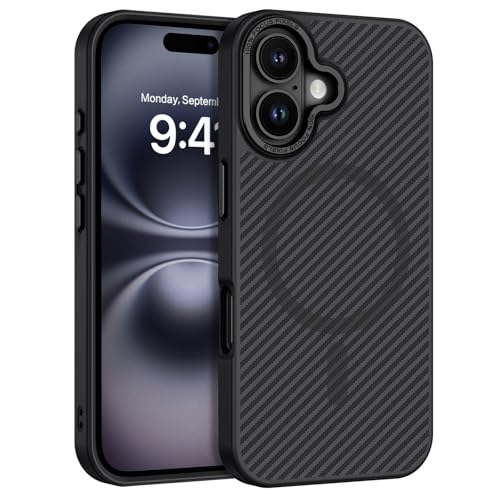
Surface treatment affects how a case feels as much as how it looks. GESIHOPY uses a textured carbon-fiber surface and ribbed side grip. X-level describes a matte carbon-fiber touch, while Tigowos uses a translucent matte back with an oleophobic coating. The forged-carbon case combines glossy and matte edge treatments and adds an anti-slide edge design.
Mous offers an aramid-fiber finish in a broader protective structure. Samsung describes a smooth seamless grip. GIMENOHIG focuses on tactile feel and a thin outline. These are design descriptions supplied by the listings, not verified hand-feel results, so treat them as clues for choosing between textured, matte, smooth, or decorative finishes.
Final Recommendation
Mous Limitless Aramid Fibre Case for iPhone 17 Pro Max ranks first overall in this specification-based comparison under the published weighted criteria.
The final choice among the best carbon fiber phone cases depends on the documented features that match your intended use.
Mous Limitless Aramid Fibre Case for iPhone 17 Pro Max is the first overall specification-based choice because it documents the broadest combination of impact-absorbing corners, rigid-shell construction, camera protection, and magnetic charging support. Among the top carbon fiber phone cases, it is the most feature-complete selection for its supported iPhone model.
Tigowos is a strong alternative when raised-edge dimensions and MagSafe support matter. GESIHOPY is better suited to users who want a textured grip on an iPhone 16 Pro. The BENTOBEN cases offer model-specific hybrid designs for iPhone 15, iPhone 16, and iPhone 16 Pro Max. For a very light case, GIMENOHIG provides the clearest weight specification. X-level is the texture-focused choice, while Samsung is the dedicated option for Galaxy Z Fold8 Ultra owners.
Frequently Asked Questions
Are all carbon-fiber phone cases made from real carbon fiber?
No. The selected listings use several terms. BENTOBEN identifies real carbon fiber with TPU, and the forged-carbon model identifies genuine forged carbon fiber. X-level describes a carbon-fiber pattern on PC, which is a different construction. Aramid fiber is also used in several cases, including Mous, GIMENOHIG, and Samsung. Read the material wording carefully instead of relying only on the product title.
Which of the best carbon fiber phone cases support MagSafe?
Mous, Tigowos, GESIHOPY, and the selected BENTOBEN cases document built-in magnetic support or MagSafe compatibility. The Samsung Galaxy Z Fold8 Ultra case documents built-in magnets for wireless charging alignment and compatible accessories. X-level, GIMENOHIG, and the forged-carbon case document wireless charging support, but their supplied details do not establish MagSafe compatibility.
How should I choose between a slim case and a layered case?
Choose a slim design if keeping the phone’s original outline and low weight is the priority. GIMENOHIG lists a 0.028-pound case, while X-level emphasizes a thin, minimalist profile. Choose a layered design when you want more documented structural elements, such as Mous’s rigid shell and AiroShock corners or GESIHOPY’s carbon fiber, PC, and microfiber layers. The listings support these design differences but do not provide a common independent drop-test comparison.
Do these cases fit multiple phone models?
Most selected cases are dedicated to one model. BENTOBEN offers separate versions for iPhone 15, iPhone 16, and iPhone 16 Pro Max, while the other cases identify their target model in the title or specifications. The Samsung case is designed for Galaxy Z Fold8 Ultra. Confirm the exact model and screen size before ordering, especially when comparing standard, Pro, and Pro Max versions.
Which case has the clearest camera and screen protection details?
Tigowos provides the most specific measurements, listing 2.9 mm camera lips and 1.2 mm screen lips. Mous documents a reinforced camera bump, and both the forged-carbon case and X-level describe raised lips. GESIHOPY also lists a raised edge. These are published design details, not results from an independent physical test.