Buying Guide
The best card holder phone armbands should do more than hold a smartphone. They need a defined place for cards, a phone compartment that matches the device, and a wearing system suited to movement. The products above are compared from supplied listing specifications, not from hands-on testing. Because feature descriptions vary, use the documented details as a checklist rather than assuming that one design works for every phone, case, or arm size.
Start with card storage
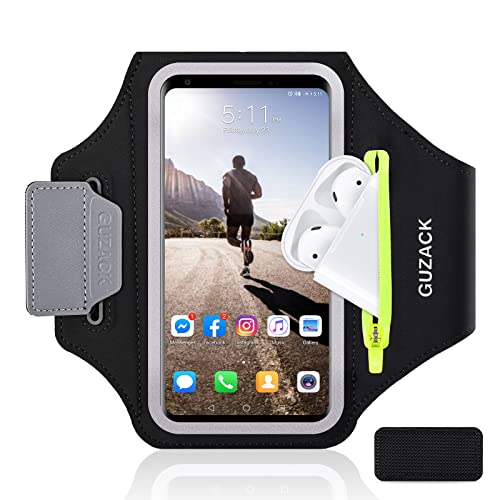
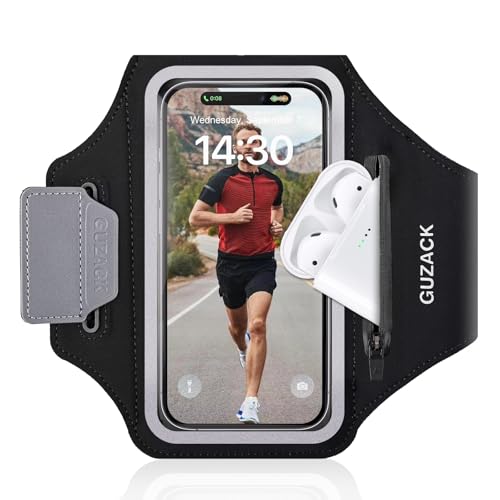
Card storage appears in several forms. A hidden rear pocket, such as the one listed for the GUZACK Running Armband with Card Slot and the PEDVSTY Running Armband, keeps cards separate from the main phone compartment. This can be useful when the listing also identifies a closure intended to help prevent sweat from reaching the contents.
Zippered pockets provide a different arrangement. The Kebrela Running Armband with Earphone Bag and the HAISSKY Running Armband with Earphone Pouch list room for cards alongside keys or earphones. The Londehuhai Running Armband Pouch and Olnverath Universal Running Armband go further in describing two separate pockets, which may make it easier to keep a phone away from metal items.
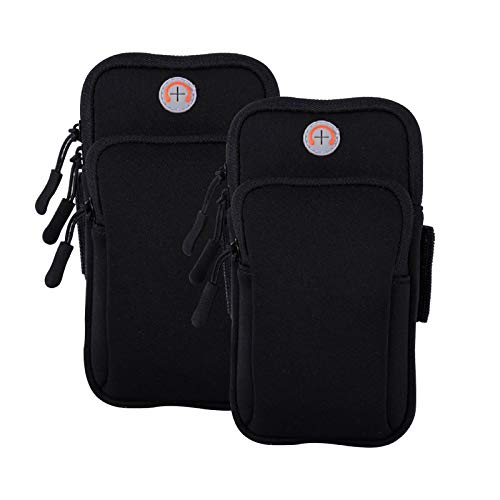
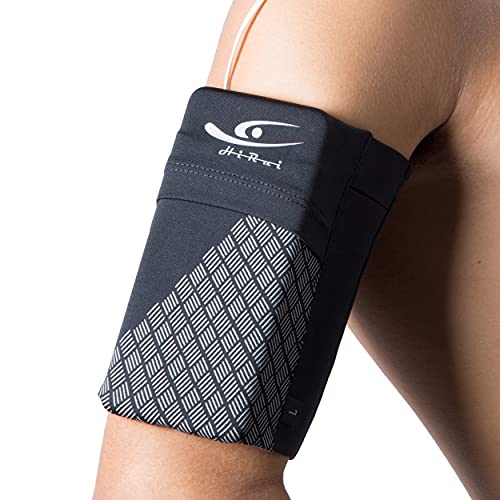
For the most extensive documented storage, the MOVOYEE 2-Pack Phone Armband lists a double-deck, double-zipper pouch with room for a phone, keys, ID or credit cards, cash, earbuds, and other small items. HiRui also specifies a phone-and-card compartment plus two side pockets. These layouts are more suitable when you routinely carry several small essentials, although extra compartments can add bulk compared with a simple card slot.
Check phone size and case compatibility
Phone capacity is not stated in one universal format. Most selected listings use a maximum screen size: MOVOYEE lists up to 7.6 inches with a slim protective case, while GUZACK and PEDVSTY list up to 6.8 inches. Kebrela, HAISSKY, and OAYOU list up to 6.9 inches, and HiRui lists up to 7 inches. These numbers should be checked against your phone and case, since a bare-phone fit does not necessarily allow for a thick protective case.
The Olnverath listing gives a 7-by-3.5-inch armband size instead of a maximum screen figure. That makes direct phone matching more dependent on comparing the device dimensions with the supplied product dimensions. PhantomSleeve does not provide a maximum screen size in the supplied evidence, so it is best considered only after checking its pocket dimensions independently.
Decide whether you want a screen window
A clear TPU or PVC window allows phone controls without removing the device. GUZACK, PEDVSTY, Kebrela, HAISSKY, and OAYOU explicitly document touchscreen access. GUZACK and PEDVSTY also list password, gesture, and Face ID access, while HAISSKY lists password and gesture unlocking. The MOVOYEE listing describes a protective, water-resistant pouch but does not provide the same touchscreen-window detail.
Londehuhai and Olnverath document earphone holes but do not state that the phone can be operated through a clear screen. PhantomSleeve also does not document a touchscreen window. Choose a windowed design when changing music, reading messages, or answering calls during activity is important; choose a pocket-style design when storage separation is the priority and you are comfortable removing the phone.
Match the arm adjustment to your measurements
Measure around the part of the arm where you plan to wear the armband. Kebrela lists an 8- to 16-inch range, while MOVOYEE, OAYOU, and PEDVSTY list 10 to 16 inches. HAISSKY lists 10.5 to 15.8 inches, and PhantomSleeve specifies a 10- to 14-inch upper-arm circumference. HiRui offers four sizes rather than one universal arm range, making the size chart particularly important.
The V-shaped choice between a strap and a sleeve also affects fit. Strap-based products use adjustable fastening, such as hook-and-loop closures or elastic sections. PhantomSleeve uses a nylon-spandex compression sleeve and documents separate upper and wrist opening measurements. A sleeve may feel more continuous around the arm, but its stated measurements are more important than assuming that “one size” will suit every wearer.
Consider moisture, access ports, and visibility
Several products list sweat or water-related construction. MOVOYEE identifies air mesh, neoprene, and water-resistant material; Kebrela lists breathable fabric and airflow mesh; HAISSKY describes water-resistant, sweatproof, and washable fabric; and OAYOU lists neoprene with sweat-wicking properties. These descriptions do not establish waterproofing for immersion, so keep the intended activity and weather conditions in mind.
An earphone opening is listed on GUZACK, HAISSKY, HiRui, Kebrela, Londehuhai, and Olnverath. HAISSKY also lists three holes for charging and listening. Wireless-earbud users may prefer a dedicated pouch, which is documented on Kebrela, HAISSKY, HiRui, and PEDVSTY.
For low-light activity, reflective elements are documented on GUZACK, PEDVSTY, HAISSKY, OAYOU, and HiRui. These features can increase the visibility of the armband, but the listings do not establish visibility from a particular distance or angle. Treat reflective trim as an added design feature, not as a substitute for broader nighttime safety practices.
Final recommendation
MOVOYEE 2-Pack Phone Armband ranks first overall in this specification-based comparison under the published weighted criteria.
The final choice among the best card holder phone armbands depends on the documented features that match your intended use.
MOVOYEE 2-Pack Phone Armband is the first overall specification-based choice. Its documented 7.6-inch phone capacity with a slim case, double-zipper storage, broad 8- to 16-inch fit, and water-resistant breathable materials give it the most complete feature combination in this comparison. For the top card holder phone armbands with a touchscreen focus, GUZACK, PEDVSTY, Kebrela, HAISSKY, and OAYOU provide clearer window-access details. HiRui is a useful alternative when separate pockets and multiple sizes matter, while PhantomSleeve suits shoppers who specifically want a compression sleeve. Check phone, case, pocket, and arm measurements before selecting any model.
Frequently Asked Questions
What should I check first when choosing the best card holder phone armbands?
Check three measurements first: your phone with its case, the pocket or screen capacity, and your arm circumference. The selected products range from documented 6.8-inch to 7.6-inch phone support, while listed arm ranges vary from 8 to 16 inches, 10 to 16 inches, 10.5 to 15.8 inches, and 10 to 14 inches. A correct measurement is more useful than relying only on a general compatibility list.
Do card holder phone armbands let me use the touchscreen?
Some do, but not all supplied listings document that feature. GUZACK, PEDVSTY, Kebrela, HAISSKY, and OAYOU specify clear TPU or similar touchscreen access. The Londehuhai and Olnverath listings specify earphone holes and storage but do not document screen operation through the pouch. MOVOYEE also does not provide the same explicit window-access detail in the supplied evidence.
Is a hidden card slot different from a zippered pocket?
Yes. A hidden card slot is generally described as a dedicated compartment for cards or ID, while a zippered pocket can hold cards together with keys, earbuds, or cash. GUZACK, PEDVSTY, and OAYOU document hidden card storage. MOVOYEE, Kebrela, HAISSKY, Londehuhai, and Olnverath document zippered storage, with Londehuhai and Olnverath specifically listing two separate pockets.
Which selected designs include reflective details?
GUZACK, PEDVSTY, HAISSKY, OAYOU, and HiRui list reflective strips, edges, or logos. Their supplied descriptions associate these details with low-light or nighttime activities. The other selected products do not provide reflective-feature details in the evidence used here.
Should I choose a sleeve or an adjustable strap?
Choose based on the documented design and your measurements. PhantomSleeve is the selected sleeve-style model and lists a nylon-spandex compression construction with a 10- to 14-inch upper-arm fit. The other selected products use adjustable straps or fastening systems. A strap design may offer more adjustment points, while a sleeve requires closer attention to its opening and circumference measurements.