Buying Guide
Choosing the best cashmere knitting yarn starts with matching the fiber profile and yarn structure to the pattern. The selected products include pure cashmere, cashmere-rich blends, and blends with a smaller cashmere component. They also cover lace, fingering, sport, DK, light worsted, and bulky descriptions. Because this is a specification-based comparison rather than a hands-on test, the most useful evidence is what each listing states about content, dimensions, gauge, care, and intended projects.
Pure cashmere or a blend?
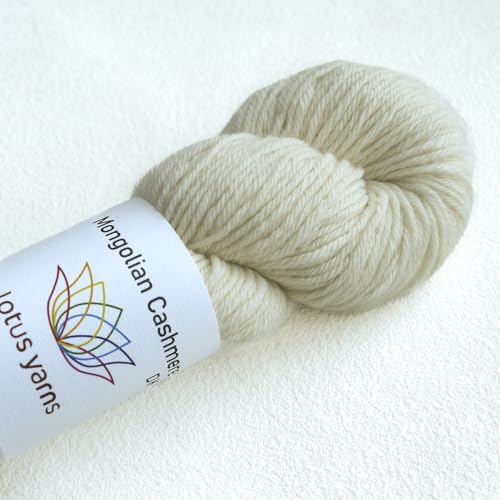
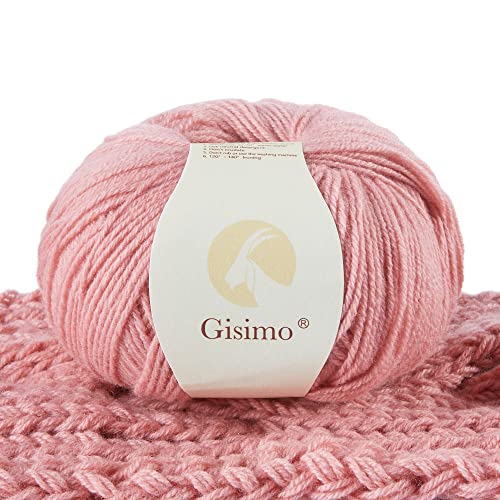
Pure cashmere is documented for Knitting for Olive Compatible Cashmere, Lotus Yarns 100% Mongolian Cashmere DK, Gongxue 100% Cashmere Cone Yarn, Gisimo, Gongxue 3-Ball Mongolian Cashmere Yarn, and Yonkey Monkey. These options are the most direct matches for a knitter specifically seeking cashmere as the principal fiber.
Blends can serve a different purpose. Sirdar Cashmere Merino Silk DK combines three natural fibers but does not state their percentages. Lotus Yarns Cashmere-Wool-Angora Lace provides exact percentages, including 50% cashmere. Debbie Bliss Baby Cashmerino and Debbie Bliss Cashmerino DK each list 12% cashmere alongside merino wool and acrylic. That distinction matters when comparing softness, structure, care, and fiber composition. A blend should not be treated as interchangeable with 100% cashmere.
Choose yarn weight before buying enough skeins
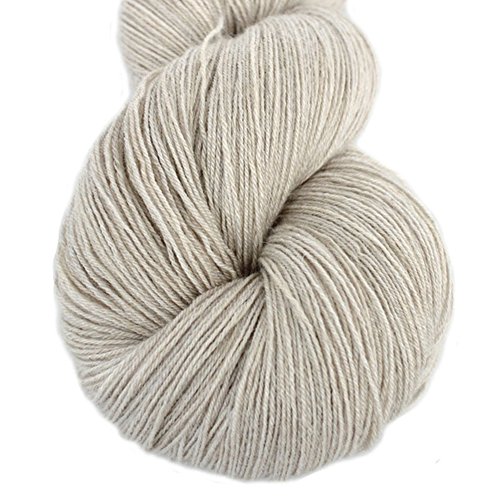
Weight affects both the appearance of a fabric and the needles or hooks used. Knitting for Olive is identified as lace/fingering weight and lists a 3 mm needle. The Lotus lace blend is also fine, with a 2.25–3.25 mm range. These formats suit delicate accessories, lace patterns, and lightweight garments, but they generally require more stitches than a thicker yarn.
Gisimo lists 2.75–3 mm needles, while the Gongxue three-ball set lists 3–4 mm. Lotus Yarns DK gives US 3–5 guidance, Sirdar is DK, Debbie Bliss Cashmerino DK is light worsted with a US 6 needle, and Yonkey Monkey is described as bulky. Debbie Bliss Baby Cashmerino sits at sport weight with US 3 guidance. Compare the listing’s weight and needle information with your pattern rather than relying on the word “cashmere” alone.
Check yardage and pack structure
Skein weight does not tell you how far the yarn will go. Knitting for Olive lists 150 meters per 25 grams, the Lotus DK lists 199 yards per 55 grams, and Gisimo lists 236 yards per 50 grams. The Lotus lace blend lists 365 meters per 50 grams, making its fine format especially yardage-focused.
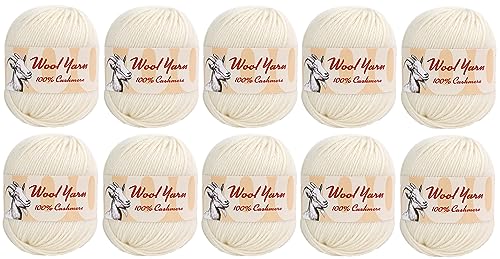
Pack details are equally important. Gongxue’s set has three 50-gram balls and 819 total yards based on the stated 273 yards per ball. Yonkey Monkey provides a 10-pack totaling 500 grams, but the supplied evidence does not state total yardage. Gongxue’s cone lists 1,200 yards in 100 grams. For any garment, compare the pattern’s required yardage with the product’s stated length and account for differences in gauge, size, and knitting tension.
Gauge information helps connect the yarn listing to a pattern. Knitting for Olive gives 32–40 stitches per 10 cm, while the Lotus lace blend states 43 stitches over 4 inches after blocking. Debbie Bliss Baby Cashmerino lists 25 stitches and 34 rows to 4 inches, and Debbie Bliss Cashmerino DK lists 22 stitches and 30 rows to 4 inches. These details are more useful than a general description of softness because they give you a starting point for swatching.
Ply and count details can also clarify construction. Gisimo identifies six-ply yarn. Gongxue’s three-ball set is identified as 24S/3 ply, and the Gongxue cone is listed as 26S/2. The cone listing specifically notes that knitters may use two or three strands if a single strand seems too thin. That is a design and setup consideration, not a direct substitute for changing the yarn weight without testing gauge.
Read care instructions carefully
Cashmere and cashmere blends commonly need deliberate care, but the selected listings are not identical. Knitting for Olive specifies cool-water hand washing and flat drying. Gisimo gives cold hand-wash instructions, prohibits bleach and machine drying, and recommends horizontal drying. Gongxue’s three-ball yarn similarly specifies cold hand washing and flat drying.
The Lotus DK listing allows dry cleaning or hand washing, while the Lotus lace blend gives the same general care choices. Care flexibility is not assumed here; follow the specific listing and the finished pattern’s requirements. Debbie Bliss Baby Cashmerino and Debbie Bliss Cashmerino DK are the clearest machine-wash options in this selection, with gentle low-temperature washing and flat drying stated. Even with those directions, swatching and following the care label remain important for a finished garment.
Match the yarn to the project
For fine shawls and lace-led work, consider Knitting for Olive, the Lotus lace blend, or the Gongxue cone. For DK garments and accessories, Lotus Yarns 100% Mongolian Cashmere DK and Sirdar Cashmere Merino Silk DK provide the clearest documented options. Gisimo and the Gongxue three-ball set offer fine-to-mid-fine specifications with stated needle ranges.
For baby and children’s projects, Debbie Bliss Baby Cashmerino is specifically positioned for those uses, while Lotus Yarns DK also lists baby garments. Debbie Bliss Cashmerino DK is suited to pullovers, blankets, and hats according to its listing. Yonkey Monkey is the outlier for larger work because its 500-gram, 10-pack format is described as bulky and suitable for garments and home décor.
Final recommendation
Knitting for Olive Compatible Cashmere ranks first overall in this specification-based comparison under the published weighted criteria.
The final choice among the best cashmere knitting yarn depends on the documented features that match your intended use.
Knitting for Olive Compatible Cashmere is the highest-scoring returned product and the first overall specification-based choice. Its 100% cashmere content, lace/fingering classification, stated gauge, needle guidance, yardage, and care instructions create the clearest technical profile for fine knitting. For a thicker pure-cashmere option, Lotus Yarns 100% Mongolian Cashmere DK is the more suitable documented choice. The top cashmere knitting yarn for a particular project still depends on required weight, gauge, total yardage, and care requirements.
Among blends, Sirdar Cashmere Merino Silk DK offers a DK format and documented project range, while the Debbie Bliss Cashmerino yarns provide the clearest gentle machine-wash instructions. The Lotus lace blend stands out for its stated 50% cashmere content and high yardage. Review the pattern gauge and care requirements before selecting a pack, and use a swatch to confirm the fabric suits the project.
Frequently Asked Questions
What is the best cashmere knitting yarn for lace patterns?
Knitting for Olive Compatible Cashmere is the clearest fit among the selected products because it is identified as lace/fingering weight and includes 32–40 stitches per 10 cm plus 3 mm needle guidance. The Lotus Yarns lace blend is another documented option, with 50% cashmere, 365 meters per 50-gram skein, and a 2.25–3.25 mm needle range.
Is 100% cashmere always the right choice for a knitting project?
Not necessarily. Pure cashmere is the most direct fiber match, but a blend may provide a different combination of structure, drape, wash guidance, or stitch definition. Sirdar combines merino, silk, and cashmere; the Debbie Bliss Cashmerino products combine merino, acrylic, and cashmere. Select according to the pattern and the stated fiber and care information.
Which selected yarn has the clearest machine-wash guidance?
Debbie Bliss Baby Cashmerino and Debbie Bliss Cashmerino DK both specify gentle machine washing at about 30 degrees Celsius, followed by flat drying. Their listings also state fiber percentages and recommended needle information. These care instructions should still be checked against the product label and pattern requirements.
How much cashmere yarn is needed for a sweater?
The supplied listings do not provide one universal amount because requirements vary by garment size, pattern gauge, yarn weight, and design. The Gongxue three-ball listing gives project references for sweaters, including six to eight balls for a women’s sweater and eight to eleven for a men’s sweater, but those figures are product-specific. Use the pattern’s yardage requirement first, then compare it with the selected yarn’s stated yardage.
What should I check before ordering multiple skeins?
Check the fiber percentage, yarn weight, yardage per skein, total pack quantity, color name, gauge guidance, and care instructions. A 25-gram lace skein, a 55-gram DK hank, and a 500-gram bulky pack serve very different purposes. Also confirm that the listing gives enough total yardage for your pattern and swatch before beginning the full project.