Buying Guide
The best cast iron omelet pans are not all shaped like standard skillets. The candidates here fall into three practical design groups: round omelet pans, rectangular tamagoyaki pans, and divided egg pans. Choosing among them starts with the type of breakfast you actually make. A round pan is the natural fit for a folded American-style omelet. A rectangular pan helps with layered Japanese rolled eggs. A divided pan is better when the goal is several uniform egg portions, sandwiches, or mini pancakes.
Choose the cooking shape first
Round pans offer a familiar surface for spreading beaten eggs and folding them around fillings. The Iwachu Medium has an 8.5-inch diameter, while the Iwachu Large reaches 9.5 inches. The larger model gives more room for generous portions, but the medium model may be easier to manage when cooking for one or two people. The Iwachu 24600 lists an 8.1-inch inner diameter and 1.4-inch depth, useful dimensions for shoppers who want a more defined specification than a general size label.
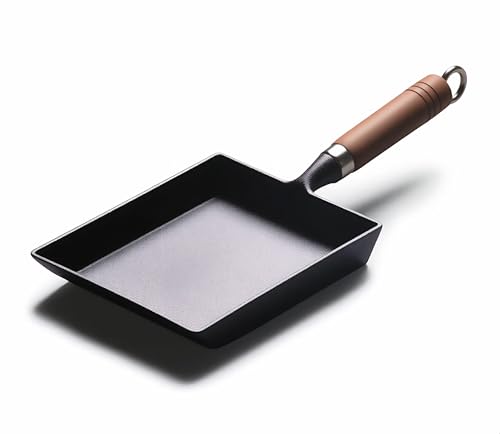
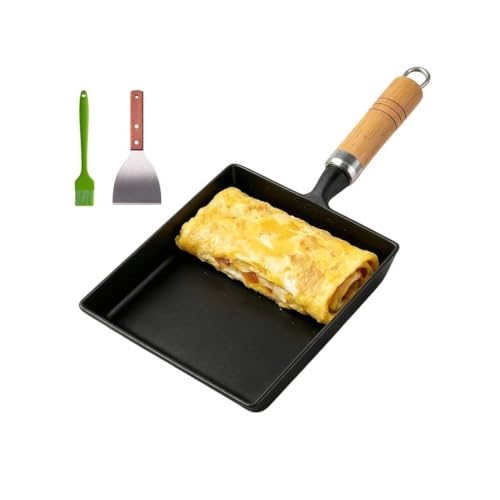
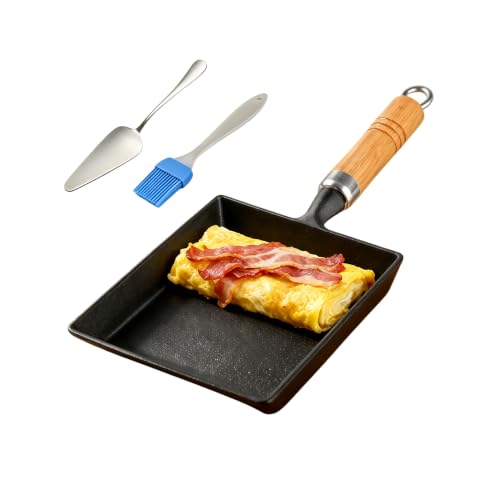
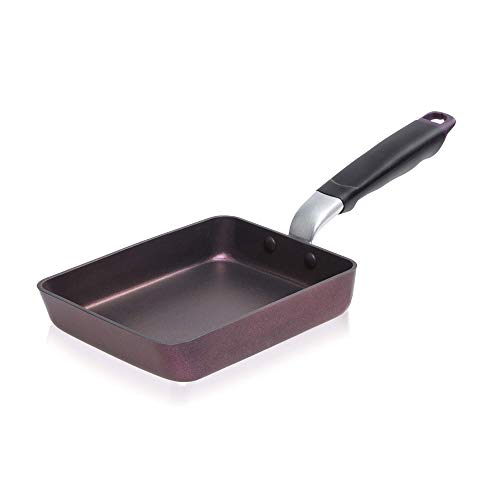
Rectangular pans are designed around rolling rather than folding. YYMIYU lists a 9-by-7-inch format, while Komost, Jerliflyer, and OUKENS document smaller rectangular or square formats near 6 to 7 inches. Low sides, a sloping front, and straight side walls can help guide layers during tamagoyaki preparation. These pans can also handle foods such as crepes, sandwiches, pancakes, bacon, or small cuts of meat when those uses are documented.
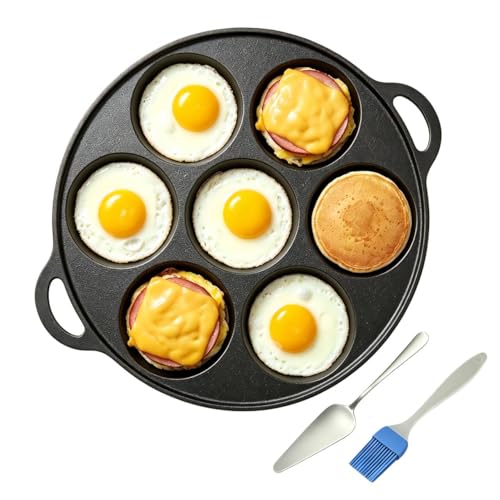
Divided pans change the task entirely. The JSY Sun seven-cup pan is intended for seven portions at once, while the JSY Sun four-cup model uses 3.54-inch cups aimed at English-muffin sandwiches and sliders. A divided design is useful for repeatable portions, but it is not the best match for one large omelet that needs to be folded or rolled.
Consider seasoning and surface preparation
Bare cast iron is not automatically nonstick when it arrives. Komost clearly states that its pan is unseasoned and should be greased well. The JSY Sun four-cup model is also described as unseasoned and includes a seasoning guide. These products suit cooks who are willing to build and maintain the cooking surface themselves.
Pre-seasoned options reduce the initial setup. That does not remove the need for routine drying and oiling, but it can make the first use more straightforward. RIIPOO explains that regular seasoning and maintenance help develop its natural nonstick layer.
Some selected pans document a nonstick coating instead of relying only on bare iron. OUKENS specifies a PFOA-free coating. That is a different maintenance and cooking-surface choice from unseasoned cast iron, so shoppers should not treat every “nonstick” description as the same construction. The supplied listings do not provide enough information to compare coating longevity or release performance through testing.
Match the pan to your cooktop
Cooktop compatibility is especially important with cast iron because the pan must sit securely and heat consistently. YYMIYU, Komost, Jerliflyer, OUKENS, RIIPOO, and both JSY Sun models list compatibility with combinations of induction, gas, electric, or ceramic cooktops.
The Iwachu 24600 specifically states induction compatibility. The two classic Iwachu omelet models do not list a complete cooktop range in the supplied evidence, so shoppers should verify their own setup before buying. Open-flame use is documented for only the products that explicitly mention it; it should not be assumed for every cast iron pan.
Oven use can expand a pan’s role from stovetop omelet cooking to finishing a frittata or another baked dish. YYMIYU lists an oven limit of 500°F and uses a detachable wood handle. The JSY Sun seven-cup model also lists an oven limit of 500°F, with a one-piece cast iron handle. These are useful distinctions: a detachable handle may improve oven clearance or storage, while an iron handle can remain attached but may become hot.
A wood handle can be comfortable on the stovetop, but the supplied evidence does not establish oven safety for those models. Do not infer an oven rating from the presence of cast iron alone. RIIPOO, Komost, and Jerliflyer provide useful shape or cooktop details but do not state a specific oven temperature in the supplied listings.
Plan for cast iron care
Cast iron care is part of the purchase decision. The supplied listings commonly point to hand washing, thorough drying, and a light coating of oil. Komost specifically recommends drying and lightly oiling before storage. RIIPOO similarly describes warm-water hand washing, drying, and oiling.
Seasoned surfaces can change with use, but no supplied evidence supports a specific release result, heating time, or durability test. For that reason, this comparison scores documented preparation and care guidance rather than claiming that one pan cooks eggs better in practice. Buyers who want the least initial preparation should favor a documented pre-seasoned model; buyers comfortable with seasoning can consider the unseasoned options.
Use capacity and weight as practical filters
Cast iron retains heat, but it also tends to add weight. YYMIYU lists a 1.5-kilogram construction, and the Iwachu Large lists a 3.4-pound weight. Smaller pans may still be substantial: Komost lists about the current price, while OUKENS lists approximately the current price. The JSY Sun seven-cup pan is listed at about the current price, a meaningful consideration for storage and handling.
Capacity claims need context. Seven cups are useful for simultaneous portions, but they do not create a broad surface for a classic omelet. Conversely, a 6-by-7-inch tamagoyaki pan can be excellent for rolled layers but unsuitable for a large family-style folded omelet. Use the dimensions and design description together rather than relying only on the word “omelet” in a title.
Final Recommendation
YYMIYU Japanese Cast Iron Tamagoyaki Pan ranks first overall in this specification-based comparison under the published weighted criteria.
The final choice among the best cast iron omelet pans depends on the documented features that match your intended use.
Iwachu Iron Omelette Pan, Large is the highest-scoring returned product and the first overall specification-based choice for shoppers who want a conventional round omelet pan. Its 9.5-inch diameter, stated even heating, Japan-made construction, and purpose-formed handle make the evidence unusually clear.
For a rectangular rolled-egg design, YYMIYU is the most specification-aligned all-around specification choice because it combines pre-seasoning, a 9-by-7-inch format, broad heat-source compatibility, campfire use, a detachable handle, and a stated 500°F oven limit. Komost is a more compact alternative for shoppers who want low sides but do not mind seasoning an unseasoned pan.
Among the top cast iron omelet pans, the best match depends more on shape than on a general ranking. Choose Iwachu Large or Medium for traditional round omelets, a rectangular model for tamagoyaki, or a JSY Sun divided pan for repeatable breakfast portions. Always confirm the listed dimensions, handle restrictions, oven guidance, and care requirements against your cooking routine.
Frequently Asked Questions
What shape is best for a folded omelet?
A round pan is the most direct match for a folded omelet because its open surface supports spreading beaten eggs and folding them around fillings. The Iwachu Medium and Iwachu Large are the clearest selected examples of dedicated round omelet pans. Choose the diameter based on portion size and available burner space.
Are the best cast iron omelet pans naturally nonstick?
Cast iron can develop a naturally seasoned cooking surface, but the supplied listings do not support assuming immediate nonstick performance for every model. Proper seasoning, drying, and oiling remain important parts of care.
Is a tamagoyaki pan suitable for American omelets?
It may be suitable for small or rolled preparations, but its rectangular shape is designed around layered rolling rather than a large folded omelet. YYMIYU, Komost, Jerliflyer, OUKENS, and RIIPOO document rectangular or square designs for tamagoyaki and other small foods. Review the cooking area before choosing one for large portions.
Can these pans go in the oven?
Only use an oven temperature that the product listing explicitly provides. YYMIYU and the JSY Sun seven-cup pan list oven safety to 500°F. Several other selected pans do not state an oven rating, and a wood or detachable handle may change how the pan should be used. When oven guidance is absent, verify it with the manufacturer rather than assuming.
Which pan is best for cooking several eggs at once?
A divided egg pan is the most suitable design for simultaneous portions. The JSY Sun seven-cup model is listed for seven eggs, while the JSY Sun four-cup model is designed around four 3.54-inch cups and breakfast sandwiches. These layouts prioritize repeatable portions over the broad, uninterrupted surface needed for a traditional folded omelet.