Buying Guide
Choosing among the best dishwasher-safe omelet pans starts with separating a true omelet tool from a general skillet that merely mentions eggs. The candidates above include compact round pans, larger frying pans, rectangular tamagoyaki designs, a folding pan, and a divided breakfast pan. Each design can be useful, but the right choice depends on portion size, cooking technique, cooktop, and how closely you plan to follow care instructions.
Match the pan shape to your omelet style
A conventional round skillet is the most adaptable choice for folded omelets, frittatas, fried eggs, vegetables, and other everyday cooking. The 10-inch Cooks Standard pan is a practical middle size, while the 8-inch COOKER KING pan is more compact. The 11-inch LECOOKING and 12-inch KOCH SYSTEME CS pans provide more room for larger portions.
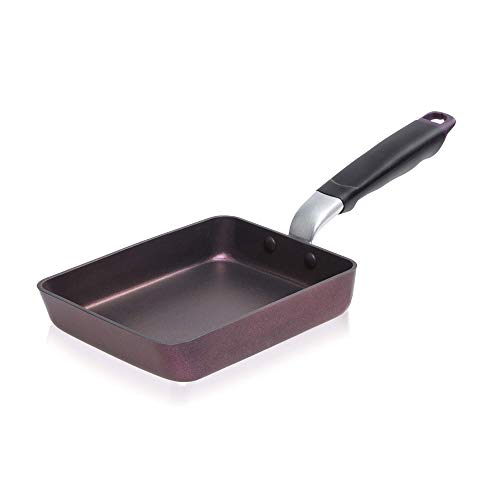
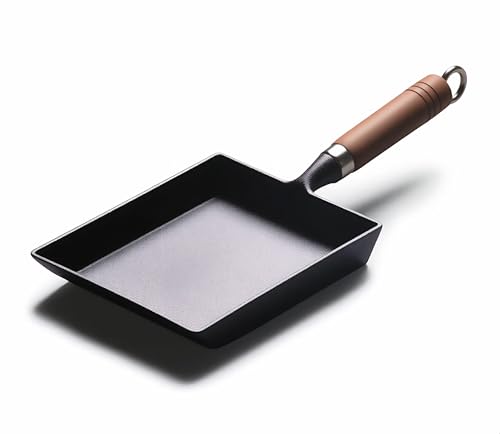
Rectangular pans are more specialized. The TECHEF Tamagoyaki Japanese Omelette Pan uses a sloped front and straight sidewalls intended for flipping and rolling. That geometry is a strong fit for layered Japanese omelets and can also handle pancakes or sandwiches.
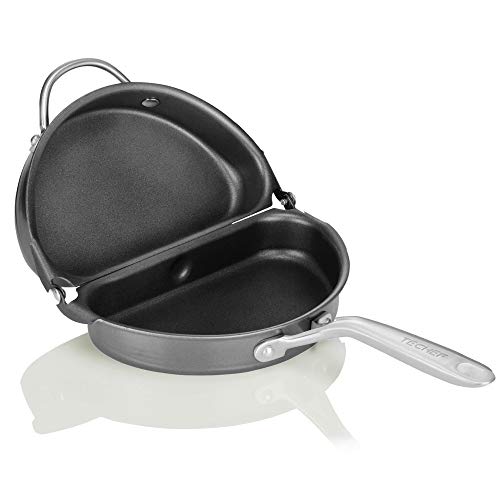
The TECHEF folding pan takes a different approach by providing two cooking surfaces at once. It is designed for frittatas and omelets, but its folding format needs more storage consideration than a flat skillet. The MIUGO three-section pan is useful when eggs and other breakfast foods should remain separated; its partitions are less suitable for making one large continuous omelet.
Check the cooking surface and coating
Nonstick and ceramic coatings are represented across the ranking. GreenPan uses Thermolon ceramic coating and identifies the coating as free from PFAS, PFOA, lead, and cadmium. LECOOKING describes a ceramic surface as PFOA- and PTFE-free, while SAYUANVA lists a five-layer granite coating. These claims describe materials and construction, not independent performance testing.
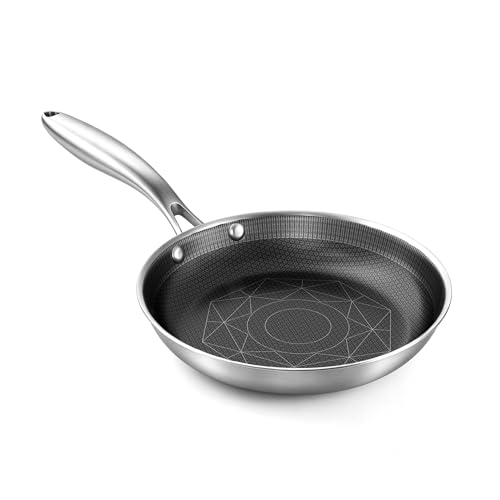
Stainless steel provides a different cooking surface. KOCH SYSTEME CS and COOKER KING use 18/10 stainless steel with tri-ply construction and aluminum cores. Their listings do not present them as conventional coated nonstick pans. For delicate eggs, the COOKER KING listing specifically advises low heat, and its cooking guidance calls for oil and preheating. That makes technique more important than it would be with a coated skillet.
Verify stovetop compatibility
Induction compatibility is not universal. TECHEF, LECOOKING, Gotham Steel, SAYUANVA, MIUGO, KOCH SYSTEME CS, and COOKER KING document induction use. Cooks Standard supports gas, electric, glass, and ceramic surfaces but excludes induction. The TECHEF folding pan also excludes induction.
If your kitchen uses induction, confirm that the exact model and size you buy matches the listing. A pan can be broadly described as compatible with multiple cooktops while a particular variant differs, so the product specifications should take priority over appearance or brand familiarity.
Consider size and portion planning
Small pans can reduce storage demands and suit one egg or one small omelet. The GreenPan 5-inch pan is specifically described for one egg, and the SAYUANVA has a 4.33-inch cooking surface. These are useful for solo breakfasts, dorms, RVs, and camping, but their cooking areas will not accommodate a large folded omelet.
An 8-inch pan is a versatile compact choice for one person. The selected COOKER KING stainless model provides an 8-inch alternative, while Cooks Standard offers a 10-inch surface for a larger single serving or smaller shared meal.
The Gotham Steel set is the most flexible for households that want several diameters. Its 8-, 10-, and 12-inch pans cover different portions, but a set takes more cabinet space and may include sizes you use less often.
Read dishwasher guidance carefully
A dishwasher-safe label does not mean every care method is equally suitable for long-term coating life. Cooks Standard says the pan is dishwasher safe while recommending hand washing to extend the nonstick coating’s life.
When using a dishwasher, allow cookware to cool as directed, avoid abrasive tools where the listing warns against them, and follow the manufacturer’s instructions for handles, lids, and removable parts. The GreenPan silicone-wrapped handle, TECHEF stainless handle, and the various coated aluminum bodies have different construction details, so care should not be generalized across all pans.
Compare oven use and handles
Oven capability matters if you finish an omelet, frittata, or other dish after stovetop cooking. LECOOKING documents oven use up to 536°F, COOKER KING lists up to 900°F, and TECHEF documents 350°F for the rectangular pan. The TECHEF folding model lists 450°F. These are product specifications, not a recommendation to exceed the instructions for a coating or handle.
Handle construction also varies. GreenPan and SAYUANVA document stay-cool grip features. Cooks Standard uses a riveted handle with a silicone grip. KOCH SYSTEME CS uses a riveted stainless steel handle, while some coated pans use heat-resistant plastic or Bakelite.
Final Recommendation
TECHEF Tamagoyaki Japanese Omelette Pan ranks first overall in this specification-based comparison under the published weighted criteria.
TECHEF Tamagoyaki Japanese Omelette Pan is the highest-scoring returned product and the first overall specification-based choice. Its rectangular sides and sloped front directly support rolling and flipping, while induction readiness, heavy-gauge forged aluminum, reinforced nonstick construction, and a stated dishwasher-safe design cover the main buying requirements.
For a compact single egg, GreenPan Mini is a more focused choice. For a folding format, TECHEF Frittata and Omelette Pan offers a documented two-surface design. Larger households should consider LECOOKING or the Gotham Steel set, while stainless-steel shoppers can choose KOCH SYSTEME CS or COOKER KING. Together, these top dishwasher-safe omelet pans cover the main size, surface, and cooktop combinations without relying on customer ratings or hands-on testing.
The best dishwasher-safe omelet pans are not interchangeable. Select the smallest pan that fits your normal portion if storage matters, choose a rectangular or folding design for specialized omelet techniques, and verify induction compatibility before ordering. Treat dishwasher use as a documented convenience while still following each manufacturer’s care guidance.
Frequently Asked Questions
Among the best dishwasher-safe omelet pans, what size pan is suitable for one omelet?
An 8-inch pan is a practical starting point for a single omelet, while 10 or 11 inches offers more room for fillings and larger portions. The GreenPan Mini and SAYUANVA are much smaller and are better suited to one egg or small servings. A 12-inch pan may be excessive for one person but can help with family-size cooking.
Are rectangular pans better for Japanese omelets?
A rectangular pan can make rolling layered omelets more convenient because the sides help contain the mixture and support the rolling shape. The TECHEF Tamagoyaki Japanese Omelette Pan documents sloped and straight sides for flipping and rolling. This design is more specialized than a round skillet and may be less useful if you mainly cook conventional folded omelets.
Can dishwasher-safe coated pans still be hand washed?
Yes, hand washing may be recommended even when a listing says dishwasher safe. Cooks Standard specifically recommends hand washing to extend nonstick coating life. Follow the care instructions for the exact pan, avoid abrasive pads when instructed, and let cookware cool before cleaning if the manufacturer says to do so.
Which selected pans work with induction cooktops?
The TECHEF rectangular pan, LECOOKING, Gotham Steel, SAYUANVA, MIUGO, KOCH SYSTEME CS, and both selected COOKER KING models document induction compatibility. Confirm the exact product specification before use because compatibility can vary by model.
Is stainless steel suitable for omelets?
Stainless steel can be used for omelets, but the selected stainless models are not presented as conventional nonstick pans. COOKER KING advises low heat for eggs and provides guidance involving preheating and oil. If you want the most directly documented release-oriented design, a coated or ceramic option may be easier to match to delicate egg cooking, while stainless steel may appeal to shoppers avoiding chemical coatings.