Buying Guide
Choosing the best chevy step rails starts with vehicle fitment, not appearance. The supplied products are not interchangeable across every Chevrolet truck. Several are designed for Colorado and Canyon crew cabs, while others fit newer Silverado and Sierra crew cabs. Cab configuration is particularly important: many listings specify four full-size doors and exclude extended or standard cabs.
Confirm the truck and cab
Check the exact model year, series, cab style, and any special configuration before comparing step construction. The Tyger Auto Trax, LanderX Silverado, MaxMate, COMNOVA, Riser, Access, and newer Rider products target the newer Silverado/Sierra applications listed in their evidence. Colorado choices include the Colorado LanderX, Colorado Rider, and OEDRO model.
A listing can cover a wide year range while still excluding a particular trim or body version. The newer Rider specifically notes an exclusion for certain 2019 LD/Limited configurations. Treat these details as compatibility checkpoints rather than assuming a model-year match is sufficient.
Choose the step style
Drop steps lower the stepping point below the main rail. The LanderX designs document a five-inch drop, while the OEDRO Colorado model lists a 3.5-inch drop. This format can be useful when easier entry is the priority, but the lower position may change the amount of clearance beneath the step.
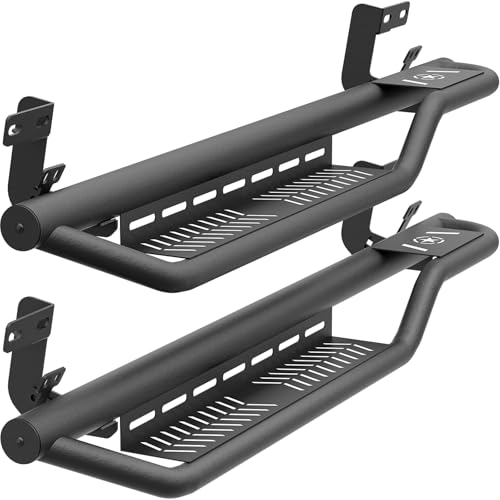
Oval tube rails offer a more defined stepping surface without becoming a full-width running board. The Colorado and Silverado Rider models use 3.5-inch oval tubing, and MaxMate uses the same nominal width. Their listings describe non-slip or UV-protected step pads. These are a middle ground between a narrow tubular bar and a broad board.
Six-inch boards provide the broadest documented step areas in this selection. The Tyger Auto Riser uses a six-inch-wide board, while COMNOVA lists a six-inch step with a slider design that adjusts forward and backward. A wide board may be preferable for frequent entry or for drivers who want more visible side coverage, though it has a different visual and structural design than a tube rail.
Compare construction and capacity
Most selected rails use carbon steel, including the Trax, LanderX, Access, Rider, MaxMate, COMNOVA, and OEDRO products. The Riser uses triangle aluminum tubing. The supplied listings also state capacities ranging from 500 to 550 pounds among the selected products. Capacity figures are product specifications, not independent test results, so compare them only as listed.
Bracket design is another useful distinction. COMNOVA documents four brackets on each side, while other products state that brackets and hardware are included. More brackets may affect how a rail mounts to the vehicle, but the supplied evidence does not establish a universal performance advantage. Inspect the included hardware and factory mounting points before installation.
Evaluate finish and step surfaces
Textured black powder or E-coating appears across many of the tube-style products. MaxMate specifies matte black E-coating and pre-welded endcaps, while the Tyger models describe textured or dual-stage finishes intended to resist rust and corrosion. The Riser lists satin-black powder coating on aluminum tubing. These descriptions support finish comparison, but they do not establish long-term field durability.
Step-pad details matter for daily use. The Rider models describe non-slip surfaces, MaxMate lists UV-protected pads, and the Riser specifies UV-resistant non-slip wide pads. COMNOVA uses anti-slip plastic steps, and OEDRO describes detachable pedals on its Colorado model. Match the pad style to the access pattern you expect rather than treating width alone as the deciding factor.
Review installation requirements
The selected products generally use bolt-on installation through factory mounting points. The Trax, MaxMate, Riser, Access, and Colorado Rider listings state that drilling is not required. COMNOVA also describes direct bolt-on mounting and includes its mounting accessories. OEDRO’s Colorado model uses factory holes, while the LanderX models include brackets and hardware for bolt-on installation.
Installation time statements are listing claims, not hands-on verification. Several Tyger products state that installation can be completed in about 20 minutes. Confirm that the package includes both driver- and passenger-side rails, the correct brackets, and hardware for your exact truck. If the listing calls out a special body configuration, resolve that issue before beginning.
How this comparison was scored
This is a specification-based comparison using the supplied listing features and specification fields. Vehicle fitment and step access each receive 25 percent because a rail must match the truck and provide a usable entry surface. Construction receives 20 percent, while installation and finish protection receive 15 percent each. No hands-on testing or customer-opinion summary is used.
Final Recommendation
Tyger Auto LanderX Colorado Drop Steps ranks first overall in this specification-based comparison under the published weighted criteria.
The final choice among the best chevy step rails depends on the documented features that match your intended use.
Tyger Auto Trax Dual-Tube Step Rails are the highest-scoring returned product and the first overall specification-based choice. Their dual-tube carbon-steel construction, 500-pound listed capacity, approximately 12 inches of ground clearance, broad newer Silverado/Sierra fitment, and no-drill installation form the most complete package in this comparison.
For a lower entry point, the Tyger Auto LanderX Silverado Drop Steps document a five-inch drop and retain the same broad truck application. MaxMate is a strong oval-tube alternative with UV-protected pads and a five-year manufacturer-defect warranty stated in the listing. COMNOVA is the better match when a six-inch surface and forward-back slider adjustment matter most.
Colorado owners should first compare the Tyger Auto LanderX Colorado Drop Steps, Tyger Auto 3.5-Inch Rider Colorado Rails, and OEDRO Colorado Paintable Drop Rails against cab configuration. The LanderX emphasizes a five-inch drop, the Rider uses a wider oval tube, and OEDRO adds detachable paintable pedals with a 550-pound stated capacity. Together, these top chevy step rails cover different entry heights, widths, materials, and mounting approaches.
Frequently Asked Questions
What should I verify before choosing the best chevy step rails?
Verify the truck’s model year, model series, cab configuration, and any listed exclusions. Many selected products require a crew cab with four full-size doors, and newer and older Silverado applications are not interchangeable. Use the product’s confirmed-fit information and compare it with the vehicle before ordering.
Are drop steps or wide running boards better for truck entry?
The supplied evidence shows different design priorities rather than one universal answer. Drop-step products such as the LanderX and OEDRO Colorado model place the step lower. Wide boards such as the Tyger Auto Riser and COMNOVA provide more lateral surface. Choose based on the entry height and step area you want, while checking clearance and fitment.
Do these Chevy step rails require drilling?
The selected listings generally describe bolt-on installation using factory mounting points. The Trax, MaxMate, Riser, Access, Colorado Rider, and OEDRO Colorado products specifically state no-drill or factory-hole mounting. Hardware and brackets are included according to the listings, but exact installation steps still depend on the truck configuration.
Which selected rails have a wide step surface?
COMNOVA and the Tyger Auto Riser list six-inch-wide boards. The Tyger Auto 3.5-Inch Rider and MaxMate models use 3.5-inch oval tubes, while the Riser specifies UV-resistant non-slip pads. The best match depends on whether you prefer a full-width board or a narrower oval rail.
What does the listed weight capacity mean?
Capacity is the manufacturer’s stated product specification in the supplied evidence. Selected products list capacities from 500 to 550 pounds, with many Tyger, MaxMate, and COMNOVA models listing 500 pounds. These figures should not be treated as independent test results, and the brackets and vehicle mounting points remain part of the installation system.