Buying Guide
Choosing the best regular cab step rails is primarily a fitment exercise. A step bar can be well built yet unusable if it is intended for a different cab, body style, chassis, or fuel-tank arrangement. The selected products cover Ford, Chevrolet, GMC, and Ram regular-cab applications, but their year ranges and exclusions differ. Treat the vehicle fitment text as a starting point and compare the listing’s cab illustration, mounting points, and model notes with the truck before ordering.
Confirm the cab and model range
Regular cab, standard cab, single cab, and two-door cab describe closely related layouts, but listings still impose product-specific restrictions. The COMNOVA Ford options expressly exclude Crew Cab and Double Cab trucks. The Auto Dynasty board fits two-door standard cabs but excludes diesel models equipped with a DEF tank. The TAC GM rail excludes C/K Classic models even though its year span reaches older Silverado and Sierra trucks.
Ram applications also vary by generation and body style. MaxMate, APS, YZONA, and the Climwa Ram board cover different combinations of Ram 1500, 2500, and 3500 models. Some include Classic versions, while the precise years differ. Confirm the exact year, drivetrain or chassis-cab status where relevant, and whether the truck has a regular cab rather than a larger two-door or four-door variant.
Choose a step shape and width
Narrow tubular rails, such as the three-inch TAC design, provide a compact side-bar appearance and a smaller stepping surface. They may be appropriate when the owner wants a simpler rail rather than a broad running board. The listing still specifies UV-resistant non-slip pads, so the tube is not solely decorative.
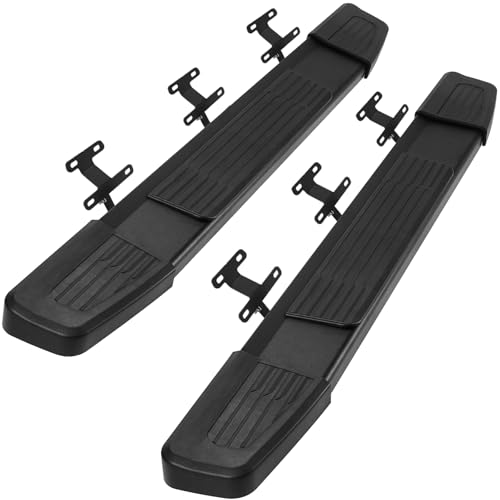
Six-inch boards from COMNOVA, Climwa, APS, and AutoBull provide a broader platform. Wider pads can make foot placement feel more deliberate, but the supplied evidence does not establish real-world comfort or traction beyond the listed pad materials and non-slip descriptions. The 6.75-inch Auto Dynasty board is the widest conventional board selected here, while the 3.5-inch MaxMate and APS drop step occupy a middle ground.
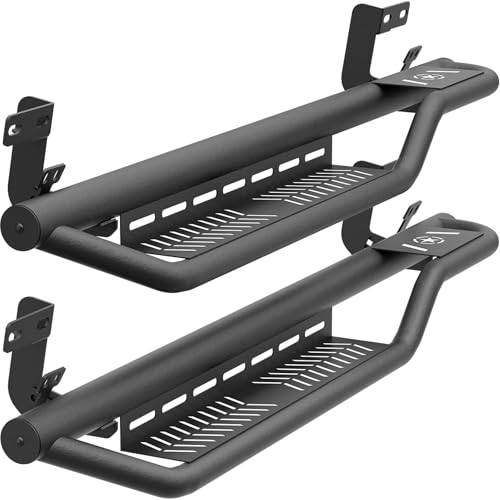
Drop and two-tier designs change the access geometry. The APS Ram board places its step below the main rail, and the YZONA and AutoBull designs add a second level. These layouts are documented as helping access taller vehicles, oversized tires, or roof areas. They can also create a larger or lower profile, so compare the design with the truck’s clearance needs and intended use.
Compare construction and surface treatment
The evidence includes carbon steel, mild steel, stainless steel, and aluminum constructions. Coatings vary as well: powder coating, matte or textured finishes, E-coating, and triple-layer black coating are all represented. These descriptions support comparisons of stated material and finish, but they do not prove long-term corrosion performance in a particular climate.
Stainless options include the APS Ford iBoard, APS Ram drop steps, and Auto Dynasty GM boards. The APS Ford listing specifically identifies nickel and chromium in the stainless steel and describes a black powder-coated finish. The Auto Dynasty listing identifies stainless steel, ABS end caps, and a chrome polished finish. Carbon-steel boards from YZONA, COMNOVA, Climwa, and AutoBull emphasize coated surfaces and step-pad materials instead.
Load figures should be read as listing specifications, not independent test results. MaxMate and APS state 500 pounds, YZONA states 550 pounds per side, Auto Dynasty states 450 pounds, and several others do not provide a capacity. Do not assume that an unlisted product has the same capacity as a visually similar rail.
Review installation details
Installation evidence ranges from no-drill bolt-on mounting to requirements for minor drilling. TAC’s Silverado and Sierra rail, the Ford COMNOVA boards, the Super Duty COMNOVA boards, and the Climwa Silverado board specify bolt-on installation without drilling or cutting. YZONA states that its brackets align with factory holes. Auto Dynasty describes no-drill mounting to factory points for most models.
The MaxMate listing adds an important qualification: no drilling is required for the general installation, but some 2009-2011 and 2012 Ram applications may need minor quarter-inch holes. TAC’s Ram listing says drilling is required. That difference can matter when installation time, available tools, or preserving factory mounting points is important.
Check whether the package includes both running boards, brackets, bolts, and instructions. Most selected products describe a pair, but some specification fields list unit count differently from the feature text. Professional installation may be sensible when the listing recommends it or when fitment is uncertain.
Match the rail to the truck’s use
For routine cab entry, a broad anti-slip pad may be the most relevant feature. For raised trucks or frequent roof access, the APS drop step, YZONA two-tier board, or AutoBull two-stairs design offers a documented access-focused layout. For a lower-profile appearance, the TAC tubular rail or APS iBoard may be more suitable based on their stated dimensions and designs.
Side rails can also help shield the rocker area from mud, stones, scratches, or minor impacts when the listing makes that claim. AutoBull, MaxMate, and TAC describe protective or exterior-protection functions. These statements should not be expanded into claims about crash protection or structural safety. The practical comparison is limited to the supplied design and feature descriptions.
Final recommendation
YZONA Two-Stairs Running Boards for Ram ranks first overall in this specification-based comparison under the published weighted criteria.
The final choice among the best regular cab step rails depends on the documented features that match your intended use.
MaxMate 3.5-Inch Oval Nerf Bar Side Steps is the highest-scoring returned product and the first overall specification-based choice. Its combination of Ram fitment coverage, oval step form, UV-protected pads, pre-welded endcaps, stated capacity, and installation detail gives it the most balanced evidence profile in this comparison.
Among the top regular cab step rails, APS 3.5-Inch Drop Steps is the more access-oriented Ram option, while YZONA is the more distinctive two-tier alternative. Ford shoppers can compare the broad adjustable COMNOVA boards with the stainless APS iBoard. For GM trucks, the Climwa board targets newer models and Auto Dynasty covers older applications with a wider platform. The narrow TAC rail remains a sensible design match for older GM owners who prefer a compact tubular step.
Before selecting any product, confirm the exact year, cab designation, diesel or chassis-cab status, and mounting requirements. The article is based on public listing specifications, not physical inspection or installation testing.
Frequently Asked Questions
Are regular cab step rails universal?
No. Each selected product lists specific vehicle years and cab configurations. For example, the COMNOVA Ford boards exclude Crew Cab and Double Cab models, while the Auto Dynasty board excludes certain diesel configurations. Use the exact vehicle fitment details rather than relying only on the product name.
Are wider running boards better than narrow step rails?
Not automatically. A wider board such as the six-inch COMNOVA or Climwa design provides more stated stepping area, while the three-inch TAC rail has a slimmer tubular format. The better match depends on preferred access surface, appearance, clearance, and the truck’s mounting configuration.
Which best regular cab step rails have a drop or two-level design?
The APS Ram product uses a drop-down step, YZONA uses a two-tier layout, and AutoBull uses a two-stairs design. Their listings describe these formats as useful for taller vehicles or easier entry. Confirm clearance and exact fitment before choosing a lower or multi-level design.
Do these step rails require drilling?
Requirements vary. Several products specify no-drill bolt-on mounting, but TAC’s Ram option states that drilling is required. MaxMate notes that some earlier Ram applications may need minor drilling. Read the installation notes for the exact year and model.
What should I check before installing a step rail?
Verify the cab style, year range, exclusions, mounting points, included brackets, hardware, and instructions. Also compare the rail’s width and shape with the desired clearance. Listing claims about capacity, materials, and warranties should be treated as product specifications and checked against the current manufacturer information.