Buying Guide
Choosing among the best chocolate graters starts with the texture you want to put on a cake, drink, pastry, or plated dessert. Public listings in this comparison describe dedicated rotary shavers, flat fine-blade zesters, ribbon graters, box graters, and rotary cheese graters that also process chocolate. Because this guide uses specifications rather than hands-on testing, the most useful approach is to match the documented design with your preparation routine.
A rotary chocolate shaver is the most specialized design in the selection. The O’Creme Rotary Chocolate Shaver uses a rotating shaving lid and a custom-shaped mold, and its listing emphasizes contained operation and uniform shavings. This format may appeal to bakers who want a dedicated garnish tool and prefer to keep the chocolate inside the device while working. Its specialized construction may be less flexible if you want to grate several unrelated ingredients.
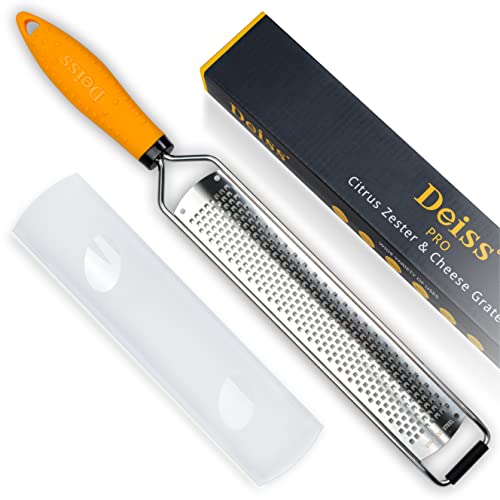
A handheld fine grater is more flexible for small amounts. The Microplane Premium Classic Series Zester is listed for chocolate, hard cheese, garlic, ginger, nutmeg, citrus, and vegetables. Cambom likewise combines a fine blade with chocolate and other ingredients, while the Deiss PRO is described as a handheld grater for chocolate, parmesan, spices, and produce. These tools occupy less space than box or rotary designs and may suit occasional garnish preparation.
The Microplane Gourmet Series Chocolate Grater occupies a middle ground for handheld use because its listed size is medium ribbon and its intended results are ribbon-like. That makes it a strong choice when you want a more visible chocolate texture rather than a fine grate. It also has a soft-touch handle and non-slip foot, which are useful documented control features.
Match texture control to the recipe
Fine blades are suited to small shavings and grated chocolate that can be scattered over a surface. A fine zester may also be appropriate when the same tool will be used for citrus zest, garlic, ginger, or hard cheese. The listings for Microplane Premium, Deiss PRO, and Cambom document this broader ingredient coverage, but they do not specify a range of chocolate textures. Do not assume that a fine blade will produce large curls when the listing only describes fine grating or zesting.
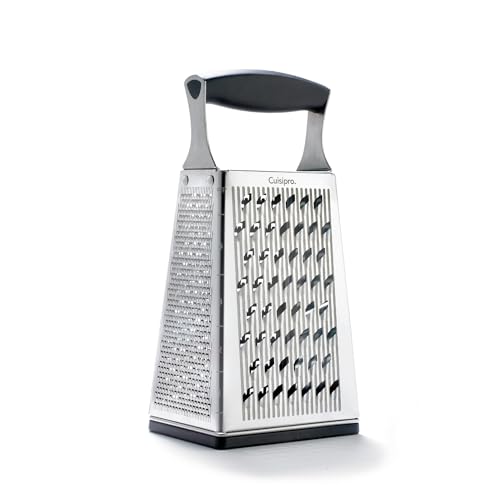
For more than one texture, look at tools with multiple surfaces or drums. The Cuisipro Stainless Steel Four-Sided Box Grater documents four grating surfaces ranging from fine to coarse and explicitly includes chocolate. Its box format can support more preparation choices, although it may occupy more storage space than a narrow handheld rasp. KEOUKE and Badelite use three interchangeable blades in rotary bodies, with slicing, coarse, and fine options described in their listings. Those designs are useful when chocolate is part of a larger food-preparation routine.
Consider handling and countertop stability
Handheld graters depend on the handle and the way the frame contacts the counter. Microplane Gourmet lists an ergonomic soft-touch handle and a non-slip foot. Deiss PRO describes a non-slip handle and curved sides, while Cambom lists a TPR handle and anti-skid bars. These features can help with positioning, but the supplied evidence does not establish how any product feels in use or how much force a particular user will need.
Rotary models shift the work to a hand crank and feeding chamber. KEOUKE and Badelite describe suction bases, but their listings limit the suction claims to smooth surfaces. KEOUKE specifically says the tool does not work on a wood table. That limitation matters when choosing a countertop tool: a suction feature should not be treated as universal stability on every worktop.
A guarded feeding port can also change how ingredients are placed into a rotary grater. KEOUKE describes a feeding port intended to help keep hands away from the blades, and the NEZUIBAN listing describes press-and-turn operation. These are design details, not evidence of a tested safety outcome, so users should follow the maker’s handling instructions.
Review materials and cleanup details
Stainless steel appears throughout the selection, but construction varies. Microplane Gourmet and Microplane Premium specify stainless-steel blades, Cuisipro specifies 304 stainless steel, and Cambom also specifies a 304 stainless-steel blade. Rotary products generally combine stainless-steel blades with plastic bodies: KEOUKE lists food-grade ABS plastic, while NEZUIBAN lists ABS as its main body material. GinSent combines a removable stainless-steel grater with acacia wood.
Cleanup claims are useful for chocolate because residue can remain in small openings. Microplane Gourmet, Microplane Premium, Cuisipro, and Cambom list dishwasher-safe cleaning. KEOUKE and Badelite describe detachable parts, with Badelite specifically listing dishwasher-safe blades. O’Creme says it comes apart for cleaning but does not document dishwasher use. GinSent has a mixed care requirement: the stainless-steel grater is removable and dishwasher safe, while the acacia wood portion is hand-wash only.
Think about storage and frequency of use
A narrow handheld grater is generally the most storage-friendly format in this group, and several listings include hanging holes or loops. Microplane Premium, Cambom, and GinSent document hanging or storage features. The Cuisipro box grater and rotary models have larger bodies, so check the listed dimensions where available and make sure your cabinet or drawer can accommodate them. The O’Creme is specialized, but its custom mold and contained mechanism may make it a dedicated item rather than a replacement for a general kitchen grater.
Final Recommendation
Microplane Gourmet Series Chocolate Grater ranks first overall in this specification-based comparison under the published weighted criteria.
Microplane Gourmet Series Chocolate Grater is the first overall specification-based choice among the best chocolate graters because it combines explicit chocolate use, a defined medium-ribbon result, stainless-steel blades, a soft-touch handle, a non-slip foot, and dishwasher-safe cleaning. The O’Creme Rotary Chocolate Shaver is the more specialized alternative for contained shaving, while Cuisipro is a strong fit for users who want four documented grating surfaces in a box design.
For fine chocolate work that also covers citrus and spices, Microplane Premium, Deiss PRO, and Cambom offer the clearest handheld versatility. KEOUKE, Badelite, and NEZUIBAN suit shoppers who want a crank-operated tool, with the first two documenting three-blade systems and suction bases for smooth surfaces. GinSent stands apart with its acacia-wood base and removable metal grater. These top chocolate graters are not ranked from hands-on results; they are ordered from the supplied design, material, format, handling, and cleaning evidence.
Frequently Asked Questions
Which of the best chocolate graters is designed specifically for chocolate?
The O’Creme Rotary Chocolate Shaver is one of the most chocolate-specific products in the returned selection. Its listing describes a rotating shaving lid, a custom-shaped mold, contained operation, and uniform shavings. The Microplane Gourmet is also explicitly presented as a chocolate grater, but it is a handheld medium-ribbon tool rather than a contained rotary shaver.
Are rotary chocolate graters better than handheld graters?
Neither format is universally better based on the supplied evidence. Rotary models such as KEOUKE and Badelite offer hand-crank operation and three interchangeable blades, while handheld models such as Microplane Gourmet and Microplane Premium are narrower and easier to store. A rotary tool may be more useful for repeated multi-ingredient preparation, whereas a handheld design may suit smaller garnish tasks.
Which selected grater offers multiple chocolate textures?
Cuisipro documents four grating surfaces from fine to coarse. KEOUKE and Badelite each document three interchangeable blades for slicing, coarse grating, and fine grating. These listings support format flexibility, but they do not establish the exact appearance or size of chocolate pieces produced in practice.
What should I check before buying a chocolate grater?
Check whether the listing names chocolate specifically, then review the documented blade or shaving format, handle or base design, materials, and cleaning instructions. Also consider storage: handheld tools with hanging holes take a different approach from box graters and rotary bodies. If the tool includes wood, as GinSent does, look for separate care instructions for the wood and metal components.
Can these graters be used for foods besides chocolate?
Yes. The selected listings describe broader uses. Microplane and Deiss products list ingredients such as citrus, garlic, ginger, spices, and cheese. Cuisipro lists fruits and vegetables, while KEOUKE, Badelite, and NEZUIBAN list combinations of cheese, nuts, and vegetables. O’Creme is the most specialized option, although its listing also mentions dessert garnishes and drink toppings.