Buying Guide
Choosing among the best plastic graters starts with identifying the texture and ingredients you prepare most often. “Plastic grater” can describe several formats: a flat handheld tool, a collecting plate, a box-style unit, a Japanese fine grater, a Korean strip slicer, or a rotary device with interchangeable blades. The products above are compared from supplied listing specifications and feature descriptions, not from hands-on testing or customer feedback.
A flat handheld model is usually the simplest format to store and use for routine cheese, vegetable, chocolate, or zest preparation. The OFXDD Curved Plastic Grater with Handle documents general use across fruits, vegetables, chocolate, and cheese, while its curved profile and ergonomic handle give it a different shape from a flat plate. The Better Houseware Dual-Sided Plastic Grater is more specific about texture: its coarse side is intended for shredded or grainy foods, and its fine side is intended for smoother results.
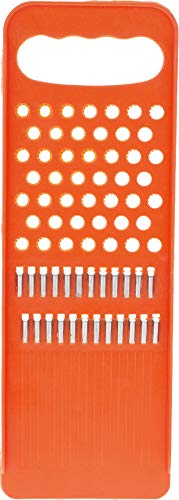
For specialty vegetable preparation, the OFXDD Plastic Korean Carrot Grater and OFXDD Korean Carrot Vegetable Grater are the more focused choices. Both listings describe plastic construction with stainless-steel blades and fine, uniform strips. That makes them relevant for carrot salads and similar preparations, but they should not be treated as substitutes for every type of cheese, root, or zest grater. A strip-oriented tool provides a different output from a fine-paste or coarse-shred surface.
Consider whether you need collection or storage
A container can make prep more organized. The PrepSolutions 2-Way Grate & Measure combines fine and medium grating with a removable 2-cup container and measurement markings. The grater stores inside the container, which is useful when you want to capture ingredients and keep the components together. The ARFUKA Plastic Garlic Grater Plate also includes a storage box, making it suitable for small amounts of garlic, ginger, lemon, cheese, or chocolate and for holding leftovers.
The JapanBargain Japanese Plastic Zester Grater documents a 490-milliliter capacity and is designed for fine ingredients such as ginger, garlic, wasabi, daikon, turmeric, horseradish, and citrus. Its collection capacity is useful when the recipe needs a paste or zest rather than loose shreds. By contrast, the Ditac Japanese Daikon Oroshi Plastic Grater focuses on draining: its net and fine mesh are intended to separate moisture from grated radish. This is a design choice for a specific preparation, not a general indication that it is better for every ingredient.
Look for the right texture range
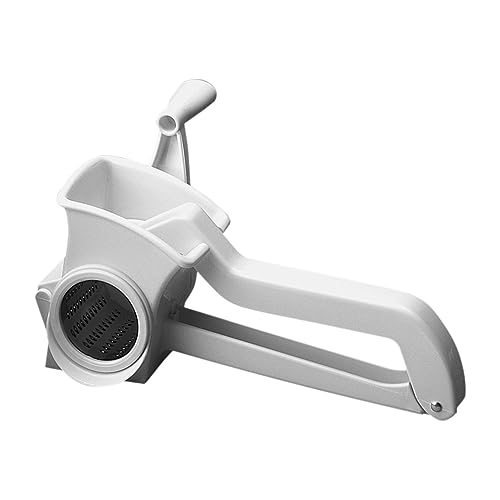
Texture choice is one of the most important differences between the top plastic graters. The Better Houseware model provides coarse and fine sides in one tool. The PrepSolutions model documents fine and medium surfaces. The American Metalcraft Plastic Handcrank Cheese Grater goes further for cheese by including three interchangeable stainless-steel cylinders for thin strips, medium grating, and fine grating.
The ChinKc Rotary Plastic Grater with Five Blades is the most configurable option in this selection because its listing specifies five interchangeable blades. It also includes a pusher cup, suction base, and blade storage box. Those features may appeal to cooks who want several cutting formats, but the larger size and multiple components are worth considering before choosing it for a small kitchen.
Review cleaning details before buying
Cleaning information varies by product. Dishwasher-safe claims are documented for the Better Houseware, PrepSolutions, JapanBargain, OFXDD Curved, and both OFXDD Korean-style models. ARFUKA describes a smooth surface intended for quick rinsing, while the Ditac model includes a draining net that may need attention around its mesh. The American Metalcraft listing emphasizes stainless-steel cylinders but does not provide a dishwasher statement in the supplied evidence.
A simple flat tool may have fewer parts to rinse, while a container, draining net, or rotary blade set can introduce more surfaces and components. If your priority is quick cleanup, compare the exact care statement and consider whether the design has removable parts. Do not assume that a plastic frame alone establishes dishwasher safety; use the supplied care information for the specific model.
Think about storage and handling
Compactness is useful when drawer space is limited. The ARFUKA plate lists compact dimensions, and the OFXDD Korean-style graters are described as small and lightweight. A flat handheld grater can also be easier to place in a drawer than a container or rotary system. The PrepSolutions model addresses storage by nesting the grater inside its container, while the ChinKc unit includes a separate blade storage box but has a documented 2.1-pound weight and larger dimensions.
Handling features also differ. The Better Houseware model is described as ergonomic and space-saving. The OFXDD Curved model emphasizes its handle and curved shape. The Ditac grater adds a rubber non-slip base, and the ChinKc model lists both a suction base and pusher cup. These features can influence how a tool fits your routine, but the listings do not establish that any one design is universally safer or easier for every user.
Final recommendation
Better Houseware Dual-Sided Plastic Grater ranks first overall in this specification-based comparison under the published weighted criteria.
The final choice among the best plastic graters depends on the documented features that match your intended use.
The Better Houseware Dual-Sided Plastic Grater is the highest-scoring returned product and the first overall specification-based choice. Its coarse and fine sides, documented BPA-free plastic construction, dishwasher-safe care, and clear potato-focused use case create the most balanced feature set in this comparison. Among the top plastic graters, it is the most specification-aligned general recommendation when texture flexibility matters.
Choose PrepSolutions 2-Way Grate & Measure if you value direct collection, measurement markings, and nesting storage. Select the American Metalcraft model for three cheese-specific cylinder choices. JapanBargain is better suited to fine pastes and zest, while ARFUKA is a compact option with a storage box. For Korean-style strips, either OFXDD specialty model is more appropriate than a general handheld surface. ChinKc is the most feature-rich rotary choice, and Ditac is the focused pick for draining grated radish.
Frequently Asked Questions
Are the best plastic graters suitable for hard cheese?
Some are, but the listing evidence varies. Better Houseware documents hard cheeses among its uses while cautioning against very hard aged varieties. PrepSolutions lists cheese, and American Metalcraft is specifically described for cheese with stainless-steel cylinders. Specialty Korean and Japanese designs may be better suited to strips or fine pastes than to every hard-cheese task.
Which plastic grater is best for vegetables?
It depends on the desired result. Better Houseware lists potatoes, carrots, zucchini, and onions; PrepSolutions lists vegetables generally; and the OFXDD Korean-style models are documented for fine, uniform carrot and vegetable strips. For grated radish with moisture separation, Ditac has the most specific design.
Do plastic graters go in the dishwasher?
Several selected listings document dishwasher-safe cleaning, including Better Houseware, PrepSolutions, JapanBargain, the OFXDD curved model, and the OFXDD Korean-style models. ARFUKA describes quick rinsing instead. Always follow the care details for the exact product because plastic construction alone does not prove dishwasher compatibility.
Should I choose a rotary or handheld grater?
A handheld model generally offers a simpler, more compact setup. A rotary model can provide more controlled feeding and multiple blade choices. ChinKc documents five interchangeable blades, a pusher cup, suction base, and blade storage, while American Metalcraft documents three cheese cylinders. Those added parts can improve format flexibility but may require more storage and cleanup.
What should I use for ginger, garlic, or zest?
JapanBargain is the most clearly documented fine-paste and zest option, covering ginger, garlic, wasabi, daikon, turmeric, horseradish, and citrus. ARFUKA also lists garlic, ginger, lemon, cheese, and chocolate and includes a storage box. A coarse dual-sided model can handle some of these ingredients, but its output may differ from a specialty fine grater.