Buying Guide
Choosing the best chocolate raspberry ground coffee starts with separating the flavor name from the useful specifications behind it. A product can use the same dessert-style wording as another listing while differing substantially in roast detail, grind description, package size, and brewing guidance. This comparison therefore focuses on documented attributes rather than assumed cup performance.
Start with the flavor description
Chocolate raspberry coffee usually combines a sweet, cocoa-like direction with a brighter berry note. The balance matters. New England Coffee describes rich chocolate with wild European raspberry notes, while Stone Street emphasizes wild raspberries and decadent chocolate. Door County uses a chocolate raspberry truffle designation, and Steel Mill identifies white-chocolate-truffle notes with sweet raspberry. These descriptions help distinguish a darker, richer profile from one that places more emphasis on tart or bright fruit.
Some listings provide more detail than others. Coffee Beanery adds creamy, nutty, and earthy descriptors to its chocolate raspberry profile. Harry & David describes a smooth-bodied dessert coffee. Crazy Cups gives a simpler flavor and roast description but adds unusually extensive ingredient and dietary information. When comparing labels, favor products that explain the balance of the two named flavors instead of relying only on a broad flavor title.
Match the roast and coffee base to your preference
Most of the selected products identify a medium roast. That makes the category relatively consistent on paper, but the underlying coffee information still varies. Harry & David, Stone Street, New England Coffee, and Coffee Beanery identify Arabica credentials, while Door County goes further with Specialty Class 1 Arabica. Paramount also describes premium Arabica coffee and detailed bean selection.
A medium-roast label does not by itself tell you how a finished cup will taste. It does, however, give you a stable comparison point. Readers who want the most explicit bean-grade information should look at Door County or Coffee Beanery. Those who value a named origin descriptor can consider Stone Street’s Colombian Arabica. If the listing does not specify the bean variety, as with Steel Mill and Crazy Cups, judge it on the other evidence it supplies rather than filling in the gap.
Check the grind and brewer fit
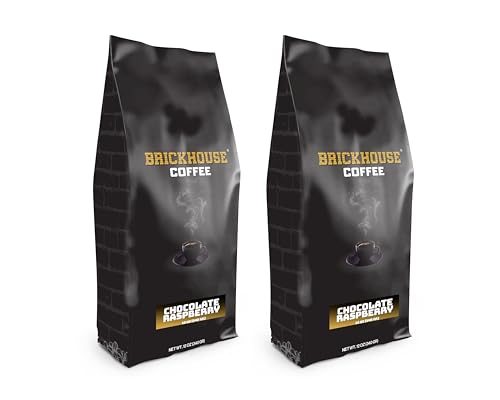
Ground coffee is not automatically interchangeable across every brewing method. New England Coffee explicitly identifies a medium grind, and Coffee Beanery names automatic drip as its intended format. Harry & David lists drip, pour-over, French press, and reusable single-serve filters. Brickhouse also lists drip, French press, pour-over, and cold brew, making it one of the most broadly documented choices in the group.
Door County similarly names drip, French press, and cold brew. Steel Mill focuses on drip makers and refillable single-serve pods. These details are more useful than a generic claim that the coffee is ready to brew. If you use a specific method, choose a listing that names it. If your household switches between methods, prioritize Harry & David, Brickhouse, or Door County because their listings document more than one brewing route.
Consider freshness and package design
Freshness information is not equally detailed across the category. Stone Street provides the clearest package construction, with a three-layer resealable bag and one-way degassing valve. New England Coffee states that the coffee is roasted and medium-ground to order. Volcanica says it is freshly roasted, then immediately packed and sealed. Steel Mill describes small-batch roasting and sealing on demand.
These statements describe preparation or package features; they do not prove a particular taste outcome. Still, they are useful specification differences. A resealable bag can be convenient after opening, while a larger format may require more attention to storage. The one-pound Stone Street and New England Coffee formats suit regular use. Steel Mill’s 2-pound bag is more clearly aimed at frequent home or office brewing. For occasional drinkers, a 10- or 12-ounce bag may be easier to manage.
Review ingredient and dietary statements carefully
Flavoring and dietary details can be decisive for some buyers. Crazy Cups states that it uses natural flavors and no added sugar, and it lists gluten-free, lactose-free, non-dairy, sugar-free, nut-free, vegan, and kosher pareve characteristics. Door County lists no dairy or gluten and states zero sugar, fat, and carbohydrates per six-ounce serving. Coffee Beanery also documents sugar-free, lactose-free, gluten-free, zero-calorie, and no-artificial-sweetener claims.
These statements belong to the individual listings and should not be generalized to the whole category. Other selected products do not provide the same ingredient detail. If a dietary restriction is important, verify the current product label and manufacturer information before relying on a listing summary.
The selected products range from single 10- or 12-ounce bags to one-pound bags, a two-pack, and a 2-pound bag. Package size affects storage, freshness management, and how often you need to reorder, but it does not establish flavor quality.
For variety and moderate use, a single smaller bag is straightforward. For frequent brewing, Stone Street or New England Coffee provide one-pound formats, while Steel Mill offers a bulk option. A two-pack such as Brickhouse can be useful when you want a repeated supply while retaining separate bags.
How this comparison was scored
The editorial scoring uses five category-specific criteria: flavor profile clarity at 25%, coffee base and roast detail at 20%, brewing versatility at 20%, freshness and packaging detail at 20%, and ingredient and dietary transparency at 15%. Each product received a 0.0-to-10.0 assessment on every criterion using only the supplied title, features, and specifications. The resulting ranking is therefore a structured reading of listing evidence, not a hands-on tasting or a report of customer experience.
Final Recommendation
Door County Chocolate Raspberry Truffle, 10 oz ranks first overall in this specification-based comparison under the published weighted criteria.
New England Coffee Chocolate Raspberry is the highest-scoring specification-based choice for its combination of 100% Arabica, medium roast, medium grind, grind-to-order preparation, and clearly stated flavor profile. It is a strong starting point for shoppers seeking the best chocolate raspberry ground coffee with unusually complete listing detail.
Stone Street is a close alternative when package design and a larger 100% Colombian Arabica format matter. Door County is especially compelling for specialty-class Arabica detail and multiple named brewing methods. Harry & David and Brickhouse are practical picks for broader brewing flexibility, while Crazy Cups and Coffee Beanery provide the clearest dietary information among the selected products.
For the top chocolate raspberry ground coffee match, focus on the specifications that fit your routine: a named grind for your brewer, a package size you can store well, and ingredient details that address your needs. The flavor language then helps you choose between rich chocolate, brighter raspberry, or a truffle-style interpretation.
Frequently Asked Questions
What should I look for in the best chocolate raspberry ground coffee?
Look for a clear flavor description, a stated roast, information about the coffee base, and a grind or brewer recommendation that matches your equipment. Packaging and ingredient statements can further separate otherwise similar products. New England Coffee is especially detailed about roast, grind, and preparation, while Harry & David and Brickhouse document several brewing methods.
Is chocolate raspberry coffee usually medium roast?
Many selected listings use a medium-roast description, including New England Coffee, Stone Street, Door County, Crazy Cups, Harry & David, and Volcanica. That does not make every product identical. Bean information, flavoring language, grind, and packaging still differ, so compare the complete listing rather than the roast label alone.
Which selected coffee is easiest to compare for different brewing methods?
Harry & David and Brickhouse provide especially broad documented compatibility. Their listings name drip, pour-over, French press, and reusable or cold-brew-related uses. Door County also lists drip, French press, and cold brew. Steel Mill is more focused on drip makers and refillable single-serve pods.
Does every chocolate raspberry ground coffee use the same ingredients?
No. The supplied listings do not provide identical ingredient information. Crazy Cups specifically describes natural flavors and no added sugar, while Coffee Beanery and Door County provide separate dietary statements. Other products offer less detail. Check the current package label if a dietary or ingredient requirement is important.
What package size is practical for regular brewing?
A 10- or 12-ounce bag can suit occasional use, while one-pound formats provide more coffee for regular brewing. Brickhouse supplies two 12-ounce bags, and Steel Mill offers a 2-pound bag for frequent home or office use. The best format depends on your brewing frequency and storage setup.