Buying Guide
Choosing the best clay teacups starts with matching the cup to the way you actually drink tea. The listings in this comparison cover tiny tasting bowls, classic gongfu cups, larger personal vessels, and a gaiwan-style brewer. Because this is a specification-based guide rather than a hands-on test, the most useful distinctions come from the stated material, capacity, construction, decoration, and included quantity.
Start with capacity
Capacity is the clearest dividing line among the selected products. Miniature cups such as the YXHUPOT 50 ml Yixing Zini Mini Cups and the YXHUPOT 30 ml Black Zini Gongfu Tea Bowls are designed around small pours. These formats suit gongfu sessions in which tea is brewed repeatedly and distributed in tasting portions. They can also help compare several infusions, but their small volume means more frequent serving.
The SILINE 2.2 oz Zisha Gongfu Teacups sit slightly above the miniature category while retaining a compact bowl profile. The YXHUPOT Black Sand Zisha Gongfu Teacups provide about 4 ounces, offering a little more room for a single pour without becoming a full-size mug. If you want a moderate middle ground, the 80ml YXHUPOT sets are easier to use for personal servings while remaining recognizably small-cup teaware.
For more volume, the YXHUPOT 200 ml Light Red Yixing Clay Cups are a stronger fit. Their listed capacity is several times larger than the smallest bowls, so they may work better for drinkers who prefer fewer refills. The trade-off is that a larger vessel changes the proportions and rhythm associated with traditional gongfu service.
Check how the clay is described
Clay terminology varies across the listings. Several products specifically identify Yixing clay, zisha, zini, purple clay, or related terms. The SILINE 2.2 oz set additionally states that it uses qingshui clay and is fired above 2300°F. The SILINE listing also identifies lead-free and cadmium-free construction. These are useful documentation points, but they should not be treated as independent laboratory verification.
Other listings use broader language. The Zorratin Handmade Small Clay Pottery Teacup Set is described as clay pottery but does not specify a named clay subtype. That does not make it irrelevant; it simply means the material evidence is less detailed than for the products that name a Yixing-related clay. When comparing the best clay teacups, distinguish between a listing that identifies a specific material and one that gives only a general pottery description.
Decide between a simple cup and a gaiwan
A conventional cup is generally the simplest format for pouring and drinking. The YXHUPOT sets in 30ml, 50ml, 80ml, and 4-ounce sizes follow that approach. Their main differences are volume, decoration, and pack size.
The YXHUPOT Red Zisha Gaiwan is different because the listing says it can function as both a personal teacup and a brewing vessel. It has a 120ml use capacity, a white-glazed interior, and a decorative golden peony enamel detail. This makes it a more versatile choice for someone who wants one piece to support both preparation and drinking. It may require more familiarity than a basic open cup, so consider your preferred handling style.
Consider quantity and social use
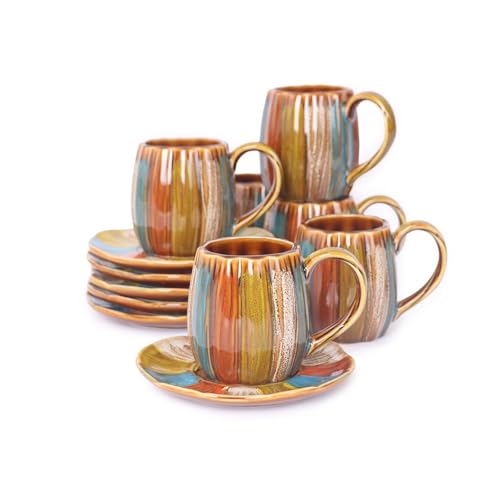
Set size matters when tea is shared. The Zorratin set includes six cups, making it the most suitable selected option for a larger group. The four-piece YXHUPOT sets are more compact but still provide enough cups for a small gathering. Two-piece sets work well for a pair or for someone who wants a spare matching cup.
The SILINE three-piece set occupies a useful middle position. It can support a small shared session while taking up less space than a six-cup collection. A single gaiwan-style piece, by contrast, is more focused on personal brewing and drinking. Before choosing, count the people you normally serve and decide whether matching presentation or individual flexibility matters more.
Weigh decoration against everyday practicality
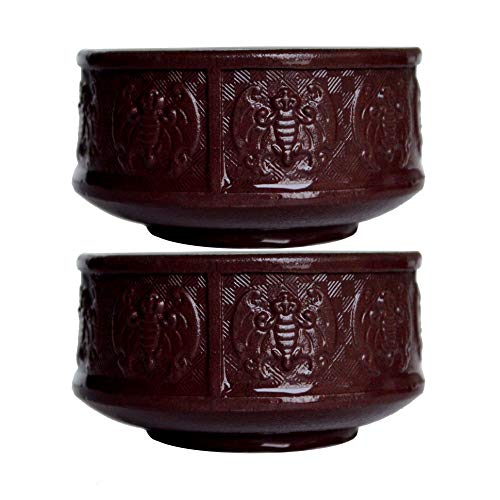
Decorative details are a major part of this category. The 80ml dark-zini cups use a nine-bat pattern, while the 80ml yellow-duan cups feature bamboo-leaf reliefs. The SILINE set has an inner-bottom flower print, and the gaiwan includes a contrasting glazed interior and peony decoration. These details can make the cups more appealing for display, gifting, or a formal tea ritual.
However, decoration does not automatically indicate better daily performance. Raised reliefs may affect how a cup feels in the hand, and the bamboo-relief listing explicitly describes the product as fragile. The more ornate option may therefore be best for careful use rather than rough kitchen handling. Plain or simply shaped cups can be easier to integrate into a routine, but the supplied listings do not provide enough evidence to make universal durability claims.
Look for care requirements in the listing
Some clay teaware listings include specific preparation instructions. The YXHUPOT 200 ml set says an opening process is needed before use and describes boiling the cup for 10 to 15 minutes. That is an important ownership consideration. Other listings discuss the way the surface may develop a smoother or shinier appearance over time, but those statements describe the seller’s claimed material behavior rather than an independently confirmed result.
The most suitable comparison method is to follow the care instructions supplied with the product you buy and avoid assuming that every clay cup has identical requirements. Also note fragility warnings where provided. The bamboo-relief model is specifically described as fragile, while several other products do not state a durability rating. Missing information should be treated as unknown, not as proof of weakness or strength.
Match the cup to your routine
For repeated gongfu pours, prioritize a small capacity, a stable open-cup shape, and enough pieces for the people at the table. For office or home sipping, the 120ml gaiwan-style cup or 200ml pair may be more convenient. For gifts and display, decorative patterns and hand-finished details may matter more than maximum capacity.
The top clay teacups are not interchangeable: a 30ml tasting bowl serves a different purpose from a 200ml personal cup. Use the stated capacity and features as your starting point, then consider quantity, storage, and care. That approach keeps the choice grounded in documented utility rather than unsupported claims about flavor, comfort, or long-term performance.
Final recommendation
SILINE 2.2 oz Zisha Gongfu Teacups, 3-Piece Set ranks first overall in this specification-based comparison under the published weighted criteria.
The SILINE 2.2 oz Zisha Gongfu Teacups are the first overall specification-based choice among these best clay teacups. They combine named Yixing zisha material, a precise compact capacity, high-temperature firing information, hand-finishing details, and a three-piece format that suits small shared gongfu sessions.
Choose the Zorratin Handmade Small Clay Pottery Teacup Set if serving six people is the priority and general clay-pottery documentation is sufficient. For miniature tasting, the YXHUPOT 50 ml Yixing Zini Mini Cups provide especially clear capacity information. The YXHUPOT Red Zisha Gaiwan is the more versatile selection for buyers who want a personal cup that can also brew tea. For larger servings, the YXHUPOT 200 ml Light Red Yixing Clay Cups are the clearest capacity-led option.
Overall, the top clay teacups depend on the balance you want between portion size, material detail, decoration, and group service. Review the stated capacity and care instructions before ordering, especially when moving from traditional mini cups to larger vessels.
Frequently Asked Questions
Among the best clay teacups, what size is best for gongfu tea?
Small sizes are the most closely aligned with traditional gongfu service in this selection. The YXHUPOT 30 ml Black Zini Gongfu Tea Bowls, 50 ml Yixing Zini Mini Cups, and 2.2-ounce SILINE set are all designed around compact pours. A larger 80ml or 120ml option may be more comfortable for drinkers who prefer a longer sip, but it changes the portion size and refill rhythm.
Are all clay teacups made from Yixing clay?
No. Several selected listings identify Yixing, zisha, zini, or purple clay, while the Zorratin set is described more generally as handmade clay pottery. Material terminology should be checked product by product. The supplied evidence does not establish that every listing uses the same clay source, composition, or manufacturing process.
Should a clay teacup be prepared before first use?
Follow the individual listing’s instructions. The YXHUPOT 200 ml Light Red Yixing Clay Cups specifically state that an opening process is needed and describe boiling the cups for 10 to 15 minutes. The supplied evidence does not say that identical preparation is required for every selected product.
Which selected clay teacups are best for several guests?
The Zorratin Handmade Small Clay Pottery Teacup Set includes six cups, while the YXHUPOT 50 ml Zini Zisha Teacups and YXHUPOT 30 ml Black Zini Gongfu Tea Bowls provide four each. The SILINE set includes three. Two-piece sets are better suited to paired use or smaller sessions.
Are decorative clay cups practical for everyday use?
They can be, but the design may affect handling and care. The YXHUPOT 80 ml Bamboo Relief Zisha Cups are described as handmade and fragile, so careful use is appropriate. Decorative features such as the nine-bat pattern on the YXHUPOT 80 ml Dark Zini Cups may appeal to collectors or gift buyers, but the listing does not provide independent durability testing.