Buying Guide
Choosing the best glass teacups starts with deciding how you brew and serve tea. A single infuser mug is usually more suitable for loose-leaf tea at a desk, while a six-piece set makes more sense for afternoon tea, family use, or entertaining. The listings in this comparison cover both formats, so capacity, included parts, construction, and care instructions should carry more weight than appearance alone.
Choose the capacity for your tea routine
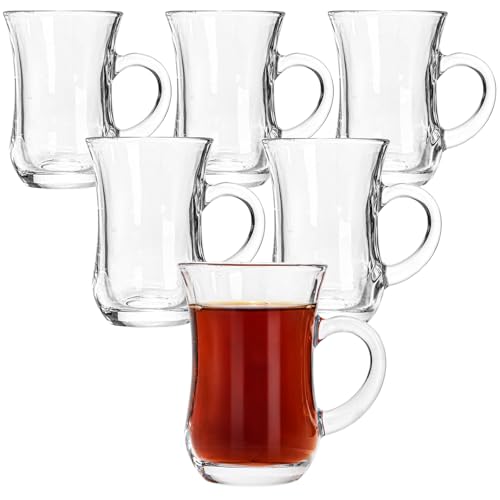
Small Turkish-style glasses generally hold about 4.5 to 6 ounces in the selected range. Red Co. lists 4.5-ounce cups, while Suwimut lists 5-ounce glasses and Teabloom lists 6-ounce cups. These sizes suit concentrated servings, tasting, and traditional service. They also make it easier to offer several guests a drink without filling a large mug.
Medium cups around 7 to 12 ounces are more adaptable. Tosnail and GURUDAR occupy this range, with 7-ounce and 12-ounce formats respectively. A 7-ounce cup is appropriate when you want a traditional portion with a saucer, while a 12-ounce handled cup gives more room for a longer drink or a mixed beverage. Check whether the stated capacity is maximum or comfortable-use capacity before comparing sizes directly.
Large infuser cups from DOPUDO and ecooe are intended for a fuller individual serving. The DOPUDO options list 17 and 17.6 ounces, while ecooe lists 16.9 ounces overall and recommends filling to 430 mL. These formats are useful for blooming tea, larger leaves, or fewer refills, but they may feel excessive for a small Turkish tea service.
Decide whether you need an infuser and lid
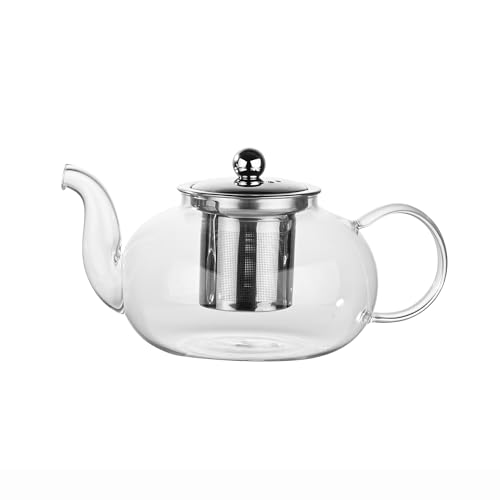
An integrated or included infuser is the clearest dividing line between basic serving cups and brewing mugs. DOPUDO, ecooe, glastal, and CNGLASS all document a strainer or infuser. This arrangement lets you place loose leaves directly in the cup, remove them after steeping, and continue using the vessel as a drinking cup. A lid can also cover the brew while it steeps; the DOPUDO and glastal listings specifically describe lids as part of the design.
The filter material and removal method matter. ecooe and glastal specify 304 stainless steel filters, while DOPUDO describes a crystal glass strainer. CNGLASS lists a removable infuser and a lid that can hold the strainer when inverted. These details are more useful than a generic claim that a cup is suitable for tea because they explain how the brewing process works.
If you mostly use tea bags, an infuser may be unnecessary. Basic cup-and-saucer sets such as Tosnail, or small decorative sets such as Red Co., focus on serving rather than brewing. That can mean fewer parts to clean and a simpler table setting.
Compare single-wall and double-wall glass
The two layers are intended to create insulation: glastal says the exterior is comfortable for hot drinks and resists condensation with cold drinks, while Teabloom says its design protects hands and furniture. This style is attractive when temperature handling and presentation are priorities.
Single-wall borosilicate cups remain practical. They are usually easier to understand and may provide clearer tactile feedback about the drink’s heat, but the supplied listings do not establish that one construction is universally safer or more durable. Treat heat-resistance language as a specification, not a guarantee against damage. Avoid sudden temperature changes unless the product listing expressly documents that use.
Look at handles, bases, and silhouettes
Handles are useful for traditional tea cups and larger mugs. GURUDAR, Suwimut, Red Co., Tosnail, DOPUDO, and glastal document handled designs. A handle can make a small Turkish glass easier to serve and a large infuser mug easier to hold. Teabloom’s selected Turkish-style glasses intentionally omit handles and instead rely on their double-wall construction and ergonomic shape.
Bases also affect the serving experience. Suwimut lists a thick sole, Red Co. uses a footed base, and Tosnail includes saucers. These features can add visual structure to a table, but they do not replace a documented care or temperature rating. If coordinated serving matters, choose a set with saucers rather than assuming a saucer is included with every glass teacup.
Check cleaning and appliance compatibility
The most useful care specifications are product-specific. GURUDAR and Tosnail list dishwasher and microwave compatibility; CNGLASS lists stovetop, dishwasher, and microwave use; and Teabloom lists dishwasher and microwave compatibility. In contrast, glastal recommends hand washing. A removable infuser may also require separate rinsing even when the cup itself is dishwasher compatible.
Do not generalize care instructions from one borosilicate product to another. Read the listing for the exact model, especially when a design includes bamboo, stainless steel, double walls, painted decoration, or gold accents. Decorative sets such as the selected Red Co. model document dishwasher safety, but other embellished designs may require more cautious care.
Match the set size to your household
Single-cup formats are convenient for personal brewing and take less storage space. Four-piece and six-piece sets are better for shared use, gifts, or keeping matching replacements available. DOPUDO’s four-cup format is unusual among the larger infuser options, while Suwimut, Red Co., Teabloom, and Tosnail focus on serving multiple people. Consider cabinet space as well as the number of guests you normally serve.
Final Recommendation
ecooe 16.9 oz Borosilicate Tea Mug with Infuser ranks first overall in this specification-based comparison under the published weighted criteria.
DOPUDO 17 oz Glass Tea Cup with Infuser and Lid is the first overall specification-based choice among these best glass teacups. Its large capacity, included infuser and lid, extra-thick borosilicate construction, and documented microwave use create the most complete single-serving brewing package in this comparison. The best top glass teacups for other needs are ecooe for detailed temperature specifications, glastal for double-wall insulation, and Tosnail for a traditional cup-and-saucer set. Choose Teabloom when a six-piece insulated Turkish format matters most, or Suwimut when a classic tulip shape and small serving size are the priority.
Frequently Asked Questions
What are the best glass teacups for loose-leaf tea?
The best glass teacups for loose-leaf tea are models with a removable infuser and lid. DOPUDO, ecooe, glastal, and CNGLASS all list brewing components. For the largest serving, compare the 17-ounce DOPUDO model with ecooe’s 430 mL recommended-use capacity. For a smaller serving, CNGLASS lists a 10.1-ounce format.
Are glass teacups microwave safe?
Some selected models are listed as microwave safe, including DOPUDO, ecooe, CNGLASS, GURUDAR, Teabloom, and Tosnail. The feature is model-specific, so confirm the exact listing before using a microwave. A cup’s material alone should not be treated as proof of appliance compatibility.
Should I choose double-wall glass for hot tea?
Double-wall glass is worth considering when hand comfort and reduced condensation are important. The glastal and Teabloom listings describe insulation-related benefits. However, double-wall designs can have additional construction details and may come with hand-washing guidance, as glastal does. Select one when those documented features match your routine rather than assuming double-wall glass is always superior.
What size glass teacup is best for Turkish tea?
Small cups around 4.5 to 6 ounces are the closest match among the selected products. Red Co. lists 4.5 ounces, Suwimut lists 5 ounces, and Teabloom lists 6 ounces. These cups are designed around smaller servings and may be less suitable if you prefer a large mug of tea.
Do glass teacup sets always include saucers?
No. Tosnail and the selected traditional serving sets document saucers, but infuser mugs such as ecooe, glastal, and CNGLASS do not list saucers as included components. Check the package contents rather than relying on the word “teacup” alone.