Buying Guide
The best color-changing night lights differ mainly in their power format, control method, brightness adjustment, and placement design. A plug-in model is usually the simplest choice for a hallway, bathroom, stairway, or nursery outlet. A rechargeable lamp is more flexible when the light needs to move between rooms or remain available during a power interruption.
Choose plug-in or rechargeable
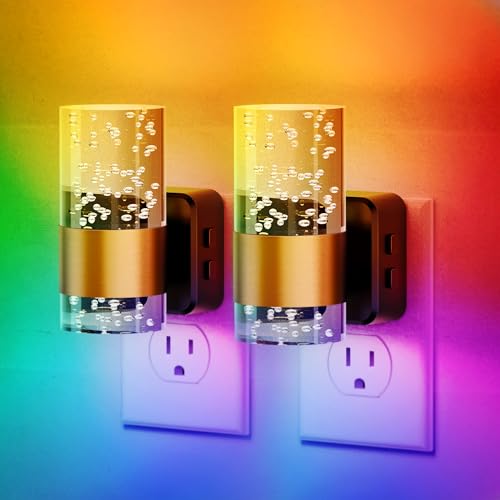
Plug-in lights provide a fixed location and do not require battery charging. The GE Color Changing Swivel Wall Wash Night Light, Horta RGB Dimmable Night Light 2-Pack, Dawnrise 12-Color Plug-in Night Light 2-Pack, L LOHAS LED RGB Bubble Night Lights 2-Pack, JandCase Gold-RGB Rotating Night Light 2-Pack, and Lights By Night Color-Changing Night Lights 4-Pack all use wall outlets. Several also include light sensors that turn the lamp on in darkness and off in brighter conditions.
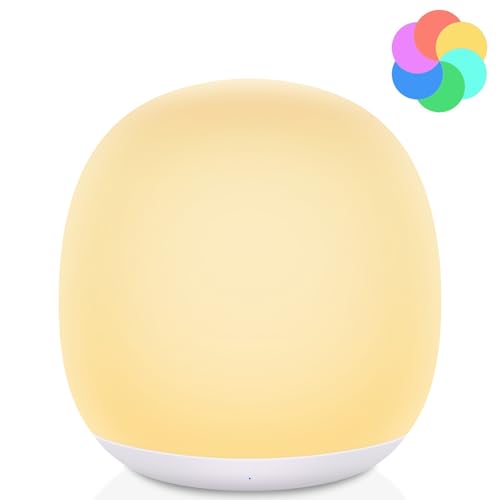
Rechargeable designs are better when placement changes frequently. The Auxmir 13-Color Rechargeable Night Light, Deogos 13-Color Portable Nursery Night Light, JolyWell 7-Color Rechargeable Egg Night Light, and Tyute 8-Color Rechargeable Silicone Night Light can be used away from an outlet. The Deogos model adds a handle for hanging, while the JolyWell model includes a one-hour timer. Battery duration varies by brightness, so a higher setting may reduce the time between charges.
Match the control style to the room
Remote control is useful when the lamp is across the room or positioned where reaching the housing is inconvenient. The Horta model includes a remote as well as side controls. Touch control is more direct for bedside use: Auxmir documents 360-degree touch control, and JolyWell specifies touch operation for nursery routines. Dawnrise uses tap controls and does not require a remote or batteries.
Button controls can be preferable in a child’s room because the operating method is physically clear, but the supplied evidence does not establish which control style is easiest for every child. If a lamp will be used during feeding or diaper changes, a timer or memory feature can reduce repeated adjustments. JolyWell documents both features; the other portable models selected here do not list a timer.
Check color and mode flexibility
Color counts are only part of the comparison. The Horta and Auxmir models list four dynamic modes in addition to multiple fixed colors. GE provides 12 colors, white mode, and color fade, while Dawnrise offers gradual and rapid color loops. The Lights By Night four-pack lists 12 colors, automatic fade, color select, and two soft-white levels.
For a calmer bedroom setting, look for a warm-white option or a dimmable color mode rather than assuming every RGB lamp provides the same atmosphere. JolyWell includes warm light alongside seven RGB colors, and the JandCase model combines nine RGB choices with 3000K soft white. L LOHAS also lists 3000K warm white and upward/downward projection. These details make the lamp more useful as ordinary low-level illumination instead of only decorative lighting.
Consider brightness adjustment
Brightness control matters when a light must guide movement without creating an overly bright room. Horta lists adjustable output from 0 to 100 lumens, while GE, Auxmir, and JandCase document dimming or multiple brightness levels. Deogos, JolyWell, and Tyute specify stepless dimming, which allows more gradual adjustment than a small set of fixed levels.
The right setting depends on the task. A low glow may suit sleep, a middle setting may help with a bathroom trip, and a brighter setting may be useful for a brief nursery task. The listings support these control options, but they do not provide independent measurements of real-world illumination or glare.
Review placement and outlet details
A rotating plug can help when an outlet is sideways, crowded, or close to furniture. Horta and JandCase specify 180-degree rotation, while GE provides 270-degree swivel adjustment for its two LED heads. GE, Dawnrise, and Lights By Night also describe designs that keep the other outlet available or avoid blocking it.
Decorative shapes change how light spreads. GE directs light across walls and floors, L LOHAS sends light upward and downward, and the L LOHAS design uses a bubble-style shade. These features may be useful when the goal is both pathway visibility and ambient decoration. For a portable lamp, consider whether the base, handle, or silicone body suits the intended surface; Deogos documents a hanging handle, and Tyute documents BPA-free silicone material.
Use the evidence appropriately
This is a specification-based comparison, not a hands-on test. Listed warranties, UL references, BPA-free materials, sensor claims, color modes, and battery information are included only where supplied. Actual brightness, sensor response, color appearance, and battery performance may vary in use. Marketplace pricing, ratings, current listing information, and badges are intentionally not part of the editorial scoring.
Final Recommendation
Horta RGB Dimmable Night Light 2-Pack ranks first overall in this specification-based comparison under the published weighted criteria.
GE Color Changing Swivel Wall Wash Night Light is the first overall specification-based choice because its independently controlled heads, 270-degree adjustment, color and white modes, dimming, sensor, and outlet-conscious design cover a broad range of use cases. For shoppers comparing the best color-changing night lights, Horta is a strong alternative when remote control and two-unit coverage matter more than directional swivel range.
Choose Dawnrise for a simple no-battery, no-remote setup, or Lights By Night when four lights are more useful than one. Auxmir and Deogos are the most flexible portable options in this selection, with Auxmir emphasizing mode variety and Deogos adding a hanging handle. JolyWell is particularly suited to short nursery routines because it documents a timer and memory function.
Among the top color-changing night lights, L LOHAS and JandCase are attractive choices for decorative wall lighting, while Tyute offers a soft silicone portable format. The best color-changing night lights are ultimately the ones whose power source, controls, brightness range, and automatic features fit the room instead of simply having the largest color count.
Frequently Asked Questions
Do the best color-changing night lights need a light sensor?
No. A sensor is useful when you want automatic dusk-to-dawn operation, especially in hallways, bathrooms, and stairways. GE, Horta, Dawnrise, L LOHAS, JandCase, and Lights By Night document automatic light sensing. Rechargeable models such as Auxmir, Deogos, JolyWell, and Tyute emphasize manual portability instead; the supplied features do not list automatic sensors for them.
Are rechargeable or plug-in color-changing night lights better for nurseries?
Either format can work, depending on placement. Plug-in models avoid charging and can remain in a fixed outlet, while rechargeable models can sit on a bedside surface or move during nighttime care. JolyWell adds a one-hour timer, Deogos has a hanging handle, and Tyute specifies BPA-free silicone. These are documented design differences, not test results or safety guarantees.
How many colors are enough for a night light?
There is no universal number. Eight or nine colors may be sufficient if you mainly want a few preferred hues, while 12 or 13 colors and multiple dynamic modes provide more selection. The Horta, GE, Dawnrise, Auxmir, JandCase, and Lights By Night models offer especially broad listed color controls. A warm-white mode and brightness adjustment may matter more than color count for routine nighttime lighting.
Can a color-changing night light also provide ordinary white light?
Several selected products document a white or warm-white mode. GE and Dawnrise list white-light options, JolyWell includes warm light, and JandCase and L LOHAS specify 3000K light. These modes can make a lamp more practical for everyday pathway illumination, but the supplied listings do not provide standardized brightness measurements for comparing their actual output.
What should I check before installing a plug-in model?
Confirm that the outlet location suits the lamp’s fixed position and that nearby furniture will not obstruct the light. A rotating plug can help: Horta and JandCase list 180-degree rotation, while GE documents 270-degree head adjustment. Also check whether the model keeps the second receptacle free, as stated for GE, Dawnrise, and Lights By Night. Ensure the intended room is indoors unless the product evidence specifically says otherwise.