Buying Guide
The best light sensor night lights should match the room, the desired amount of illumination, and the way you use the outlet. The products selected here are primarily plug-in indoor lights with dusk-to-dawn sensing. That means they are designed to turn on when ambient light becomes low and switch off when the room or surrounding area becomes brighter. A few selected models also document motion sensing, but that is an added operating mode rather than a requirement for this comparison.
Start with the sensing behavior
A dusk-to-dawn sensor is the most direct fit for a hallway, bathroom, bedroom, or nursery where you want a steady low-level glow throughout the dark period. This removes the need to reach for a switch during nighttime movement.
AUVON adds a motion mode that activates in darkness when movement is detected and turns off after inactivity. That can suit a route where light is useful only when someone walks by. Its documented sensing range and angle provide more detail than most listings, although published specifications still do not replace testing in a particular room. Choose the simpler dusk-to-dawn mode when consistent illumination is more important than motion-triggered operation.
Match brightness to the room
Brightness is one of the biggest differences between these products. Fixed-output lights such as the standard GE and Emotionlite models are easier to choose when you want a predictable, gentle glow. Emotionlite lists a 2700K warm-white color temperature, while GE SleepLite uses amber illumination. Those colors are positioned for bedrooms, nurseries, and evening routines rather than task lighting.
Adjustable models are more flexible. AUVON documents five-step and stepless dimming from 1 to 50 lumens. MAZ-TEK offers continuous adjustment from 0 to 15 lumens, which may be especially useful beside a sleeping area. DORESshop covers the widest stated range, from 0 to 100 lumens, and is therefore better suited to buyers who may want brighter guidance in a stairway, garage, kitchen, or basement. L LOHAS offers either two levels of 30 and 60 lumens or three settings of 30, 60, and 100 lumens, depending on the selected model.
Remember that a higher stated lumen range does not automatically mean a better bedside light. It provides more adjustment potential, but the most comfortable setting depends on placement, wall color, room size, and personal preference. The public listing data supports comparison of the controls, not a claim about real-world brightness in every space.
Consider color temperature and visual comfort
Warm white and amber light are generally the most relevant choices for sleep-adjacent areas in this selection. Emotionlite specifies 2700K, MAZ-TEK specifies warm white, and the AUVON models use warm-white versions in the supplied listings. GE SleepLite identifies its color as amber and describes it as a soft option for nighttime routines.
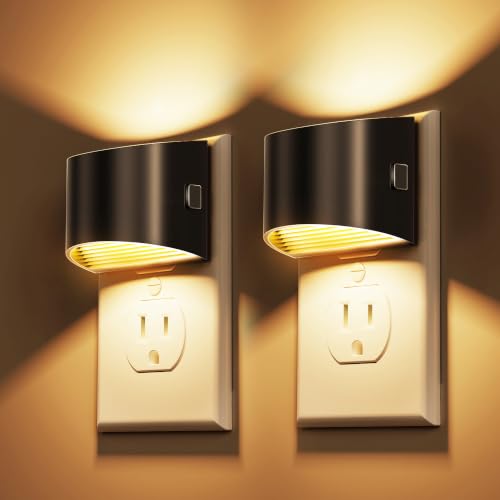
A daylight tone may be preferable in a utility area, but the supplied evidence does not justify saying it is universally better or more comfortable. AUVON’s backlit design is a separate comfort feature: its listing says the 16 LEDs reflect light onto the wall to create diffuse illumination rather than shining directly toward the eyes.
Check outlet access and physical placement
Most selected plug-in models are designed to use one receptacle while leaving the second available. It matters in bathrooms, kitchens, and hallways where outlets may already be needed for another device. Still, check the dimensions and the orientation of the receptacle before buying, especially behind furniture or near a counter.
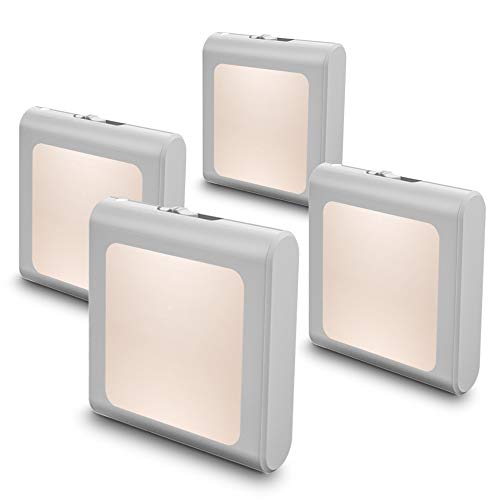
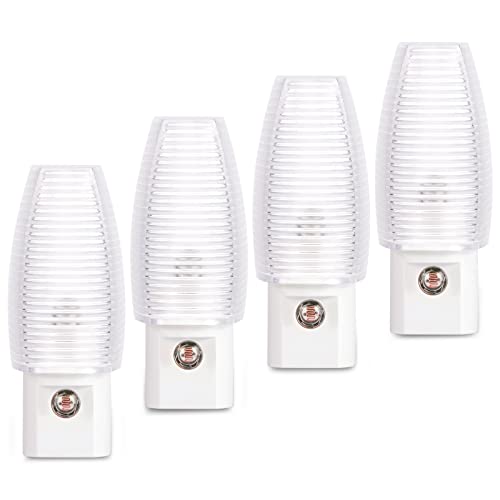
Pack size affects placement more than it affects the light’s behavior. Two-packs from GE, DORESshop, and L LOHAS can be a better fit when only one or two areas need lighting. A multi-pack is convenient for a connected nighttime route, but unused units are not useful if your home has limited suitable outlets.
The listings provide several different types of safety and efficiency information. AUVON describes V-0 fire-resistant casing and over-current protection. Emotionlite describes fireproof material, while several models specify low wattage and long-life LED operation. These are useful documented specifications, but they should not be treated as a guarantee of performance in every installation.
Plug-in night lights are intended for standard indoor outlets in the supplied descriptions. Keep placement away from water exposure unless the product documentation specifically supports the location, and avoid covering ventilation or using a damaged outlet. For a nursery or child’s room, consider whether the chosen color and brightness are appropriate, and keep cords or nearby objects from creating hazards.
Which features are worth paying for?
For basic automatic illumination, a fixed-output two- or four-pack may be enough. Spend more attention on brightness control when the same light may move between a bedroom and a darker utility area. AUVON’s dual sensing and backlit design are useful when comfort and operating flexibility are priorities. GE’s certified models are appealing when documented safety credentials and warranty coverage matter.
Final Recommendation
AUVON Backlit Night Light, 2-Pack ranks first overall in this specification-based comparison under the published weighted criteria.
AUVON Backlit Night Light, 4-Pack is the highest-scoring returned product and the first overall specification-based choice among these best light sensor night lights. It combines dusk-to-dawn automation, optional motion sensing, diffuse backlighting, broad dimming control, outlet access, and documented casing and over-current protection. For a bedroom-focused setup, GE SleepLite is a strong alternative because its amber color and frosted lens are specifically positioned for sleep-friendly use.
These top light sensor night lights are not interchangeable in every setting. Choose fixed warm or amber light for a predictable nighttime glow, adjustable output for mixed rooms, and a larger pack when several paths need illumination. The comparison is based on supplied public specifications, not hands-on testing or customer sentiment.
Frequently Asked Questions
What are the best light sensor night lights for a bedroom?
For a bedroom, prioritize warm-white or amber output and the ability to keep brightness low. GE SleepLite documents amber illumination and a frosted lens, while Emotionlite lists 2700K warm white. AUVON and MAZ-TEK add dimming controls, which can help you select a lower setting near a bed. The right choice depends on whether you prefer a fixed glow or adjustable output.
Do light sensor night lights stay on all night?
Dusk-to-dawn models are listed as turning on when ambient light becomes insufficient and turning off when daylight or brighter conditions return. That describes the automatic operating cycle, but the exact experience can depend on the room’s light and the sensor’s placement. AUVON also documents a motion mode that turns off after inactivity, so select its night mode when you want darkness-based operation rather than motion-only activation.
Should I choose warm white, daylight white, or amber?
Warm white and amber are documented in selected models for bedrooms, nurseries, and gentle nighttime navigation. Daylight white can be useful where clearer, crisper visibility is preferred, but the supplied listings do not establish that one color is best for everyone. Match the color to the room’s purpose and consider whether the light is near a sleeping area.
Are adjustable night lights better than fixed-output models?
Adjustable lights offer more control, particularly when one product may be used in different rooms. DORESshop lists a 0-to-100-lumen range, AUVON lists 1-to-50-lumen dimming, and MAZ-TEK lists 0-to-15-lumen adjustment. Fixed-output choices such as Emotionlite may be preferable when you want simple operation with no brightness setting to manage.
How many plug-in lights do I need?
Count the locations that need nighttime visibility, such as a bedroom route, bathroom, hallway, or stairway. Two-packs suit limited coverage, while four- and six-packs can serve multiple indoor areas. Also check whether the chosen design leaves the second receptacle accessible, since that feature is documented for many of the selected models but not necessarily every outlet configuration.